





Twilio WhatsApp Pricing 2026: A Complete Guide for Shopify Merchants

Twilio WhatsApp Pricing 2026: A Complete Guide for Shopify Merchants
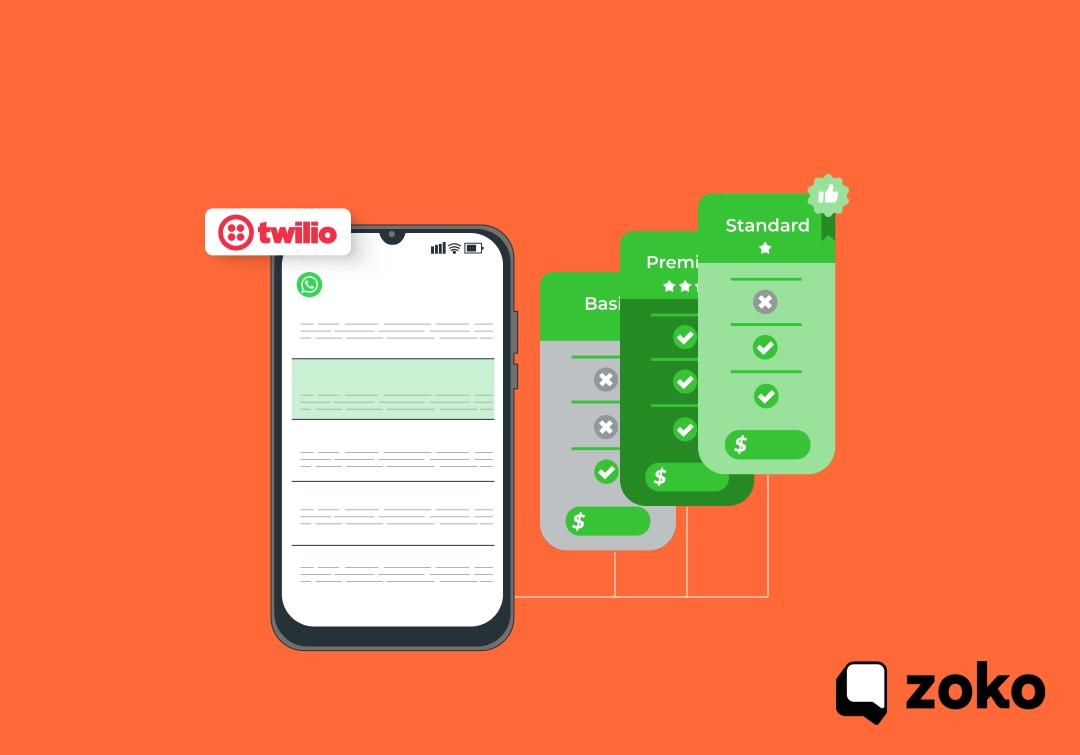
If you run an e-commerce brand, WhatsApp can feel like the natural place to sell, support, and stay close to customers. A communication platform like Twilio can help you send and manage these conversations at scale. That said, its pricing can be confusing because there are no simple monthly tiered plans to compare.
You may be planning promotions, order updates, support replies, COD confirmations, or abandoned cart messages. But the real question still lingers: what will you pay once Twilio fees, WhatsApp charges, and usage volume are factored in?
This guide explains Twilio WhatsApp pricing in simple terms for merchants who need cost clarity before choosing a provider. You will learn how the pricing structure works and what components affect your final bill. By the end, you should know what to check, what to question, and how to avoid surprise costs before adding Twilio to your WhatsApp-based workflow.
Quick Snapshot
Twilio WhatsApp pricing is usage-based, so you must calculate message type, volume, Meta fees, add-ons, and setup effort before choosing it.
- Twilio charges $0.005 per inbound or outbound WhatsApp message, while Meta adds separate fees for marketing, utility, and authentication templates.
- Since July 2025, WhatsApp pricing has moved from conversation-based billing to per-template message pricing, making volume planning more important.
- Marketing templates usually cost more than utility or authentication messages, so frequent promotions can quickly increase monthly WhatsApp spend.
- Extra costs like failed message fees, click tracking, message scheduling, WhatsApp calling, and developer setup can affect the final bill.
- E-commerce merchants should estimate costs by workflow, such as campaigns, OTPs, COD confirmations, order updates, and support replies.
How Twilio WhatsApp API Works Before You Commit to Its Pricing
Twilio helps you send and manage WhatsApp messages without using the regular WhatsApp app. It is a US-based cloud communications provider, and its WhatsApp APIs work like a bridge between your business system and WhatsApp.
The basic flow is simple:
- Your business sends an HTTP request to Twilio.
- Twilio forwards the message to WhatsApp.
- WhatsApp delivers the message to the customer.
- If the customer replies, Twilio can send that response back to your system.
This setup is useful for e-commerce brands that want WhatsApp to support customer communication at scale. You can use its WhatsApp APIs for campaigns, promotions, live support, messaging, and WhatsApp calling. From a feature point of view, Twilio’s WhatsApp offering includes:
- Programmable Messaging API: Send one-way WhatsApp messages for alerts, notifications, marketing, and promotions.
- Conversations API: Turn WhatsApp messages into two-way customer conversations for sales and support.
- Programmable Voice API: Add WhatsApp Business Calling so customers can move from chat to a live call.
- Senders API: Create, delete, or retrieve WhatsApp senders through code.
- Utility direct send: Send utility messages without pre-approval (currently marked as beta).
- Marketing Messages API: Improve deliverability for marketing templates without code changes.
- Messaging feature support: Set up WhatsApp Flows, typing indicators, PIX payments, and more.
Also Read: WhatsApp API vs Twilio: Crucial Differences You Must Know
How Twilio WhatsApp Pricing Works: A Comprehensive Breakdown
Twilio WhatsApp pricing follows a pay-as-you-go model. You do not choose from fixed monthly plans. Instead, your final cost depends on how many WhatsApp messages you send or receive and on the type of messages you send.
Here's the short answer: Twilio WhatsApp API pricing has two main parts.
- Twilio’s per-message fee: $0.005 for each inbound or outbound WhatsApp message.
- Meta’s template message fee: A separate fee charged by Meta and passed through by Twilio.
So, for instance, if your e-commerce store sends a promotional WhatsApp message, you pay Twilio’s message fee plus Meta’s marketing template fee.
Meta WhatsApp Message Categories
Meta charges template fees based on the type of message you send. Twilio passes these fees to you. The three main paid template categories are utility, authentication, and marketing. Twilio also supports free-form messages, which work differently because they are only allowed during an active customer service window.
- Utility templates: These cover customer requests, transactions, post-purchase updates, and billing reminders. For an e-commerce store, this can include order confirmations, shipping updates, delivery alerts, or payment reminders.
- Authentication templates: These are mainly used for one-time passcodes. For example, a merchant may send an OTP when a customer logs in, confirms payment, or verifies an account action.
- Marketing templates: These are business-initiated messages that do not qualify as utility or authentication. Examples include offers, sale announcements, product drops, survey requests, or campaign messages.
- Free-form messages: These are non-template messages sent during a customer service window. For example, if a buyer asks, “Can I change my delivery address?” your support team can reply in a natural message format.
Note: A customer service window lasts for 24 hours after a customer messages your business. During that window, Meta does not charge for utility templates or free-form messages. Marketing and authentication templates are still charged.
Messaging Rate Card in India
Your total cost depends on the message category and the customer's phone number and country code. In India, based on the provided rate structure, the cost can look like this:
| Message type | Meta fee | Twilio fee |
|---|---|---|
| Utility template | $0.0014/message outside customer service window; no Meta fee during window | $0.005/message |
| Authentication template | $0.0014/message; higher rates may apply for international authentication | $0.005/message |
| Marketing template | $0.0118/message | $0.005/message |
| Free-form message | Nil | $0.005/message |
Note: Check out the official Meta rate card, as prices can change.
What Costs Shopify Merchants Should Not Miss
The biggest mistake is treating Twilio WhatsApp pricing as only “$0.005 per message.” That number is only one part of the bill. Before choosing Twilio, you should account for:
- Template volume: Every campaign, order update, OTP, and reminder increases message volume.
- Message category: Marketing templates cost more than utility or authentication messages.
- Customer service windows: Customer-initiated chats can reduce Meta fees for some replies.
- Failed messages: Messages terminated with a "Failed" status will still incur a $0.001 processing fee.
- Add-ons: Link shortening, click tracking, and message scheduling cost $0.015 per message after the first 1,000 free messages each month.
- Calling costs: WhatsApp Business Calling is priced per minute, with charges from both Twilio and Meta. Twilio charges $0.005 per minute for inbound and outbound Channel API calling.
- Developer setup: Twilio is API-first, so your store may need technical support to connect orders, support tools, and customer workflows.
Volume Discounts
Volume discounts may apply to some high-volume Meta template fees every month for the Utility and Authentication templates. However, the discount threshold varies by country, and Marketing templates are explicitly excluded.
Example: If an e-commerce brand sends 50,000 OTPs per month, authentication volume discounts may reduce the Meta fee. But if the same brand sends 50,000 marketing newsletters, those marketing messages will be treated as full-cost campaign messages.
That is why large campaigns need careful cost planning. A small difference in template category can change the final WhatsApp bill once your message volume grows.
What Changed After the July 2025 WhatsApp Pricing Update
Meta changed how WhatsApp Business API pricing works from July 1, 2025. This matters because many merchants still believe WhatsApp pricing follows the old 24-hour conversation model. It does not.
Before July 2025: Conversation-Based Pricing
Under the older model, Meta charged a fee when you started a conversation with a customer. The conversation category depended on the first template used.
For example:
- You sent a utility template message (say, an order update).
- Meta charged the utility conversation fee.
- That started a 24-hour utility conversation window.
- If you later sent a marketing template, Meta charged a separate fee for it.
- That marketing message started a separate 24-hour marketing window.
Service conversations worked differently. They started when a customer messaged your business first, and you replied with a free-form message. That service window also lasted 24 hours.
From July 2025: Per-Template Message Pricing
On July 1, 2025, WhatsApp switched to a pricing model that charges you per template message rather than per conversation. That means charges apply for:
- Each marketing template you send.
- Each authentication template you send.
- Each utility template you send outside a customer service window.
Why this matters for e-commerce merchants: This pricing change makes forecasting more important. Your WhatsApp bill now depends heavily on how many template messages you send, not just how many customer conversations you start.
For example, a Shopify merchant running a weekend sale may send:
- One marketing message for the sale announcement
- One reminder before the sale ends
- One abandoned cart recovery message
- One order confirmation
- One shipping update
Under the new model, each qualifying template message will carry its own charge. So, if your store sends bulk WhatsApp messages across promotions, support, COD confirmations, and delivery updates, your total cost can grow quickly with volume.
Pro tip: Do not estimate Twilio WhatsApp pricing using only the total customer count. Estimate it by message type and frequency. A better cost model looks like this:
- Number of monthly marketing campaigns
- Number of customers per campaign
- Average abandoned cart reminders per customer
- Number of orders, payments, and shipping updates
- Number of OTP or verification messages
- Expected customer replies and support follow-ups
Also read: Twilio API for WhatsApp: What Shopify Store Owners Must Know
Simplifying Your Actual Twilio WhatsApp Pricing with an Example
Let’s say an online fashion store sends WhatsApp messages for campaigns, order updates, OTPs, and support.
Monthly usage:
- 20,000 marketing templates for sale campaigns
- 30,000 utility templates outside the customer service window
- 10,000 utility templates inside the customer service window
- 5,000 authentication templates for OTPs
- 15,000 free-form support messages during customer service windows
Here is the simple formula:
Monthly Twilio WhatsApp Cost = Twilio message fees + Meta template fees + add-on fees + failed message fees + calling fees (if used)
Sample Calculation:
| Message type | Volume | Cost/message (Twilio + Meta charges) | Estimated cost |
|---|---|---|---|
| Marketing templates | 20,000 | $0.0168 | $336 |
| Utility templates outside the window | 30,000 | $0.0064 | $192 |
| Utility templates inside the window | 10,000 | $0.005 | $50 |
| Authentication templates | 5,000 | $0.0064 | $32 |
| Free-form messages | 15,000 | $0.005 | $75 |
| Estimated monthly total | 80,000 messages | $685 |
Why Zoko Fits E-Commerce Merchants Better Than a Generic WhatsApp API Setup

Twilio is built for businesses that want flexible API access and have developers to set up custom WhatsApp workflows. It can work well if your team wants control over message logic, integrations, and backend systems. But often, you need more than the ability to send and receive WhatsApp messages. That includes WhatsApp support for real selling tasks, such as product discovery, abandoned cart recovery, COD confirmation, order updates, customer query handling, broadcasts, and performance tracking.
That is where a Shopify-first WhatsApp commerce platform like Zoko fits into the decision. It connects Shopify with WhatsApp so you can manage customer conversations, automate key workflows, and support WhatsApp-based selling from one place. It also supports actions such as taking orders on WhatsApp, helping customers track shipments, and letting them cancel items through WhatsApp.
Key Zoko features include:
- Shopify catalog sync: Zoko pulls the Shopify catalog into WhatsApp, allowing customers to browse and place orders via chat.
- Abandoned checkout recovery: You can send WhatsApp reminders with payment links or coupons when shoppers leave checkout incomplete.
- COD and order automation: Zoko includes pre-built flows to double-confirm COD orders, convert COD to prepaid, and send order notifications for shipped, delivered, or canceled orders.
- Broadcast campaigns: You can send WhatsApp bulk broadcasts and use customer tags or segments for more targeted campaigns.
- Multi-agent support: Teams can manage chats from a single WhatsApp number with agent handover, teams, and private notes.
- Analytics and tracking: Zoko includes detailed analytics, which help you track WhatsApp performance beyond message delivery.
- AI support add-ons: Zoko lists AI agents as paid add-ons, including tools for FAQs, order-status questions, and WhatsApp sales handling.
Zoko’s pricing structure is also easier to evaluate than Twilio's. It is plan-based, so you can estimate your monthly software cost before starting. The current pricing plans are:
| Plan | Monthly price | Included usage |
|---|---|---|
| Starter | $49.99/month | $0.015/conversation |
| Plus | $79.99/month | 5K conversations with no Zoko markup |
| Elite | $139.99/month | 100K conversations with no Zoko markup |
| Max | $499.99/month | 5M conversations with no Zoko markup |
WhatsApp platform charges still follow Meta’s rate card. But compared with an API-first setup like Twilio, Zoko gives you a clearer starting point for budgeting because plans already connect pricing with agents, usage, Shopify workflows, broadcasts, catalog, and automation. Also, the markups are lower than Twilio's in most plans.
So, start your 7-day free trial with Zoko, no credit card required. See how a Shopify-first WhatsApp platform can help you turn WhatsApp into a clearer sales channel without building everything from scratch.
Also read: WhatsApp Business API: Top 7 Best Practices for 2026
Also read: Simplified WhatsApp Business Cloud API Guide for Shopify Stores (2026)
FAQs
1. How do I know which category my WhatsApp template belongs to?
When you submit a WhatsApp template through Twilio, you need to choose a category such as marketing, authentication, or utility. If WhatsApp reviews the template and finds that the selected category does not match the message content, it can update the category, and your pricing will follow the corrected category.
2. Do free entry points reduce WhatsApp API Twilio pricing?
Free entry points can reduce Meta message charges in specific cases. If a customer starts a WhatsApp chat from a Facebook or Instagram ad, or from a Facebook Page call-to-action button, Meta says messages can be free for 72 hours. But the conversation is only free of charge if you respond to the initial message within 24 hours, and any additional messages you send are in response to the customer's replies. Twilio fees and ad costs also apply.
3. Do failed WhatsApp messages affect Twilio WhatsApp Business API pricing?
Yes, they can. A failed message processing fee applies only when a message ends in a “Failed” status. For e-commerce merchants sending large COD confirmations, OTPs, or sales campaigns, failed messages should be included in the cost estimate, not an afterthought.
4. Does Twilio charge for incoming WhatsApp messages?
Yes. Twilio’s WhatsApp fee applies to both inbound and outbound messages. That means customer replies can also add to your bill, even when Meta does not charge a template fee for that specific reply. This matters during high-support periods, such as sales, delivery delays, or COD confirmation campaigns.
5. Can we use Twilio only for order updates and not marketing?
Yes, you can use Twilio for specific WhatsApp workflows, such as order confirmations, shipping alerts, OTPs, or support replies. You may not use it for promotions. This can help you keep Twilio WhatsApp pricing more predictable if you mainly send utility or authentication messages.
Interested to know more?
.svg)
Case Studies
















Featured Posts


Continue reading

The E-Commerce Divide: How the Top 10% of Brands Use AI to Grow 5X Faster (And Why It’s Not for Everyone)
Drive Sales with WhatsApp Catalog Integration: Here's How