


Top 10 Conversational AI Companies That Enterprises are Evaluating in 2026

Top 10 Conversational AI Companies That Enterprises are Evaluating in 2026
Enterprises aren't just dabbling in AI anymore; they're deploying it at the front lines of every customer interaction. From WhatsApp chats to enterprise service desks, conversational AI is a core business infrastructure. And with customer expectations at an all-time high, the pressure to choose the right conversational AI platform has never been greater.
But here's the thing: not all conversational AI companies are built the same. Some focus on voice automation for large contact centers. Others specialize in internal IT helpdesks. And some in powering sales and support directly inside WhatsApp for e-commerce brands.
In this guide, we will break down the top 10 conversational AI companies that enterprises are actively evaluating in 2026.
Key Takeaways
- Platforms like IBM watsonx Assistant, Google Dialogflow CX, and Cognigy.AI focus on enterprise automation and contact centers, while Zoko specializes in WhatsApp commerce for Shopify brands.
- Yellow.ai, LivePerson, and Intercom are strong in customer messaging and support automation across chat and digital channels.
- Salesforce Einstein Bots and Kore.ai connect conversational AI directly to CRM systems, enterprise workflows, and internal operations.
- Moveworks, for example, is designed to automate employee support across tools like Slack and Microsoft Teams.
- E-commerce brands may prioritize Zoko and conversational commerce tools, while large enterprises often evaluate platforms like Dialogflow CX, IBM watsonx Assistant, or Cognigy.AI for complex automation needs.
What Is a Conversational AI Platform, and What to Look for When Evaluating Options?
A conversational AI platform is software that enables businesses to automate two-way conversations with customers or employees using artificial intelligence. Unlike traditional rule-based chatbots that follow rigid scripts, modern conversational AI understands natural language, interprets context, and responds in ways that feel human.
Here are the key criteria enterprise buyers are using to shortlist platforms:
- Channel coverage: Whether it supports the channels your customers actually use, such as WhatsApp, web chat, SMS, voice, or in-app messaging.
- Integration depth: How well it connects with your existing tools, CRM, helpdesk, e-commerce platform, or ERP.
- AI quality: Whether it genuinely resolves queries end-to-end, rather than just routing or deflecting them.
- Automation capabilities: How easy it is to build and update conversation flows, ideally without heavy developer involvement.
- Security and compliance: Data privacy controls, access management, and industry-specific compliance standards.
- Scalability: The ability to handle growing conversation volumes without performance degradation.
- Analytics and reporting: Clear visibility into conversation outcomes, resolution rates, and areas for improvement.
Top 10 Conversational AI Platforms and Their Key Features
From voice assistants to AI chatbots, these platforms help organizations manage conversations at scale while improving response times and customer experience.
Below are 10 leading conversational AI platforms, along with an overview of the key features that make them valuable for modern customer communication and automation.
| Platform | Best For | Official Rating (G2 / Gartner) | Pricing (Base/Starting) |
|---|---|---|---|
| Zoko | WhatsApp E-commerce | 4.5/5 (G2) | $49.99/mo (Starter Plan) |
| IBM watsonx Assistant | Enterprise NLP & Security | 4.4/5 (G2) | $140/mo (Plus Plan starting price) |
| Google Dialogflow CX | Large-scale IVR & Chat | 4.4/5 (G2) | $0.012 per request for playbook (Gen AI) |
| Kore.ai | Multi-channel Enterprise | Leader (Gartner Magic Quadrant) | $60/month |
| Yellow.ai | Dynamic Automation | 4.4/5 (Gartner Peer Insights) | Custom Quote (Usage-based) |
| Cognigy.AI | Contact Center AI | 4.8/5 (Gartner Peer Insights) | Basic 5K plan |
| LivePerson | Conversational Commerce | 4.3/5 Leader (G2 Winter 2026) | Custom Quote (Meaningful Connection-based) |
| Intercom | SaaS Support & Fin AI | 4.1/5 (Gartner Peer Insights) | $29/seat/mo (Essential Plan) |
| Moveworks | Employee Experience | 4.6/5 High Performer (G2) | Custom Quote (Per-employee) |
| Salesforce Einstein | CRM-integrated Support | Leader (Gartner Magic Quadrant) | $2/conversation (Agentforce model) |
1. Zoko: The Conversational AI Platform for Shopify and E-Commerce
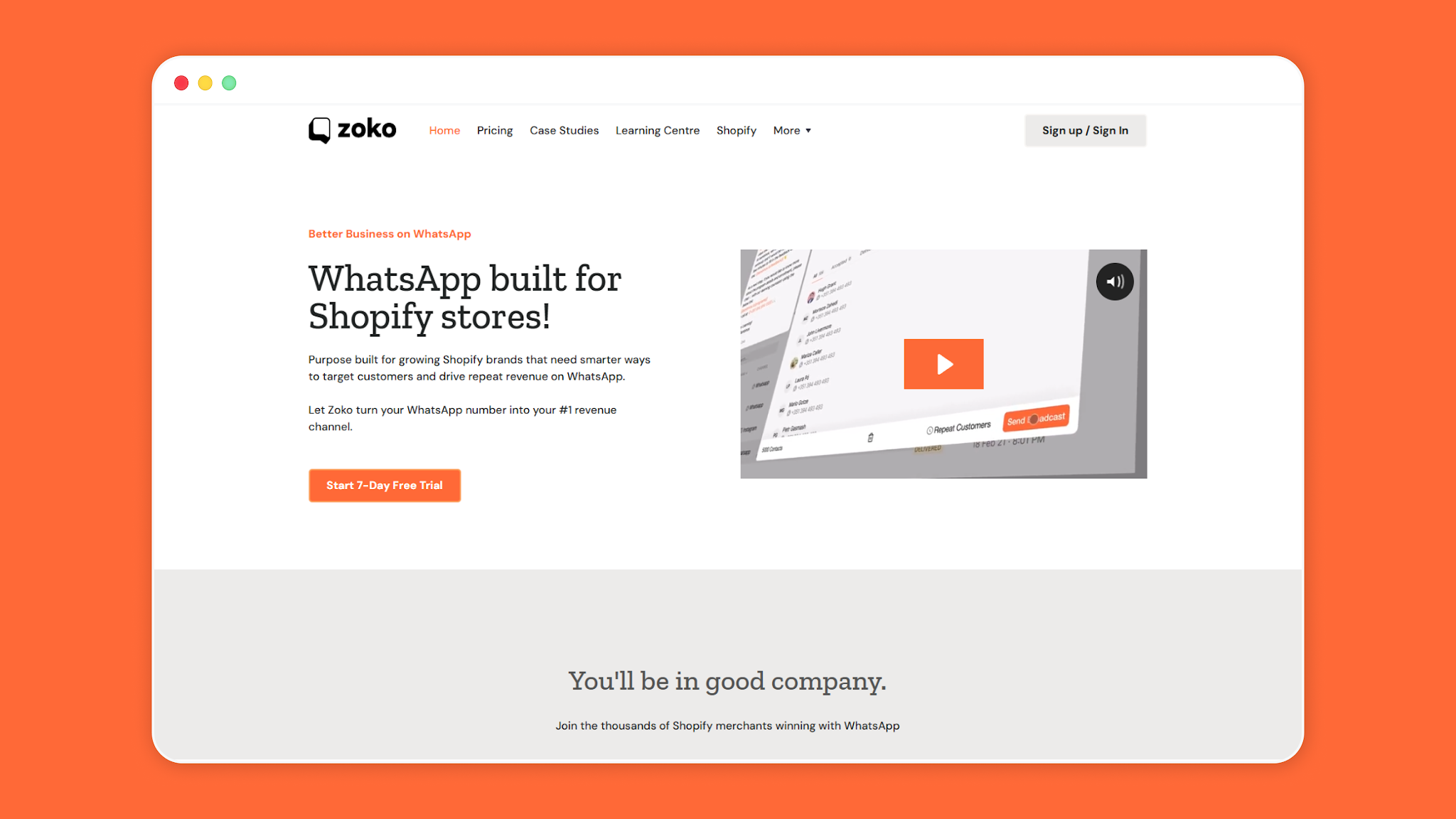
Zoko is purpose-built for Shopify stores that want to use WhatsApp as a full-stack sales, marketing, and support channel. As an official Meta Business Partner, Zoko enables merchants to sell products, run broadcast campaigns, automate workflows, and deliver real-time customer support, all without leaving WhatsApp.
What sets Zoko apart from generic conversational AI platforms is its relentless focus on e-commerce outcomes.
Key Features
- WhatsApp Catalog Sync: Automatically syncs your Shopify product catalog with WhatsApp so customers can browse and buy without leaving the chat.
- AI-Powered WhatsApp Broadcasts: Send personalized, segmented broadcast campaigns with up to 500% better open rates than email.
- Zoko Flow Builder: A no-code, drag-and-drop automation canvas that lets you build everything from simple order confirmations to complex multi-step workflows, connected to Shopify, Judge.me, and more.
- WhatsApp Support Inbox: A shared team inbox that lets multiple agents manage customer conversations from one dashboard, with automated routing, quick replies, and conversation history.
- COD Order Confirmation Automation: Automatically confirms cash-on-delivery orders over WhatsApp to reduce return rates and failed deliveries.
- Abandoned Cart Recovery: Re-engage customers who dropped off mid-purchase with automated, personalized WhatsApp messages.
- Shopify-Native Integration: Plug-and-play setup, no heavy development work required.
If you're a Shopify merchant serious about WhatsApp commerce, Zoko is your starting point. Book a free demo today to get started.
2. IBM watsonx Assistant

sourcelink
IBM's watsonx Assistant is built for organizations where security isn't optional. It delivers enterprise-grade compliance, role-based access controls, and strong natural language understanding across voice and digital channels. It's not the fastest platform to deploy, but when your industry demands airtight governance, IBM earns its seat at the table.
Key Features
- Industry-specific compliance frameworks (HIPAA, GDPR, SOC 2)
- Deep integration with IBM's broader data and cloud ecosystem
- Strong analytics and conversation performance dashboards
- Voice and digital channel support for omnichannel deployments
3. Google Dialogflow CX
sourcelink
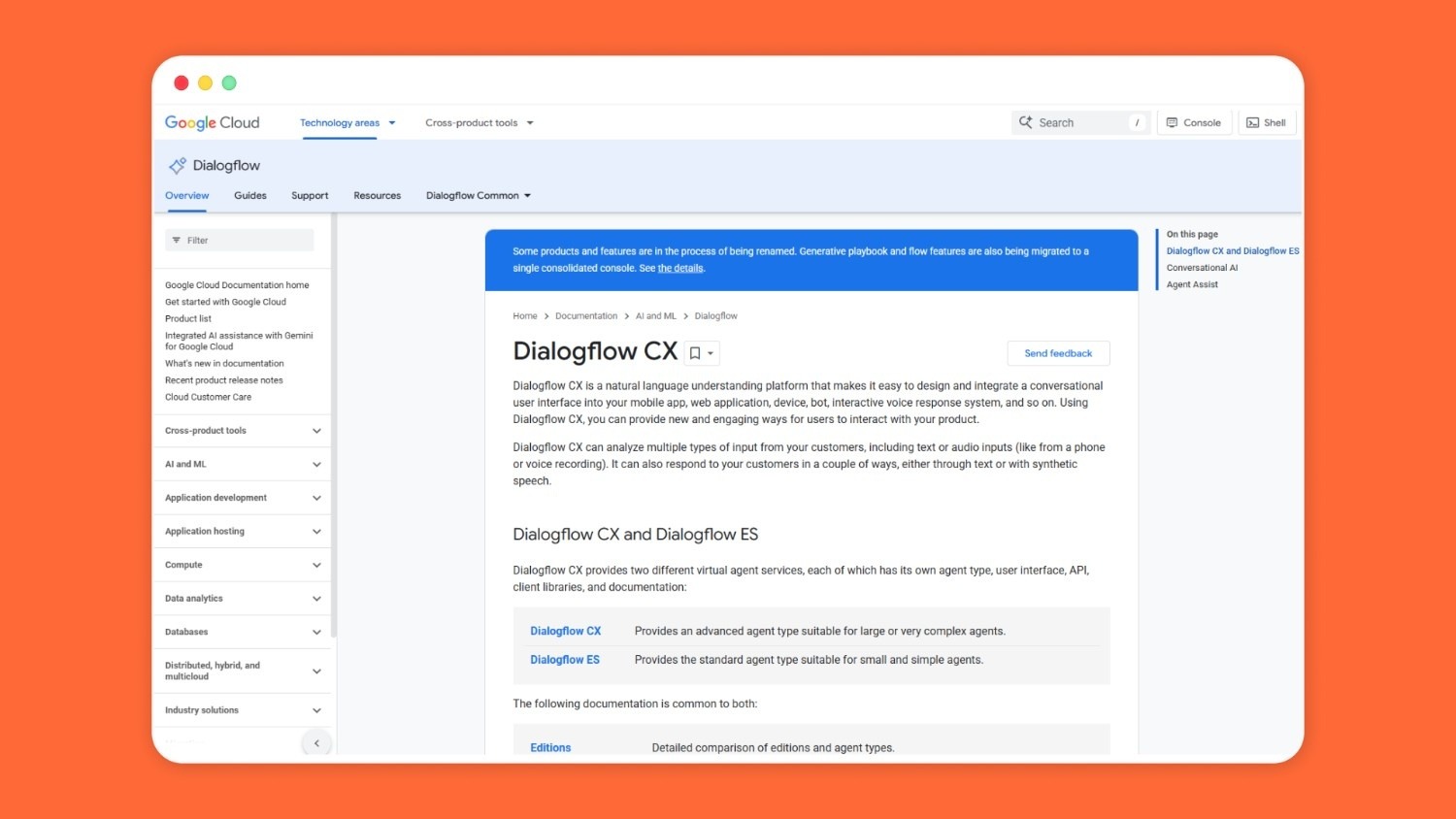
Dialogflow CX is Google's enterprise-tier conversational AI platform, designed for teams that want maximum control over conversation logic and want to build deeply customized voice or chat experiences from scratch. It handles complex multi-turn conversations well and integrates naturally with Google Workspace, BigQuery, and Cloud services.
Key Features
- Powerful natural language understanding (NLU) backed by Google's AI research
- State-based conversation management for complex flows
- Strong multilingual support across 50+ languages
- Scales efficiently for high-volume contact center deployments
4. Kore.ai
sourcelink
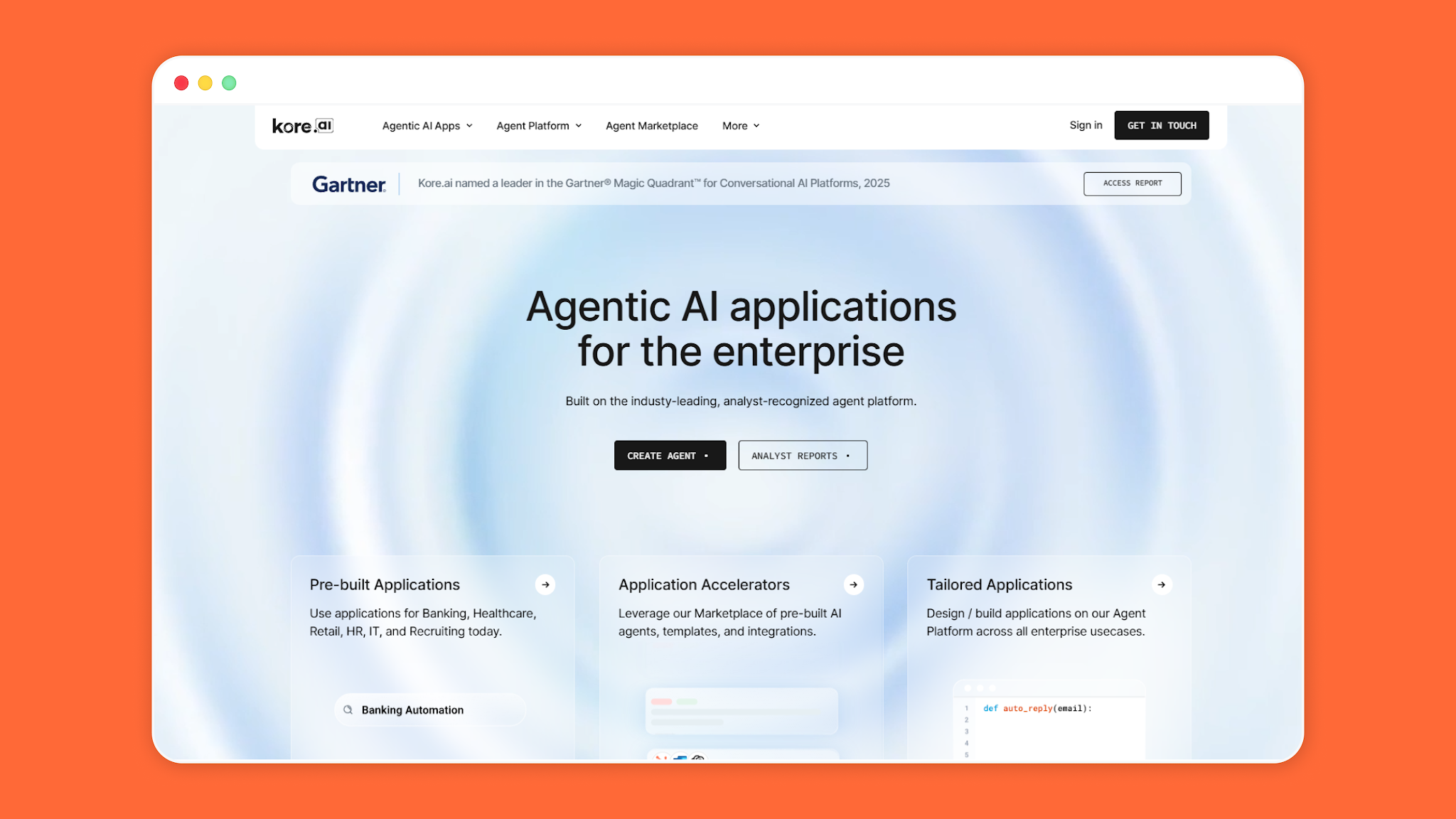
Kore.ai has carved out a strong position as one of the most versatile enterprise conversational AI platforms on the market. Its XO Platform lets enterprises build, deploy, and manage intelligent virtual assistants without heavy coding dependencies. It supports both customer-facing and internal employee support use cases, which is rare at this level of sophistication.
Key Features
- No-code/low-code bot builder suitable for business teams, not just developers
- Strong integrations with major CRMs, ITSM tools, and HR systems
- Multi-channel deployment across voice, chat, email, and messaging apps
- Solid analytics suite for monitoring intent coverage and conversation outcomes
Also Read: What Are Conversational Analytics and Why Do They Matter?
5. Yellow.ai
sourcelink
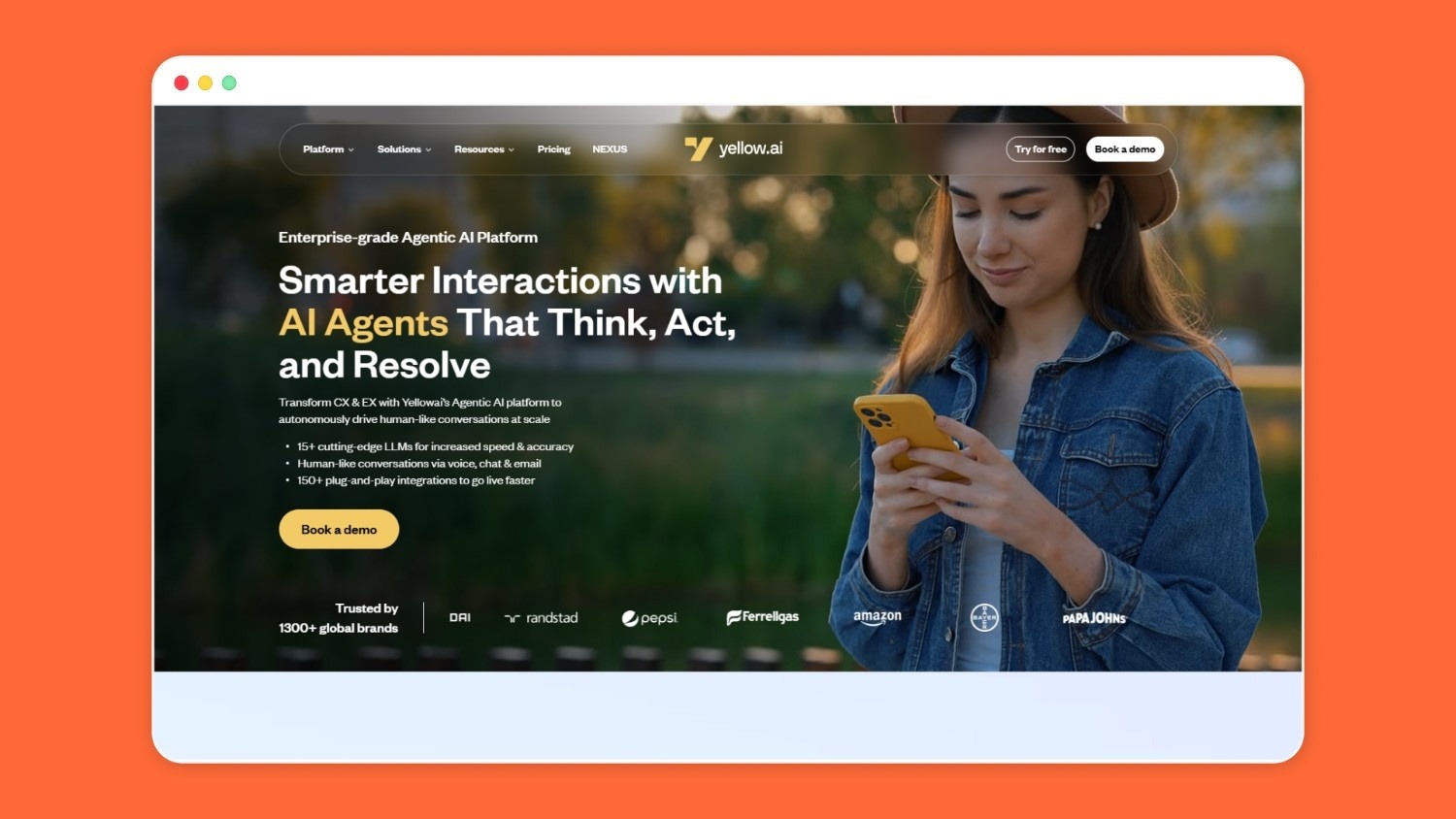
Yellow.ai's Agentic AI Platform stands out for the quality and naturalness of its conversations. G2 reviewers consistently highlight the human-like feel of customer interactions. It covers voice bots, chatbots, and digital channels with strong multilingual capabilities, making it a popular choice for global brands managing support at scale.
Key Features
- Human-like conversational quality across text and voice channels
- Multilingual support ideal for international enterprises
- AI-powered analytics for continuous conversation optimization
- Pre-built integrations with major enterprise platforms like Salesforce and ServiceNow
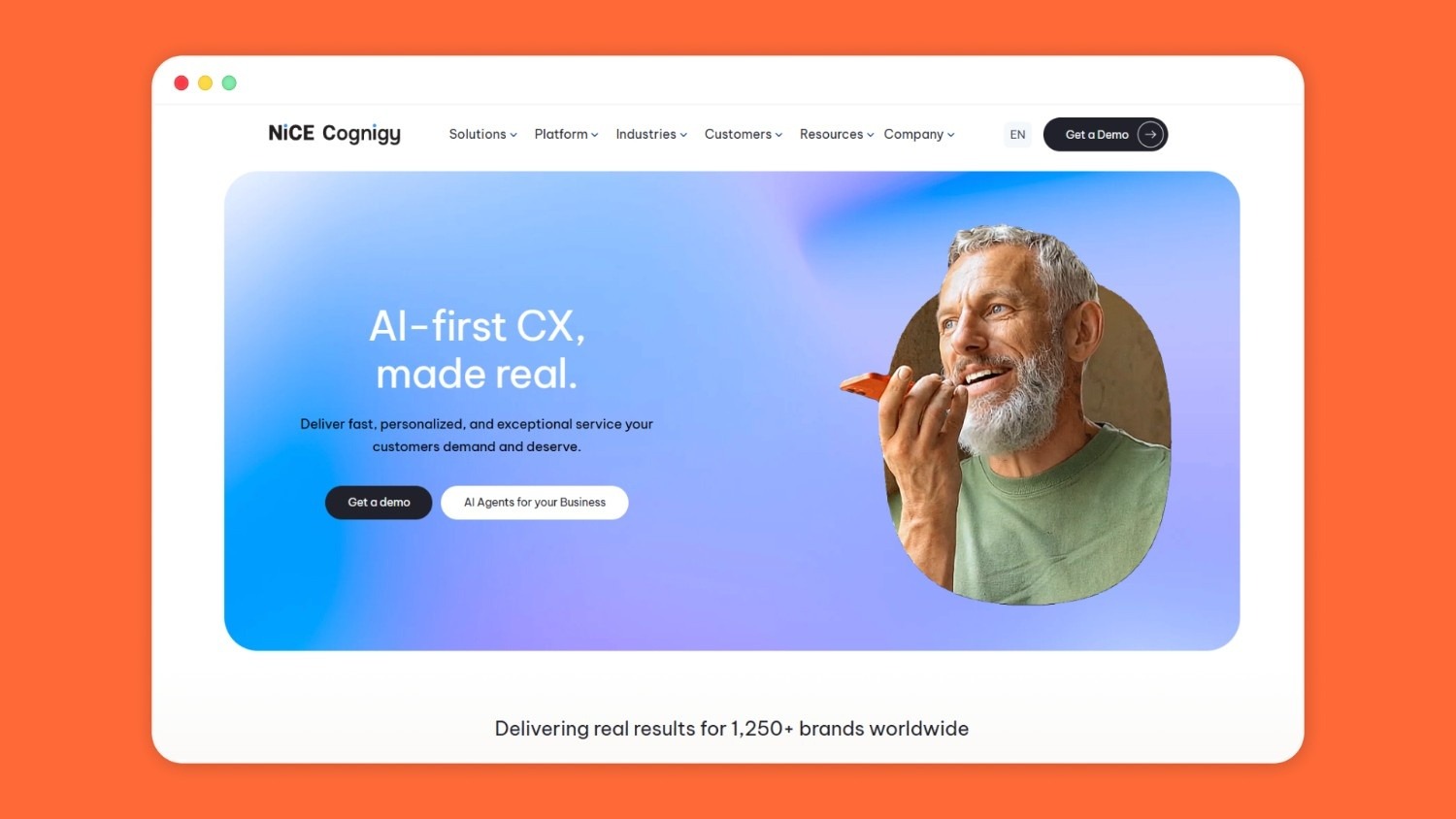
6. Cognigy.AI
Key Features
- Best-in-class voice AI with natural-sounding speech and strong IVR replacement capabilities
- Deep integrations with legacy telephony systems and modern contact center stacks
- Strong analytics for tracking voice conversation quality and agent escalation rates
- Supports blended human-AI workflows for complex support scenarios
Also Read: The Power of Conversational Commerce on WhatsApp Catalog
7. LivePerson
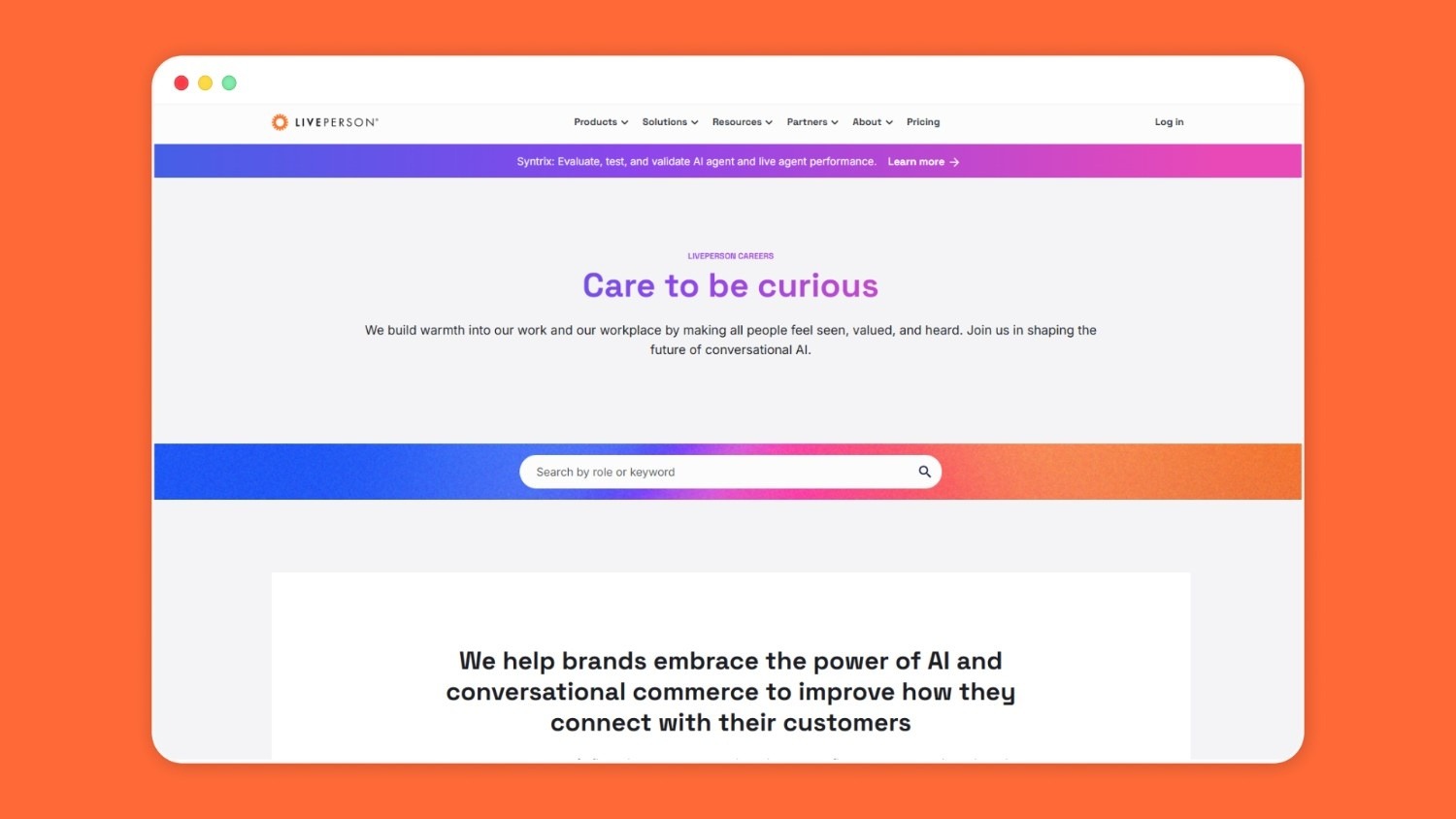
LivePerson has been in the conversational commerce space long before it was fashionable. Its platform combines real-time messaging, AI automation, and commerce tools into a single suite, helping brands convert support conversations into sales opportunities at scale.
Key Features
- Conversational commerce capabilities that link AI conversations to purchase journeys
- Strong support for SMS, WhatsApp, Apple Messages for Business, and web chat
- AI-powered agent assist tools for hybrid human-AI contact centers
- Deep analytics connecting conversation data to business outcomes
8. Intercom
sourcelink
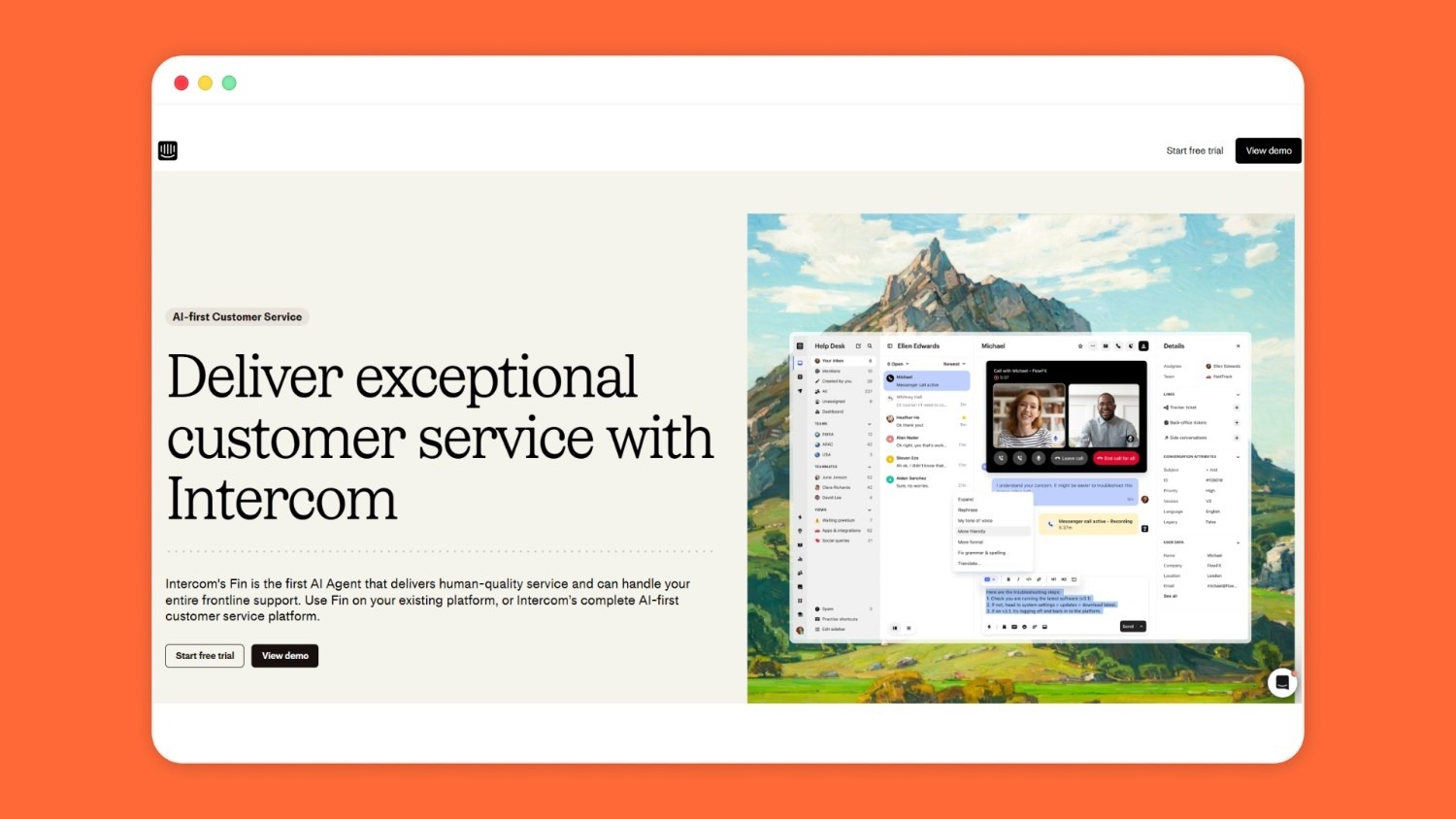
Intercom has evolved from a live chat tool into a full-featured AI-first customer service platform. Its Fin AI agent handles front-line support autonomously, escalating to human agents only when truly necessary. It's strong for SaaS products where customers need help navigating software features and need answers fast.
Key Features
- Fin AI Agent that resolves support queries end-to-end without human intervention
- Seamless handoff between AI and human support agents
- In-product messaging for SaaS and mobile apps
- Strong knowledge base and help center integrations
9. Moveworks
sourcelink
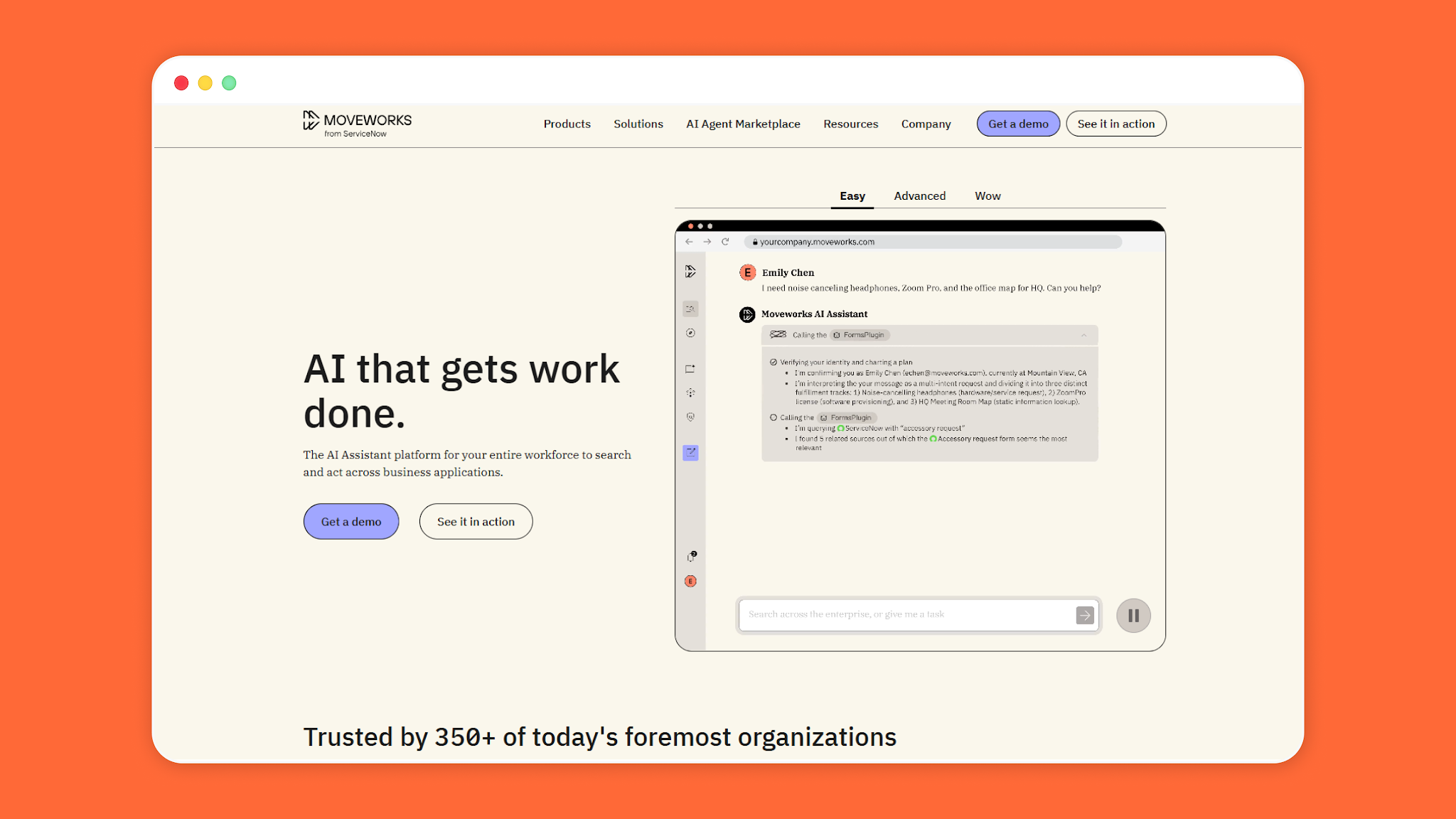
Moveworks takes a different approach, focusing almost entirely on internal employee support rather than on customer-facing interactions. If your support team is drowning in IT tickets, HR queries, and policy lookups, Moveworks' agentic AI can automatically resolve them in Slack or Microsoft Teams.
Key Features
- Deep integrations with ITSM platforms like ServiceNow and Jira
- Works natively inside Slack and Microsoft Teams for frictionless employee adoption
- Permission-aware AI that retrieves only what each employee is allowed to see
- Strong multilingual support for global workforces
10. Salesforce Einstein Bots
sourcelink
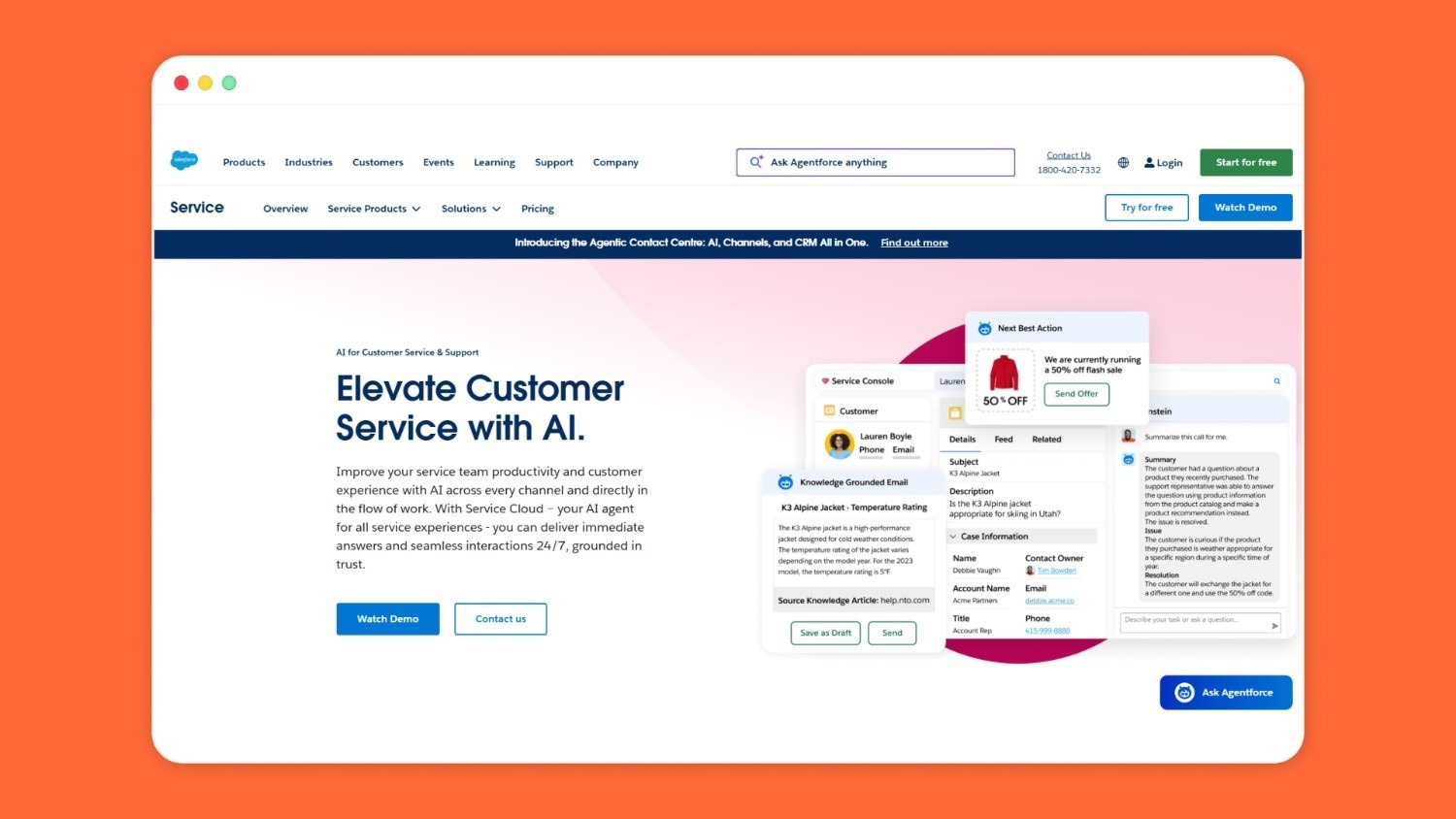
For organizations deep in the Salesforce stack, Service Cloud, Sales Cloud, Marketing Cloud, and Einstein Bots are the natural conversational AI choice. It connects AI automation directly to CRM data, customer records, and case management, enabling bots that not only chat but also update records, open cases, and trigger workflows in Salesforce in real time.
Key Features
- Native CRM integration, bots can read and write Salesforce data in real time
- Part of the broader Salesforce Customer 360 ecosystem for unified customer data
- Flow Builder for no-code bot creation tied to Salesforce workflows
- Strong customer journey personalization based on CRM history
Conclusion
Conversational AI has moved well past the chatbot era. In 2026, the best platforms don't just answer questions; they close sales, resolve tickets, qualify leads, and deliver personalized experiences at a scale no human team could match.
For Shopify merchants and e-commerce brands, the opportunity is clearest on WhatsApp, the world's most popular messaging app, and a channel where customers already expect to interact with brands they love.
Zoko's WhatsApp-first platform is built specifically to help you capture that opportunity, turning every conversation into a potential sale and every customer message into a chance to build loyalty. Book a 7-day free trial today!
FAQs
1. What companies use conversational AI?
Conversational AI is used by companies across industries such as e-commerce, banking, telecom, healthcare, and customer support. Businesses use it to automate chats, assist customers, and handle high volumes of inquiries efficiently.
2. Who is the leader in conversational AI?
Several companies lead the conversational AI space, including Google, Microsoft, OpenAI, and specialized platforms like Dialogflow, IBM Watson, and enterprise AI providers. The market continues to evolve as new platforms improve automation and language understanding.
3. How many companies will use AI in 2026?
AI adoption continues to expand rapidly across industries. Research from multiple technology reports suggests that a large majority of organizations are expected to integrate AI into at least one core business function by 2026.
4. What type of AI is conversational AI?
Conversational AI is a form of artificial intelligence that combines natural language processing, machine learning, and speech recognition. It enables machines to understand, interpret, and respond to human conversations through chat or voice.
5. What is the future of conversational AI?
Conversational AI is expected to become a central interface for digital services. Advances in generative AI, voice technology, and automation will allow businesses to manage more complex conversations and customer interactions with minimal human intervention.
Interested to know more?
.svg)
Case Studies
















Featured Posts


Continue reading

The E-Commerce Divide: How the Top 10% of Brands Use AI to Grow 5X Faster (And Why It’s Not for Everyone)
Drive Sales with WhatsApp Catalog Integration: Here's How