
Late payments can quickly disrupt cash flow for Shopify merchants, especially when customers reach the payment stage but do not complete the transaction. In a recent global survey, 79% of respondents said their organizations saw more than 1.5x higher return on ad spend from ads that click to WhatsApp compared with other digital ad types.
That highlights WhatsApp’s strength as a high-attention customer communication channel, which is one reason many merchants also use it for payment follow-ups.
The right payment reminder format on WhatsApp helps you follow up clearly, share a direct payment link, and keep the customer experience smooth.
This guide covers what a strong WhatsApp payment reminder should include, ready-to-use templates for different payment stages, and how to automate the process for your Shopify store.
A WhatsApp payment reminder is a message sent to a customer on WhatsApp to prompt them to complete a pending payment for an order, invoice, subscription, or installment.
For Shopify merchants, this is often part of a broader ecommerce workflow rather than a standalone reminder. It can support checkout recovery, COD confirmation before dispatch, failed payment follow-up, renewal collection, and order-linked payment completion. When done well, it helps speed up payment recovery, reduce support back-and-forth, and keep fulfillment moving without manual chasing.
A good WhatsApp payment reminder should be easy to scan, easy to understand, and easy to act on. In most cases, the best format includes six parts:
Example of a Basic format:
Hi [Name],
This is a reminder for [order/invoice] #[number] of [amount], due on [date].
Please complete your payment here: [link]
If you have already paid, please ignore this message.
Reply here if you need help.
— [Brand Name]
This format works because it gives the customer all the information they need in one short message.
The timing and tone of your payment reminder changes depending on where you are in the payment cycle. Here are ready-to-use templates for each stage.
Send this 3–5 days before the invoice or COD payment is due. The goal is to give the customer a heads-up, not to pressure them.
Hi [Name]
Just a quick heads-up — invoice #[Invoice Number] for [Amount] is due on [Date].
You can complete your payment here: [Payment Link]
Let us know if you have any questions. We're happy to help!
— [Your Brand Name]
Short, clear, and direct. The customer knows the payment is due — you're simply making sure they don't forget.
Hi [Name],
Invoice #[Invoice Number] for [Amount] is due today.
Please complete your payment here: [Payment Link]
Thank you!
— [Your Brand Name]
Send this 3–7 days after the due date. The tone stays polite and assumes the customer forgot — not that they're avoiding payment. Most late payments are simply a result of busy lives.
Hi [Name],
We noticed that invoice #[Invoice Number] for [Amount] is still pending as of [Due Date].
If you've already made the payment, please ignore this message.
If not, you can complete it here: [Payment Link]
If you need help, just reply here, and we'll sort it out.
— [Your Brand Name]
Reserve this for situations that are 14+ days overdue. Stay professional — do not threaten or shame the customer. State the facts and make the next steps clear.
Hi [Name],
This is a final reminder that invoice #[Invoice Number] for [Amount] has been
outstanding since [Due Date].
Please clear this balance by [Final Date] to avoid delays in order processing
Pay here: [Payment Link]
If you need to discuss a payment plan, please reply to this message.
— [Your Brand Name]
Generic templates are a starting point, but Shopify merchants often need WhatsApp reminders for different payment-related situations across the buying journey. Here are templates tailored to common e-commerce scenarios.
COD orders often need one last confirmation before shipment. A short WhatsApp message helps merchants confirm intent quickly and avoid dispatching orders that may not be accepted.
Hi [Name]
Your order #[Order Number] for [Amount] is ready to ship.
Since you selected Cash on Delivery, please confirm your order so we can dispatch it today.
Reply YES to confirm, or visit: [Order Link]
— [Your Brand Name]
When a customer reaches checkout but does not complete payment, a timely WhatsApp reminder can bring them back before the sale is lost.
Hi [Name],
Looks like you left [Product Name] in your cart.
Complete your purchase here: [Checkout Link]
If you have any questions, just reply to this message.
— [Your Brand Name]
For subscription-based products, a reminder before renewal helps customers complete payment on time or update their payment method without disruption.
Hi [Name],
Your [Subscription Plan Name] subscription renews on [Renewal Date] for [Amount].
Please complete your payment or update your payment method here: [Account Link]
If you need help, just reply to this message.
Thank you,
— [Your Brand Name]
If you offer installment payments, a clear reminder helps customers stay on schedule and reduces manual follow-up for your team.
Hi [Name],
This is a reminder that installment [#X of Y] for order #[Order Number] is due on [Date]. Amount: [Amount].
Pay here: [Payment Link]
If you have any questions, just reply here.
— [Your Brand Name]
The timing of a WhatsApp payment reminder matters as much as the message itself. Send it too early, and the customer may ignore it. Send it too late, and you risk delays in payment recovery, order processing, or dispatch.
A clear reminder schedule helps Shopify merchants follow up consistently, adjust tone by stage, and avoid sending too many messages.
For most Shopify merchants, three to four touchpoints in this sequence are enough to recover the majority of outstanding payments. Sending more than that without a response indicates a deeper issue, at which point a direct conversation is more productive than another automated message.
Also Read: Marketing Automation in E-commerce Stats for 2026: Key Insights and Trends
As order volume grows, manual follow-ups become harder to manage across pending payments, COD confirmations, and abandoned checkouts. A simple automation flow helps you send the right reminder at the right time without making the message feel generic.
Start by identifying the point where a reminder is needed. This could be an unpaid order, a COD order waiting for confirmation, an abandoned checkout, a renewal date, or an overdue installment.
Each stage needs a different message. A pre-due reminder should sound light and helpful, while an overdue reminder should be firmer and more direct.
Decide when each reminder should go out, such as on the due date, three days later, or before dispatch. This helps you follow up consistently without sending too many messages.
The reminder should include details like the customer’s name, order number, amount due, due date, and payment link. This keeps the message clear and saves the customer from searching for context.
Every reminder should lead to one action, such as paying now, confirming the order, updating payment details, or replying for help. The easier the next step feels, the more likely the customer is to respond.
Once the trigger, message, timing, and payment link are in place, the workflow can run automatically. For Shopify merchants, Zoko supports this through WhatsApp workflows that use real order and payment data to send reminders for COD confirmation, abandoned checkout recovery, and staged payment follow-ups.
Even the right template can underperform if the message is unclear or hard to act on. These practical habits help Shopify merchants make payment reminders easier to read, more trustworthy, and easier to complete.
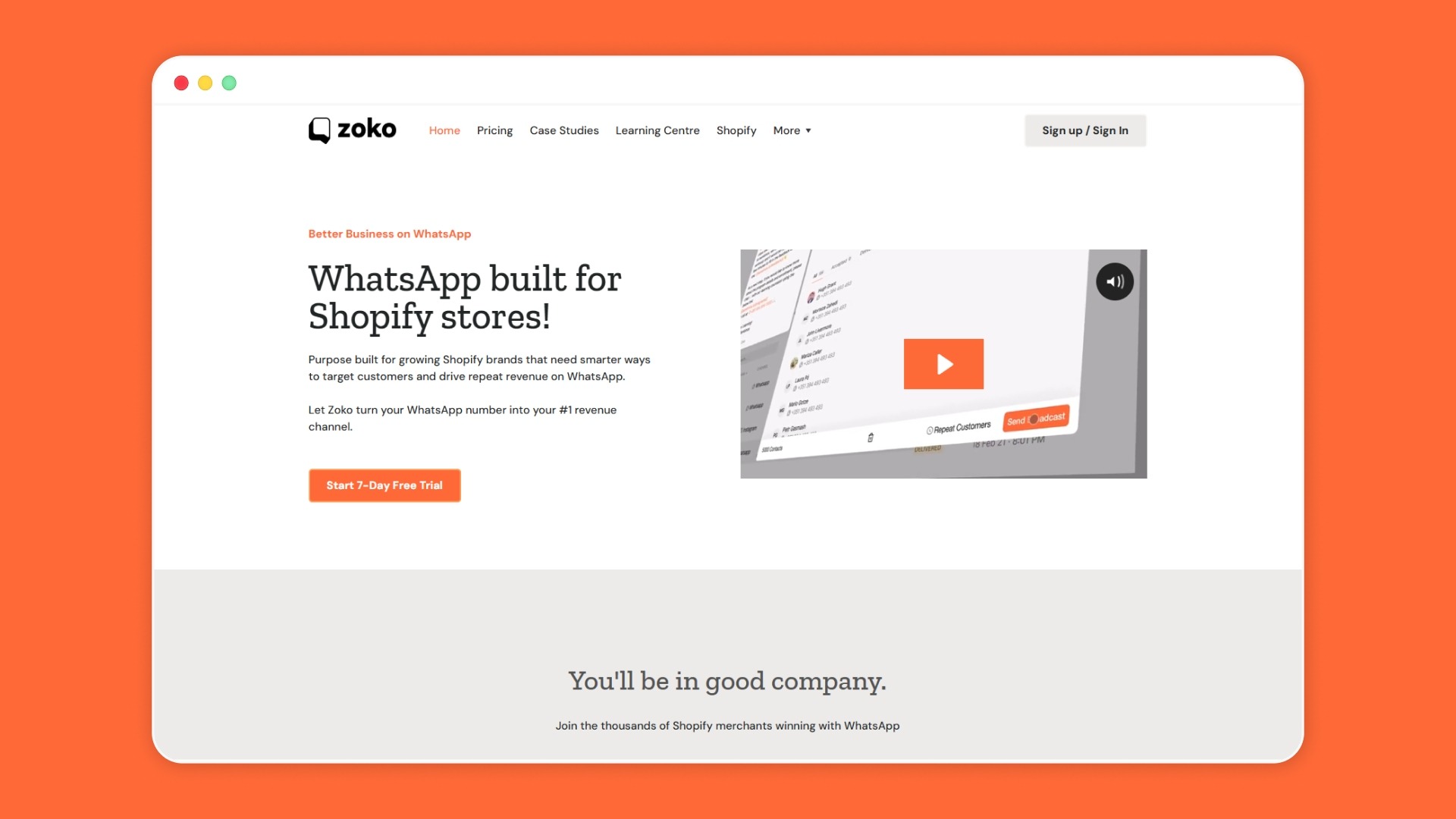
Zoko is an official Meta Business Partner built for Shopify merchants that want to run sales, support, and follow-up workflows on WhatsApp. It connects Shopify store data with WhatsApp messaging and automation, which makes it easier to manage customer communication around checkout recovery, COD confirmation, and other payment-related journeys in one place.
For Shopify merchants looking to reduce manual follow-up and bring more consistency to payment-related workflows, Zoko offers a practical way to connect WhatsApp reminders with real order and payment events. Talk to our Team Today!
A well-timed WhatsApp payment reminder with the right format, clear payment details, and a direct action link can help Shopify merchants reduce payment delays and recover more revenue across the buying journey.
The templates and timing strategies in this guide give you a practical starting point for handling reminders across due dates, overdue payments, COD confirmations, and checkout recovery.
As the reminder volume grows, consistency becomes harder to manage manually. Zoko helps Shopify merchants handle that shift by connecting Shopify data with WhatsApp workflows built for ecommerce use cases such as COD confirmation, abandoned checkout recovery, and automated follow-ups.
If you want to move from one-off reminders to a more reliable payment recovery process, sign up for Zoko or book a demo to see how it works for your store.
1. How do I write a payment reminder?
Start with the customer’s name, mention the order or invoice, state the amount due and due date, and add one clear payment link. Keep the message short, polite, and easy to act on.
2. What's the best time to send payment reminders on WhatsApp?
A good starting point is 3 to 5 days before the due date, again on the due date, and then a follow-up a few days later if payment is still pending. The right timing depends on your order cycle, payment terms, and how quickly fulfillment is affected.
3. What is the best payment reminder message?
The best message is clear, brief, and specific to the payment stage. It should tell the customer what the payment is for, how much is due, when it is due, and what they need to do next.
4. How to ask for payment politely on WhatsApp?
Use calm, respectful wording and focus on the payment details instead of sounding demanding. A simple line like “Just a reminder that invoice #[number] for [amount] is due on [date]” works better than aggressive phrasing.
5. How to write a formal reminder message?
A formal reminder should sound professional, not stiff. Include the customer’s name, payment reference, amount, due date, and payment link, then close with a polite line offering help if needed.
6. Can I automate WhatsApp payment reminders in India?
Yes, businesses in India can automate WhatsApp payment reminders using tools connected to the WhatsApp Business API. This is useful for Shopify merchants managing COD confirmations, pending payments, and follow-up workflows at scale.
7. Is WhatsApp okay for payment reminders?
Yes, WhatsApp can work well for payment reminders because it is fast, direct, and easy for customers to respond to. It is especially useful when you want to share payment details and a clear next step in the same message.



.svg)


