





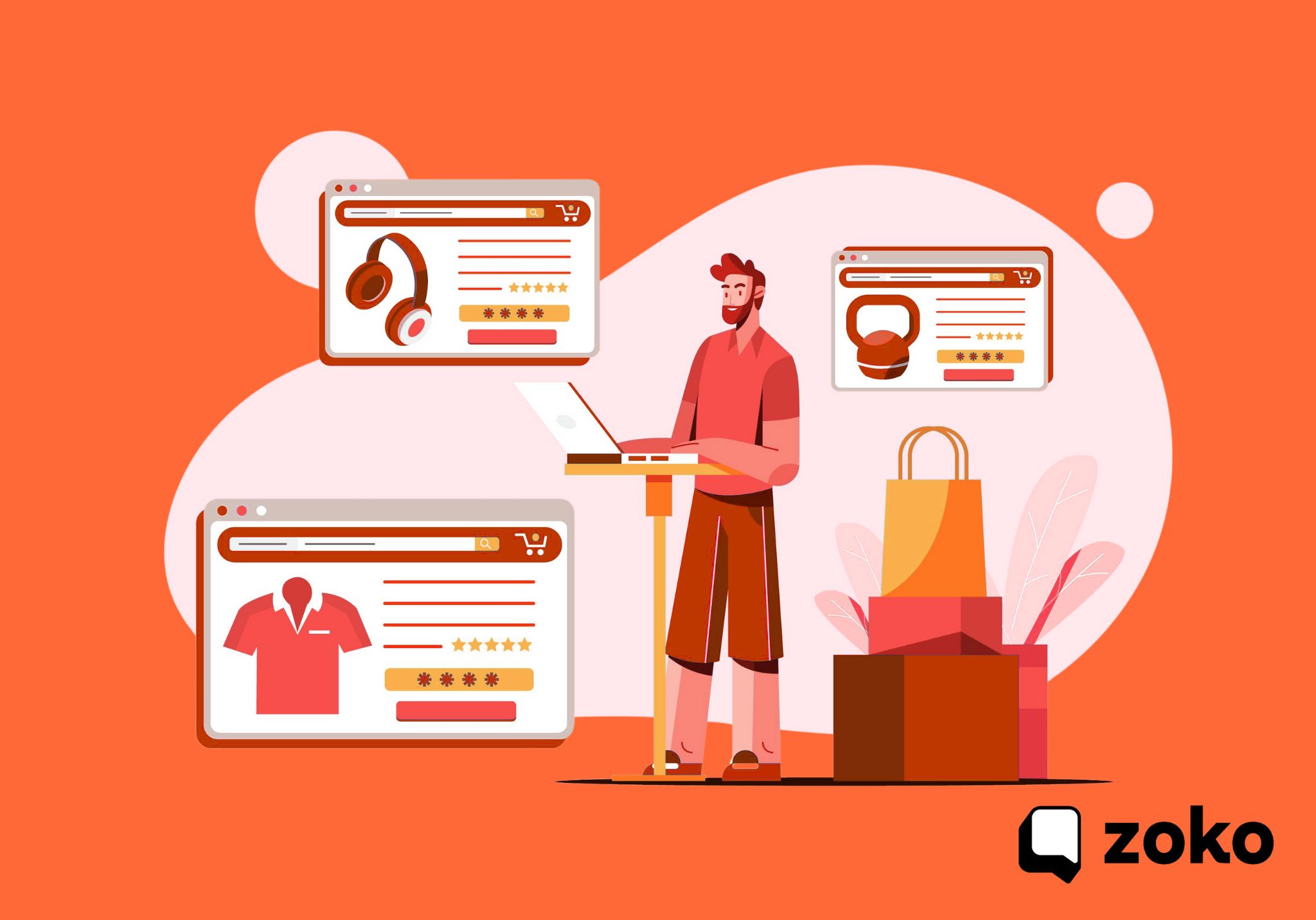


Relying solely on Google Shopping to drive your e-commerce sales? You're not alone, but it's time to rethink that strategy. In 2024, 90% of Shopify merchants connected their stores to two or more sales channels, aiming to diversify and reach customers across various platforms. As advertising costs continue to rise, many are turning to more affordable alternatives.
In this blog, we’ll explore the Google Shopping alternatives that offer Shopify merchants better value, higher engagement, and more cost-effective solutions for growing their online sales.
Key Takeaways
- Cost-Effective Solutions: Many alternatives, such as Pinterest Shopping and Facebook Marketplace, offer lower cost-per-click (CPC) models or even free listings, helping reduce advertising costs.
- Targeted Engagement: Platforms like Shopify's WhatsApp integration use AI and dynamic retargeting to drive higher conversions and improve customer engagement.
- Less Competition and Niche Markets: Alternatives like Etsy and ShopZilla cater to specific markets, offering less competition and more opportunities to stand out.
- Broader Reach and Customer Loyalty: Exploring alternatives allows merchants to expand globally, improve branding, and build customer loyalty through personalized shopping experiences.
11 Leading Google Shopping Alternatives in 2025: Drive More Conversions
Google Shopping is a powerful tool, but relying solely on one platform can limit your store’s potential. Explore alternatives to optimize your ad spend and enhance customer engagement.
1. Amazon Marketplace
Amazon Marketplace is one of the most popular e-commerce platforms globally, with Amazon hitting nearly $638 billion in net sales revenue worldwide in 2024. Sellers can leverage Amazon’s tools, such as Amazon Seller Central, FBA (Fulfillment by Amazon), and its advertising solutions to drive sales.
Key Features
- Amazon Seller Central: A dashboard that helps e-commerce merchants manage inventory, track orders, and engage with customers.
- Fulfillment by Amazon (FBA): Allows merchants to store inventory in Amazon’s fulfillment centers, where Amazon handles the packaging, shipping, and customer service.
- Global Reach: Amazon operates marketplaces in over 20 countries (like India, Germany, Brazil, and Canada), giving merchants access to a global customer base.
- Advertising Solutions: Amazon offers several advertising tools, including Sponsored Products and Sponsored Brands, allowing merchants to increase their product visibility.
Who is it best for?
Amazon Marketplace is best for e-commerce merchants who want to maximize their e-commerce sales and expand their reach globally. It's beneficial for merchants seeking high visibility and access to a large, international consumer base.
Limitations
- High Fees: Referral fees range from 6% to 45%, depending on the product category, which can impact margins.
- Intense Competition: With millions of sellers, standing out on Amazon can be challenging, especially for new or smaller merchants.
- Limited Customization: While Amazon offers vast traffic, merchants have limited control over branding.
2. eBay Marketplace
eBay stands as one of the world's largest online marketplaces, facilitating over 1.7 billion listings worldwide as of Q2 2025. In the same quarter, eBay reported a Gross Merchandise Volume (GMV) of $19.5 billion, with $2.7 billion in revenue.
Key Features
- Global Reach: eBay operates in over 190 markets, providing sellers access to a diverse international audience.
- Auction and Fixed-Price Listings: Merchants can choose between auction-style or fixed-price listings, offering flexibility in sales strategies.
- Promoted Listings: eBay offers advertising solutions to enhance product visibility and drive sales.
- Seller Protections: eBay provides various tools and policies to protect sellers from fraud and disputes.
Who is it best for?
e-commerce merchants looking to tap into a global market with diverse sales formats, including auctions and fixed-price listings.
Limitations
- Intense Competition: The platform hosts millions of sellers, making it challenging for new entrants to stand out.
- Limited Branding Opportunities: eBay's standardized listing templates offer limited customization, restricting brand expression.
- Integration Challenges: Integrating eBay with other e-commerce tools and platforms can be complex and may require additional resources.
3. Shopify
Shopify is a leading global e-commerce platform that allows entrepreneurs and businesses to set up, operate, and scale their online stores. As of Q4 2024, Shopify reported a 31% year-over-year revenue growth, highlighting its strong financial performance. The platform supports millions of merchants across 175+ countries.
Key Features
- Customizable Online Storefronts: Access to a wide range of themes and customization options to create a unique brand experience.
- Multi-Channel Selling: Sell across various platforms, including Facebook, Instagram, Amazon, and eBay, directly from the Shopify dashboard.
- Advanced Analytics and Reporting: Gain insights into sales trends, customer behavior, and marketing performance to make data-driven decisions.
Who is it best for?
E-commerce merchants are looking for a scalable and customizable platform to build and grow their online stores. It's beneficial for businesses aiming to expand across multiple sales channels.
Limitations
- Monthly Subscription Fees: Shopify's plans start at ₹20/month, which may be a consideration for startups or small businesses with limited budgets.
- Transaction Fees: Additional transaction fees apply when using third-party payment gateways, which can add to overall costs.
Integration with Zoko
While Shopify provides an excellent platform for building and growing your e-commerce store, integrating Zoko takes your business to the next level with sales and customer interactions via WhatsApp into your ecommerce store.
Book a free demo today to see how Zoko integrates with Shopify, allowing you to manage orders, offer customer support, and process payments, all within WhatsApp.
4. Etsy Marketplace
Etsy is a global online marketplace specializing in handmade, vintage, and unique factory-manufactured items. As of Q1 2025, Etsy reported 88.5 million active buyers, a 3.4% decrease year-over-year, and 6.5 million reactivated buyers, up 2.1% from the prior year period.
Key Features
- Global Reach: Etsy operates in over 190 countries, providing sellers access to a diverse international audience.
- Customizable Online Storefronts: Sellers can personalize their shops with banners, logos, and custom URLs to create a unique brand identity.
- Integrated Payment Solutions: Etsy Payments allows sellers to accept various forms of payment, including credit/debit cards, PayPal, and Etsy gift cards.
- Advertising Tools: Etsy offers advertising solutions like Etsy Ads and Offsite Ads to enhance product visibility and drive sales.
Who is it best for?
E-commerce merchants specializing in handmade, vintage, or unique items who wish to reach a global audience seeking distinctive products.
Limitations
- Branding Limitations: Selling on Etsy may lead to customers associating their purchases with Etsy rather than the seller’s brand.
- Crowded Marketplace: Etsy hosts millions of sellers, and standing out can be challenging for new merchants.
- Limited Customization: While Etsy offers some customization options, sellers may find the platform's design templates limiting compared to standalone e-commerce store websites.
5. Facebook Marketplace
Facebook Marketplace is a peer-to-peer platform integrated within Facebook, enabling users to buy and sell items locally or nationally. As of 2025, it boasts over 1.1 billion monthly active users worldwide. The platform is accessible in 228 countries and territories.
Key Features
- No Listing Fees: Sellers can list items for free, making it accessible for small businesses and individual sellers.
- Integrated Communication: Direct messaging through Facebook Messenger allows for seamless communication between buyers and sellers.
- Local and National Reach: Sellers can choose to sell locally or opt for shipping to reach a broader audience.
- Wide Product Categories: Categories include electronics, furniture, clothing, vehicles, and more, catering to diverse consumer needs.
Who is it best for?
E-commerce merchants seeking to tap into a vast user base without incurring listing fees. It's beneficial for businesses offering products in categories like electronics, furniture, and fashion.
Limitations
- Branding Limitations: Selling on Facebook Marketplace may lead to customers associating their purchases with Facebook rather than the seller’s brand.
- Limited Analytics: The platform offers basic insights, lacking advanced analytics tools for performance tracking.
- Shipping Challenges: Managing shipping logistics can be complex, especially for sellers opting to ship items nationally.
6. Alibaba.com
Alibaba.com is a leading global B2B e-commerce platform that connects businesses with suppliers and manufacturers worldwide. In the quarter ended March 2025, Alibaba.com reported a 36% year-over-year growth (US$4,495 million) in its international digital commerce segment, highlighting its expanding reach and influence in 190+ countries.
Key Features
- Trade Assurance: A free service that protects orders and ensures suppliers meet agreed-upon terms.
- Customizable Storefronts: Create a personalized storefront to showcase products and build brand identity.
- Integrated Payment Solutions: Secure payment options, including credit cards, bank transfers, and online payment platforms like Razorpay.
Also Read: How to Integrate your Razorpay Account to Zoko
Who is it best for?
E-commerce merchants seeking to source products in bulk at competitive prices, particularly those looking to establish or expand their wholesale operations.
Limitations
- Minimum Order Quantities (MOQs): Many suppliers require large minimum order quantities, which may not be feasible for small businesses or startups.
- Shipping Costs and Logistics: International shipping can be costly and complex, involving customs clearance and potential delays.
- Quality Assurance: Ensuring product quality can be challenging, as buyers rely on supplier information and third-party inspections.
- Payment Risks: Despite Trade Assurance, there are inherent risks in international transactions, including fraud and currency fluctuations.
7. Bing Shopping
Bing Shopping is an integral part of Microsoft's Bing search engine, allowing e-commerce merchants to showcase their products directly in search results. 54% of consumers use search engines for online product research. Bing Shopping offers e-commerce merchants a chance to tap into this valuable search traffic.
Key Features
- Product Ads: Display product images, prices, and store names directly in search results, enhancing visibility.
- Merchant Promotions: Highlight special offers or discounts within product ads to attract more clicks.
- AI-Powered Targeting: Utilize Microsoft's AI capabilities and advanced marketing attribution to reach relevant audiences based on their search behavior.
- Cross-Platform Reach: Ads appear across Microsoft's network, including Bing, MSN, Outlook, and Microsoft Edge.
Who is it best for?
E-commerce merchants aiming to diversify their advertising strategies and reach users within Microsoft's ecosystem, particularly those targeting North American audiences.
Limitations
- Complex Setup: Setting up Bing Shopping campaigns requires creating a Microsoft Merchant Center store and submitting a product feed, which can be more complex than other platforms.
- Conversion Tracking Discrepancies: Without proper implementation of Consent Mode, there may be discrepancies between tracked conversions in Microsoft Advertising and actual sales data.
8. ShopMania
ShopMania is a global price comparison platform operating in 25 countries, including India, Brazil, and several European regions. It attracts over 5 million unique visitors monthly, providing e-commerce merchants with an opportunity to showcase their products to a broad audience.
Key Features
- CPC Advertising Model: Merchants pay only for clicks, offering cost-effective advertising.
- Product Feed Integration: Supports CSV, XML, and TXT formats for product data feeds.
- Facebook/Instagram Integration: Allows merchants to extend their reach by selling directly on Facebook.
- Performance Analytics: Provides tools to monitor and optimize campaign performance.
Who is it best for?
E-commerce merchants seeking to expand their online presence through a cost-effective advertising platform with global reach.
Limitations
- Integration Complexity: Setting up and maintaining product feeds may require technical expertise or third-party tools.
- Limited Customer Engagement: Selling through ShopMania may lead to customers associating their purchases with ShopMania rather than the seller’s brand, reducing customer loyalty and repeat business.
9. BigCommerce
BigCommerce is a highly scalable e-commerce sales platform to help businesses of all sizes create, manage, and grow their online stores. It supports over 60,000 merchants globally, offering tools for product management, multi-channel selling, and customer engagement.
Key Features
- Multi-Channel Selling: Integrate with platforms like Amazon, eBay, Facebook, and Instagram to expand your reach.
- SEO & Marketing Tools: Built-in SEO features, email marketing integrations, and promotional tools to drive traffic and conversions.
- API-First Architecture: Strong APIs allowing for seamless integrations with third-party applications and services.
Also Read: How to Leverage WhatsApp B2B for Marketing Success
Who is it best for?
E-commerce merchants seeking a scalable platform with advanced features, especially those in the B2B sector or those looking to expand across multiple sales channels.
Limitations
- Pricing Structure: BigCommerce's pricing plans are based on annual sales volume, which can lead to higher costs as your business grows.
- Design Flexibility: While customizable, the design options may be more limited compared to other platforms like Shopify.
- App Ecosystem: Some users report that the app marketplace isn't as extensive as competitors, potentially limiting third-party integrations.
10. Criteo Commerce Growth
Criteo Commerce Growth is a performance-driven advertising platform to acquire new customers and retain existing ones through automated campaigns. Utilizing Criteo's extensive shopper graph and AI-powered optimization in the e-commerce sales funnel enables advertisers to deliver personalized product recommendations and cross-channel campaigns across social platforms like Meta (Facebook and Instagram).
Key Features
- Automated Acquisition & Retention: Utilizes AI to optimize campaigns for both new customer acquisition and existing customer retention.
- Dynamic Retargeting: Delivers personalized product ads to users based on their browsing behavior and purchase intent.
- Predictive Bidding: Employs predictive algorithms to adjust bids in real-time, aiming to achieve desired outcomes while optimizing ad spend.
Also Read: Top 9 Alternatives for Dynamic Retargeting Ads
Who is it best for?
E-commerce merchants seeking an advertising solution that combines customer acquisition and retention strategies, with the flexibility to manage campaigns across channels and platforms.
Limitations
- Complexity for Small Businesses: The platform's advanced features and customization options may require a learning curve, posing challenges for small businesses with limited resources.
- Dependence on First-Party Data: Effectiveness is heavily reliant on the quality and volume of first-party data.
11. Pinterest Shopping
Pinterest Shopping is an integrated feature within Pinterest that allows e-commerce merchants to showcase their products directly to users in a visually appealing and engaging manner. With over 578 million monthly active users globally, Pinterest serves as a powerful platform for product discovery and inspiration.
Key Features:
- Product Pins: These are shoppable Pins that display real-time pricing, availability, and product details, allowing users to make informed purchasing decisions.
- Catalogs Integration: Merchants can upload their product catalogs to Pinterest, enabling bulk creation of product Pins and streamlined inventory management.
- Shopping Ads: Promote product Pins through paid advertisements to reach a broader audience and drive targeted traffic to your website.
- Verified Merchant Program: Earn a blue checkmark badge on your profile by meeting Pinterest's merchant guidelines, which can enhance trust and credibility with potential customers.
Also Read: Shopify Catalog Syncing and Data Analytics
Who is it best for?
E-commerce merchants aiming to use visual discovery to promote their products, especially those in fashion, home décor, beauty, and lifestyle categories.
Limitations
- Limited Checkout Options: Pinterest does not offer native checkout; users are redirected to external sites to complete purchases, which may lead to potential drop-offs in the conversion process.
- Dependency on High-Quality Visual Content: Success on Pinterest heavily relies on the quality of images and videos; poor visuals can result in lower engagement and sales.
- Ad Spend Management: While setting your own budget is possible, managing ad spend effectively requires continuous monitoring and optimization to ensure cost-efficiency.
Boost Your Store’s Online Growth with Zoko: Tap into the Power of WhatsApp for Seamless Sales
Zoko enables e-commerce merchants, especially those using Shopify, to enhance their store’s performance by integrating WhatsApp into their sales and customer service processes. With Zoko, you can streamline customer interactions, recover abandoned carts, and drive higher conversions, all directly through WhatsApp.
Key Features:
- AI-Powered Chatbots: Automate customer interactions, provide personalized product recommendations, and handle inquiries 24/7, ensuring your customers receive instant support.
- Multi-Agent Support: Enable your team to manage multiple customer conversations simultaneously, enhancing support efficiency and improving customer satisfaction.
- Seamless Shopify Integration: Sync your Shopify store with WhatsApp, allowing customers to browse, add items to their cart, and make purchases directly through chat.
- Advanced Analytics: Monitor and optimize your WhatsApp-driven sales with real-time performance data, empowering you to make informed, data-driven decisions.
If you're looking to optimize your sales and customer experience further, Zoko allows seamless integration. Sign up for Zoko to start selling through WhatsApp and unlock more growth opportunities.
FAQs
1. What is the biggest competitor to Google?
The biggest competitor to Google is Bing, driven by Microsoft’s investments and its integration with AI tools like ChatGPT.
2. Which resale app is best?
The best resale app varies by market, but platforms like eBay, Poshmark, and Depop are top choices for reselling products.
3. Which app is the number one choice for shopping in India?
Amazon is the number one shopping app in India, followed closely by Flipkart, both of which offer extensive product ranges and convenient delivery options.
4. What is the most trusted shopping app?
Amazon and Flipkart are the most trusted shopping apps in India, known for secure payment methods and reliable customer service.
Interested to know more?

Case Studies

















Featured Posts


Continue reading

The E-Commerce Divide: How the Top 10% of Brands Use AI to Grow 5X Faster (And Why It’s Not for Everyone)
Drive Sales with WhatsApp Catalog Integration: Here's How