



Baymard Institute’s 2025 data show that the average e-commerce cart abandonment rate is 70.19%, meaning most buying journeys still end before checkout. For Shopify merchants, that creates a constant pressure to re-engage shoppers quickly without overwhelming them with irrelevant messages or manual follow-ups.
The challenge is not just reaching more customers. It is doing it in a way that supports sales, keeps communication organized, and fits how people already interact with brands on WhatsApp.
This guide explains how to send multiple messages on WhatsApp in a way that fits real e-commerce workflows. You will learn the difference between using the WhatsApp Business App and the WhatsApp Business API, when each option makes sense, what rules you need to follow, and which use cases matter most for Shopify stores.
Sending multiple messages on WhatsApp means reaching several contacts with the same or personalized messages in one action. It is different from a group chat, where participants can see each other, and replies are visible to everyone.
With multi-recipient messaging, each customer receives the message in a private chat, which makes the interaction feel direct and one-to-one.
There are two main ways this happens. The first is broadcast messaging, where you send a single message to a selected contact list at once. The second is automated messaging, in which a connected system sends messages based on customer actions, such as a purchase, an abandoned cart, a failed delivery attempt, or a reorder cycle. Both help you send multiple messages on WhatsApp, but they solve different business needs.
If you want to send multiple messages on WhatsApp, there are two official ways to do it. One is better for simple, manual communication. The other is built for businesses that need more scale, automation, and control over customer messaging.
The WhatsApp Business App is Meta’s free option for smaller businesses that want a basic way to message multiple contacts.
The WhatsApp Business API is built for businesses that need to send messages at scale and connect WhatsApp to real workflows.
The right option depends on how often you message customers, how much automation you need, and whether WhatsApp is only a communication channel or part of your sales and operations workflow.
Once you understand the two options, the next step is choosing the one that fits your store today. The WhatsApp Business App works for lower-volume communication. The API makes more sense when WhatsApp becomes part of your sales and post-purchase workflow.
If your store needs more than manual broadcasts, the WhatsApp Business API is the route built for scale. Here is what the setup and sending process usually looks like.
Start with a provider that offers official API access and supports Shopify workflows. This makes it easier to connect customer data, campaigns, and post-purchase messaging in one system.
Your business number is registered through the provider and connected to your WhatsApp Business account. This step is required before you can start sending messages through the API.
For outbound messaging, WhatsApp requires approved templates. These templates can include variables such as customer names, order details, product links, and other personalized fields.
Before sending messages at scale, you need clear customer consent. Opt-ins can come from checkout, website forms, chat widgets, click-to-WhatsApp ads, or other approved collection points.
Once templates are approved and your audience is ready, you can send campaigns and set up automated flows. This is where the API becomes useful for abandoned-cart reminders, order updates, COD confirmations, and repeat-purchase messaging.
Use your provider dashboard to monitor delivery, replies, clicks, and campaign response. This helps you improve message timing, targeting, and conversion performance over time.
If you want to send multiple messages on WhatsApp at scale, compliance is part of the setup. These rules help protect account quality, message deliverability, and your ability to keep using WhatsApp as a sales and customer communication channel.
The most effective WhatsApp messaging programs are built around specific customer moments. For Shopify stores, the real value comes from using WhatsApp, where speed, relevance, and timing can improve conversions, reduce friction, or support repeat purchases.
These use cases become much more valuable when tied to store actions rather than sent manually. Abandoned cart recovery is a strong example. Zoko highlights WhatsApp recovery flows that helped brands like Flexnest recover 1 in 3 abandoned carts, which shows what happens when follow-ups move from one-off messages to automated Shopify-linked workflows.
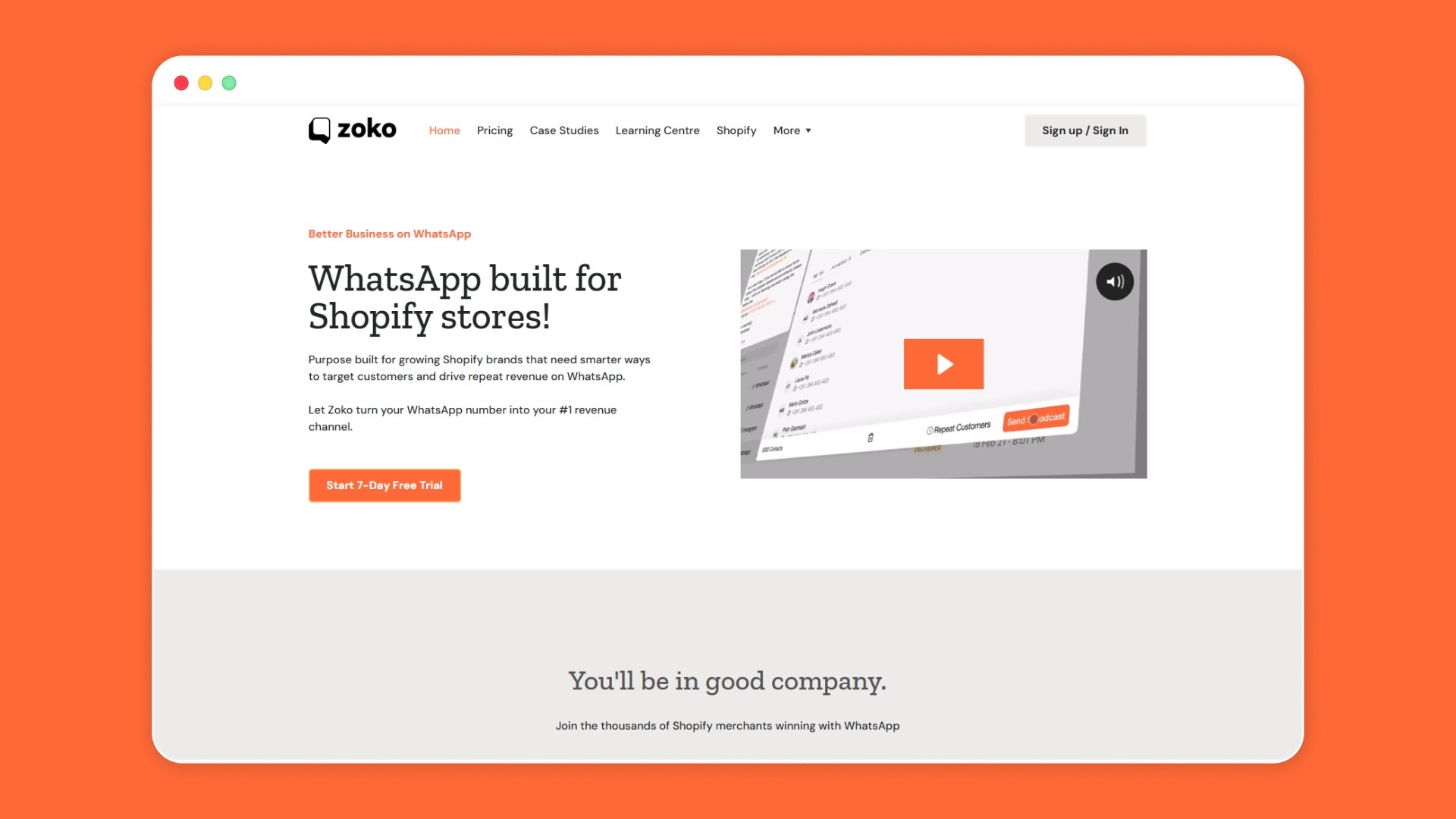
For Shopify merchants, sending multiple WhatsApp messages becomes incredibly efficient when integrated with store data, such as order updates, abandoned carts, and customer interactions. Zoko’s deep integration with Shopify ensures you can manage these processes seamlessly, boosting customer engagement and driving conversions.
As an official Meta Business Partner, Zoko gives Shopify merchants the infrastructure to send multiple WhatsApp messages at scale, with direct Shopify integration.
By using Zoko’s robust features such as automated abandoned cart recovery, shipping updates, and customer support, you can seamlessly send multiple messages that drive engagement and sales conversions.
Use the WhatsApp Business App if your store only needs simple, manual messaging for a smaller contact list. Move to the WhatsApp Business API when messaging becomes part of your sales, support, and post-purchase workflow, especially if you need automation, team access, and Shopify-linked campaigns.
For Shopify stores, the right setup should do more than send messages. It should connect with your customer data, product catalog, and order events. Zoko, an official Meta Business Partner, helps you do that in one place. Start your 7-day free trial to see how WhatsApp messaging can scale with your store.
1. How can I send 1000 messages at once on WhatsApp?
You cannot do that with the standard WhatsApp Business App, because broadcast lists are limited to 256 contacts per list, and recipients must have your number saved. For larger-scale sending, businesses usually use the WhatsApp Business API through an official provider.
2. How to send a message 100 times in WhatsApp?
If you only need to reach a smaller group, you can use a broadcast list in the WhatsApp Business App. If the same message needs to go out repeatedly across campaigns or customer journeys, the API is the better option because it supports templates, automation, and more structured sending.
3. How to do bulk SMS on WhatsApp?
WhatsApp does not use SMS. Businesses send bulk WhatsApp messages either through broadcast lists in the Business App or through the WhatsApp Business API for larger and more automated campaigns.
4. How to increase WhatsApp sending limit?
On the WhatsApp Business Platform, messaging limits increase based on factors like your quality rating and recent messaging activity to unique users. Better message relevance, stronger opt-in practices, and low complaint rates help you scale more safely.
5. Is bulk WhatsApp legal?
Bulk WhatsApp messaging can be lawful and compliant when you send it to opted-in contacts and follow WhatsApp’s business messaging rules. The safer route is to use official tools and approved templates where required.
6. What is the 24-hour rule on WhatsApp?
When a customer messages your business, it opens a 24-hour customer service window. During that window, you can send non-template messages, but after it closes, outbound communication must use an approved template.
7. Is WhatsApp Business API free?
No, the WhatsApp Business API is not fully free. Meta applies pricing on the WhatsApp Business Platform, and your total cost can also depend on the provider you use to access and manage the API.



.svg)


