



As businesses scale their digital operations, staying connected with customers in real time has become a top priority. Yet many companies still rely on outdated messaging channels like email and static notifications that fail to capture timely attention.
With over 5 million businesses already using the WhatsApp Business API for engagement and automated workflows, and messages reaching open rates as high as 98 %, traditional channels simply can’t match WhatsApp’s impact on customer communication and conversion. But as customer expectations evolve and e‑commerce competition intensifies, current API capabilities will soon be stretched thin unless future enhancements arrive.
The good news is that WhatsApp’s roadmap for 2026 includes major improvements such as smarter commerce tools, localized payments, automation, and deeper CRM integrations, all to help businesses automate, personalize, and scale customer interactions more effectively than ever before.
In 2026, the WhatsApp Business API will introduce key improvements that will change how businesses use the platform. These updates will focus on scalability, automation, and CRM integrations.
As WhatsApp continues evolving into a full‑fledged commerce platform, one of the most significant upgrades expected by 2026 is the rollout of local billing and payment enhancements for business users.
Instead of relying on foreign currency payments or cross‑border settlement systems, WhatsApp is introducing localized billing options in key markets, making it easier for businesses to accept payments and manage transactions directly through the platform.
Also Read: How to Set Up WhatsApp API Payment in Your Meta Business Manager
In 2026, conversational commerce will become the default way customers shop and interact with brands. At its core, conversational commerce means helping customers complete real‑time shopping journeys through dialogue, not siloed interfaces or static product pages.
WhatsApp, with its globally ubiquitous user base, is uniquely positioned to turn everyday messaging into a seamless commerce engine. In 2025, global spend via conversational commerce channels hit around $290 billion, reflecting how prevalent this model has become across retail and services.
Also Read: Top Conversational AI Chatbots for 2025
The WhatsApp Business Platform API is moving towards a cloud-first model to make it easier for businesses to use. The Cloud API allows businesses to send messages, create custom experiences, and scale communications without managing their own infrastructure.
This shift eliminates technical barriers and makes it simpler for businesses, especially e-commerce merchants, to adopt WhatsApp for sales, customer support, and marketing. With the on-premises API being phased out, the Cloud API is now the standard way for businesses to connect directly to WhatsApp.
WhatsApp’s 2026 policy changes around artificial intelligence will reshape how automation works on the Business API. Starting January 15, 2026, WhatsApp will no longer allow general‑purpose AI chatbots, those that can carry open‑ended conversations like ChatGPT or Perplexity, on its Business API.
WhatsApp’s goal is to ensure the platform stays focused on business messaging and transactional use cases rather than serving as a hub for broad conversational AI.
Zoko’s AI-powered automation can streamline everything from order updates to customer support, all while remaining fully compliant with WhatsApp’s guidelines.
As businesses grow, handling customer conversations from a single phone or isolated accounts becomes inefficient. To address this, shared inboxes and tighter CRM integration are becoming important features for the WhatsApp API.
These improvements open up significant opportunities, but taking advantage of them requires a platform designed specifically for e-commerce needs.
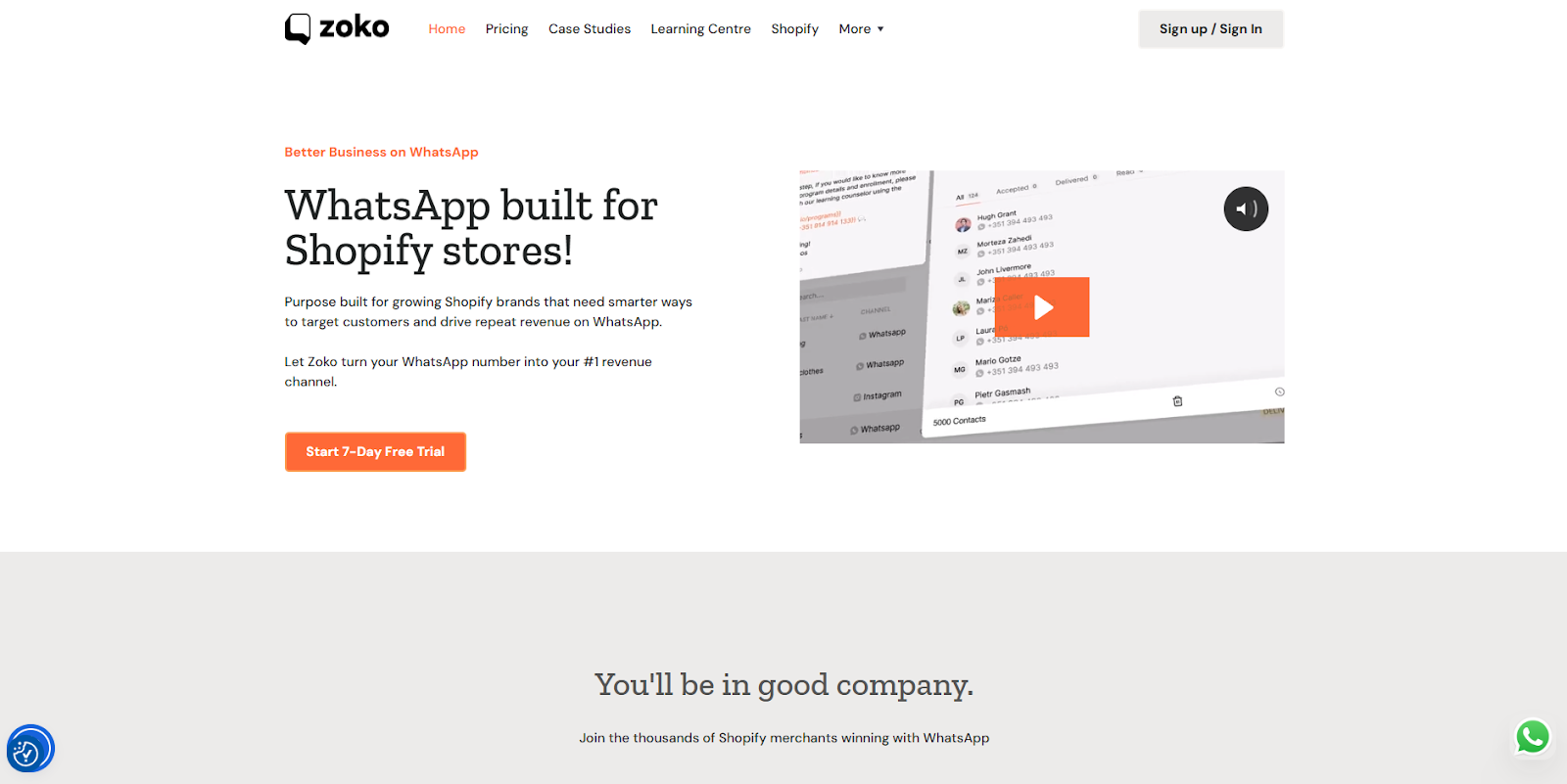
As WhatsApp’s API develops in 2026, having a platform that keeps pace with changes and helps you put these capabilities to work matters. Zoko is built specifically for Shopify merchants who want to use WhatsApp as a sales and engagement channel rather than just a messaging tool.
Zoko’s pricing and fair‑use model is transparent, and the platform includes a range of pre‑built automation flows that don’t incur extra costs for essential e‑commerce tasks.
Importantly, Zoko stays aligned with WhatsApp’s policy and compliance requirements as they evolve, including template messaging and API usage rules, so you can adopt new capabilities without guesswork.
Sign up for a 7-day free trial to explore Zoko.io's features in more detail.
WhatsApp API has limitations like no support for personal accounts, the inability to send unsolicited promotional messages, and the requirement for business approval before using certain features like WhatsApp Payments.
The Cloud API is generally preferred for its ease of integration, scalability, and lower maintenance, while the On‑Premises API suits businesses that need more control over their infrastructure.
You can use ChatGPT in WhatsApp, but only through custom integrations. WhatsApp Business API does not support direct integration with general-purpose AI like ChatGPT unless it's used for structured automation tasks.
The 24-hour rule means businesses can only send free-form messages to customers within 24 hours of the last customer-initiated message. After 24 hours, businesses must use template messages for further communication.
The four types of chatbots are:



.svg)


