


Top 15 Best Shopify Apps in 2026 Every E-Commerce Merchant Needs to Scale Sales and Automate Growth

Top 15 Best Shopify Apps in 2026 Every E-Commerce Merchant Needs to Scale Sales and Automate Growth
You've launched your Shopify store. Products are live. Traffic is coming in. But the orders aren't following.
Customers abandon their carts. Support tickets pile up. Deliveries go untracked. And somewhere between running ads and managing inventory, the growth you planned for keeps getting pushed to next quarter. This is the reality most Shopify merchants face.
Here's what the data says: Over 85% of Shopify merchants rely on third-party apps to run and grow their stores. The right app stack does more than add features. It helps you recover lost sales, automate repetitive work, and build a smoother customer journey.
This guide covers the 15 best Shopify apps in 2026, handpicked for Shopify merchants and SMBs looking to automate operations and improve customer engagement.
Key Takeaways
- Zoko is the most complete option for Shopify merchants who want to sell, support, and automate through WhatsApp. It brings catalog sync, broadcasts, payments, cart recovery, and COD workflows into one channel.
- Klaviyo and Omnisend are strong choices for merchants focused on email and SMS-driven growth. They help automate campaigns, segment audiences, and improve retention across channels.
- Gorgias, Tidio, Loox, and Judge.me help improve support and buyer confidence. Together, they cover customer service, AI chat, and review collection that can reduce hesitation before purchase.
- Yotpo, Smile.io, Privy, and ReConvert are useful for retention and revenue expansion. These apps support loyalty, referrals, list growth, cart recovery, and post-purchase upsells.
- AfterShip, Shiprocket, PageFly, and Triple Whale strengthen the rest of the commerce stack. They help merchants manage tracking, shipping, landing pages, and attribution with more control.
What Are Shopify Apps?
Shopify gives you a store. Apps give you a business. Shopify apps are plug-and-play tools built by third-party developers and available through the Shopify App Store. Each app adds a specific capability to your store — from automating customer support, to collecting product reviews, to syncing your catalog with WhatsApp. You install them in a few clicks, and they connect directly to your Shopify data.
Things to Keep in Mind When Choosing the Right Shopify App in 2026
Before installing any app, run it through these filters. A good app earns its place in your stack. A bad one adds cost, complexity, and friction.
- Does it solve a specific problem? The best apps fix one clear issue well, such as cart abandonment, slow support, or low review volume. Be cautious of apps that try to do everything.
- Will it affect your store's speed? Every app adds code to your storefront. Prioritize lightweight apps, native Shopify compatibility, and Built for Shopify certification where possible.
- What does pricing look like at scale? Low starting prices can rise quickly with order volume, usage, or seats. Make sure the long-term cost is justified by measurable ROI.
- Is there proof it works? Look for strong App Store ratings, credible merchant reviews, and real case studies. Avoid tools with weak evidence behind their claims.
- Is it relevant to your market? Customer behavior differs across India, the Middle East, and Western Europe. Choose apps that match how your customers actually shop and communicate.
Also read: 10 High-Impact Shopify Marketing Apps Every Growth-Focused Store Needs in 2026
Top 15 Best Shopify Apps in 2026: The Full Breakdown along with Case Study
With thousands of apps in the Shopify ecosystem, the real challenge is identifying which ones genuinely improve sales, operations, and customer experience. Here is a look at the best apps for Shopify, along with a case study, to help you understand which one is the best and how to choose the right one for your store.
| App | Best For | Standout Feature |
|---|---|---|
| Zoko | WhatsApp commerce for Shopify | Sell, support & automate on WhatsApp |
| Klaviyo | Email & SMS marketing | Deepest Shopify data integration |
| Gorgias | Unified customer support | AI Agent resolves up to 60% of tickets |
| Tidio | Live chat + AI chatbot | Lyro AI resolves 64–67% of queries |
| Loox | Photo & video reviews | Auto-request reviews post-purchase |
| Judge.me | Product reviews | Unlimited review requests — free |
| Yotpo | Reviews + loyalty + SMS | All retention tools in one platform |
| Smile.io | Loyalty & referral programs | Built for Shopify — zero coding needed |
| ReConvert | Post-purchase upsells | One-click upsells on thank-you page |
| AfterShip | Order tracking & returns | Branded tracking for 1,100+ carriers |
| Shiprocket | Shipping & COD (India) | AI courier recommendation + COD reconciliation |
| PageFly | Landing page builder | No-code custom pages that convert |
| Triple Whale | E-commerce analytics | Unified ad attribution across all channels |
| Omnisend | Multichannel marketing for SMBs | Email + SMS + push in one dashboard |
| Privy | Popups & email capture | Exit-intent popup + cart abandonment recovery |
1. Zoko — Shopify App for WhatsApp Commerce Platform for Merchants
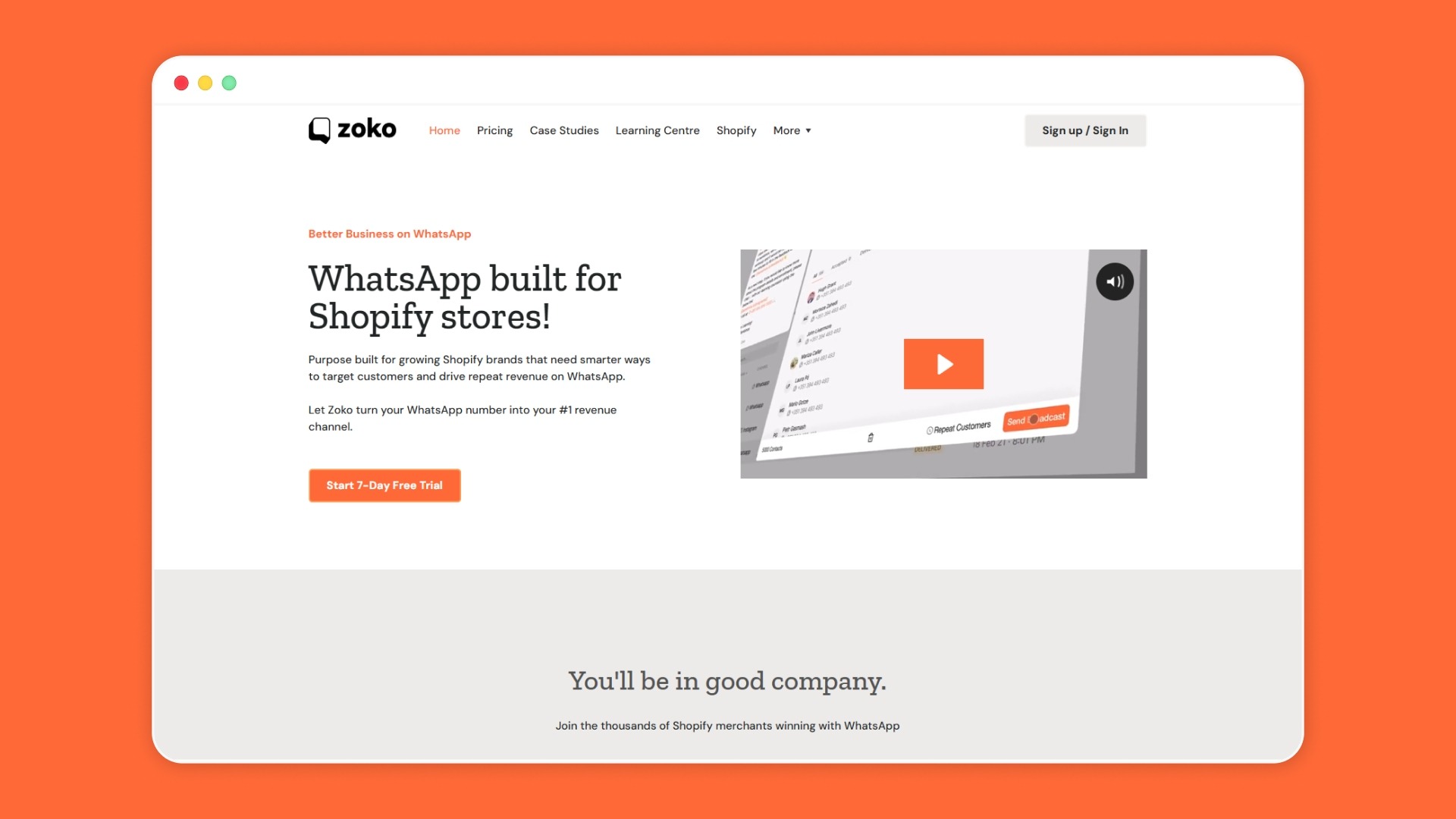
Most Shopify apps operate within your website. Zoko works where your customers already spend their time: WhatsApp. As an Official Meta Business Partner, Zoko connects your Shopify store to the WhatsApp Business API, turning a messaging app into a fully functional sales and support channel.
Key Features
- WhatsApp Catalog Sync: Automatically pulls your Shopify product catalog into WhatsApp. Customers can browse products, ask questions, and complete purchases, all without leaving the app.
- Zoko Flows / FlowHippo Flows: Automates your most critical customer workflows, including COD confirmations, abandoned cart recovery, shipping updates, reorder reminders, and review collection. All on WhatsApp.
- WhatsApp AI Chatbot: A 24/7 AI-powered chatbot that handles customer queries, recommends products, and routes complex issues to live agents without missing a conversation.
- WhatsApp Broadcasts: Send personalized, segmented messages to your customer list at scale for promotions, product launches, and re-engagement campaigns.
- Shiprocket Integration: Connect your logistics workflow directly to WhatsApp. COD confirmations and shipping updates go out automatically via Zoko, reducing cancellations and failed deliveries.
- WhatsApp Payments: Accept payments inside WhatsApp itself, no redirects, no friction, no drop-off.
- Click to WhatsApp Ads: Run ads that open a WhatsApp conversation directly, enabling instant lead qualification and faster conversions.
- Multi-Agent Shared Inbox: Multiple agents can manage customer conversations from a single WhatsApp number, with features like agent handover, private notes, and team routing.
Pricing: Starts From $49.99/month
Case Study
- Flexnest, a fitness equipment brand, used Zoko's Abandoned Cart Flow to recover abandoned cart purchases. By sending timely, personalized WhatsApp reminders with cart links and optional coupon codes, Flexnest recovered 1 in 3 abandoned carts, directly on WhatsApp.
- Fabus Frames: Using Zoko's Click to WhatsApp Ads and automated lead qualification flows to generate a 2330% ROI within 60 days.
Ready to boost your Shopify store’s sales and engagement? Start your 7-day free trial at Zoko and experience the power of WhatsApp commerce!
2. Klaviyo — Shopify App for Email & SMS Marketing
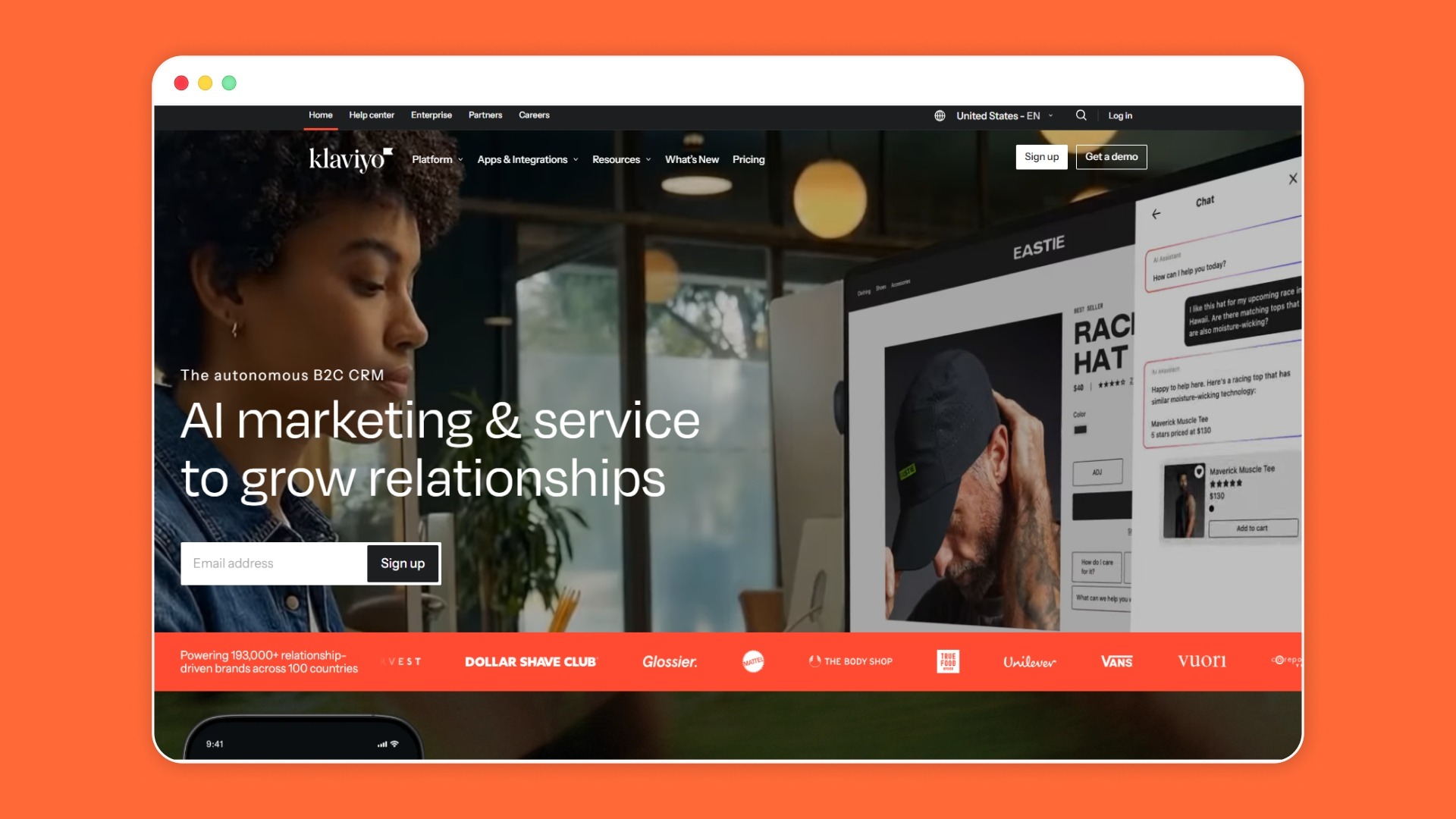
Klaviyo is the industry standard for e-commerce email and SMS marketing. It syncs deeply with Shopify, pulling order history, browsing behavior, and customer tags in real time, so every email you send can be genuinely personalized.
- 60+ pre-built automation flows: welcome series, abandoned cart, post-purchase, win-back
- Real-time segmentation based on purchase history, predicted LTV, and behavior
- Native SMS + email in a single platform, no extra tools needed
- AI-powered product recommendations based on what each customer actually buys
Pricing: Free plan; paid starts from $20/month
Case Study: JewelCandle
JewelCandle, a European e-commerce brand, migrated from Mailchimp to Klaviyo after moving to Shopify. After setting up automated flows, welcome series, and post-purchase, Klaviyo now drives nearly a third of its total revenue.
3. Gorgias — Shopify App for Customer Support & Helpdesk
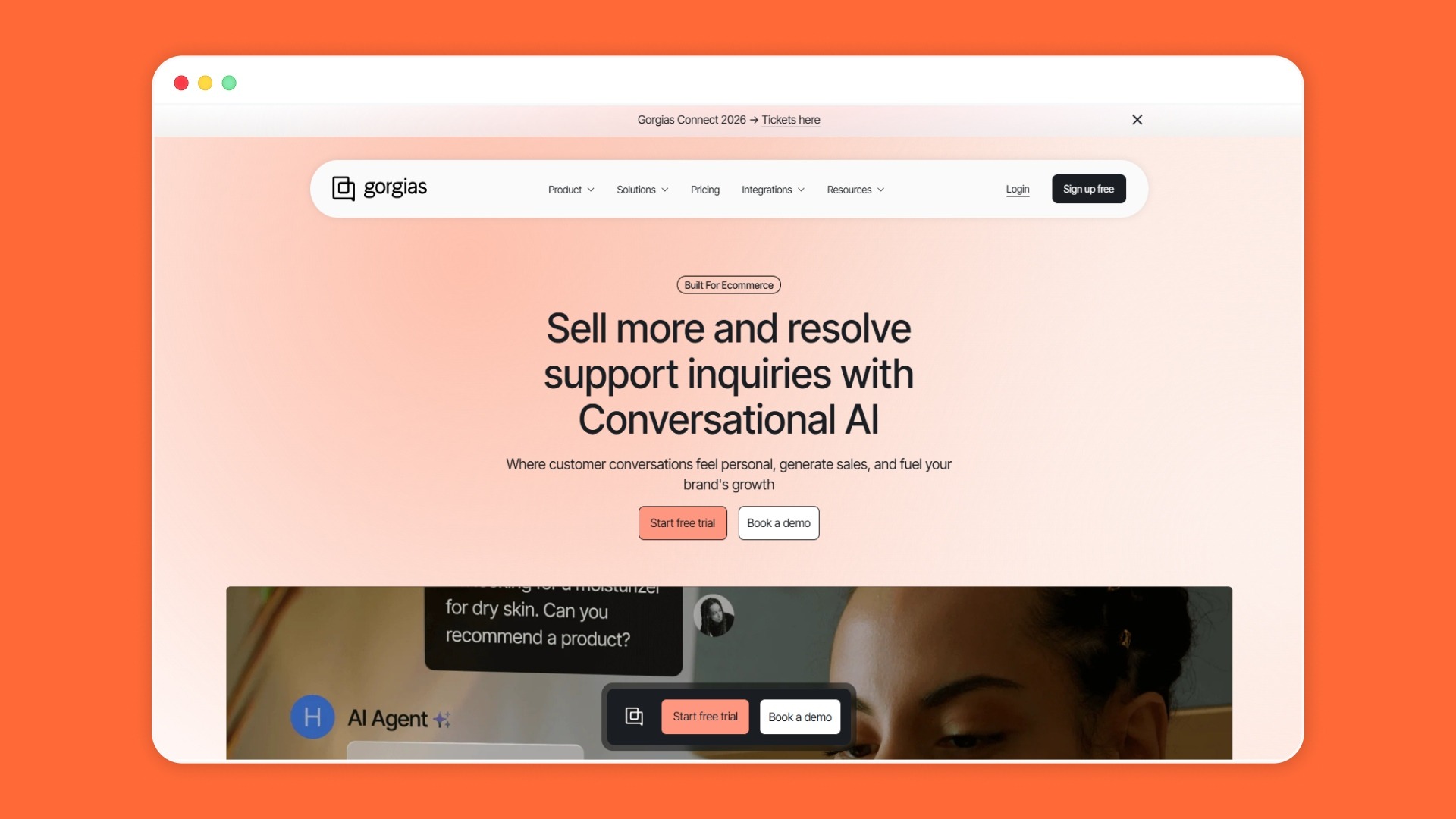
Gorgias connects all your customer support channels, like email, live chat, Instagram, Facebook, and WhatsApp, into one unified inbox. Every ticket shows the customer's full Shopify order history, making it easy for agents to resolve issues fast.
- AI Agent resolves up to 60% of emails automatically, with brand-consistent responses
- Shopify Actions: agents can refund, cancel, or edit orders without leaving Gorgias
- Revenue statistics track which support tickets led to sales within 5 days
- Trusted by 17,000+ brands, from startups to high-volume Shopify Plus stores
Pricing: Starts From $10/month
Case Study: One Block Down
One Block Down, a Milan-based streetwear brand, integrated Gorgias with Shopify to centralize all customer interactions and give agents instant access to order data. The result: a 1,000% increase in support-generated revenue and a 1-hour average first response time.
4. Tidio — Shopify App for Live Chat & AI Chatbot
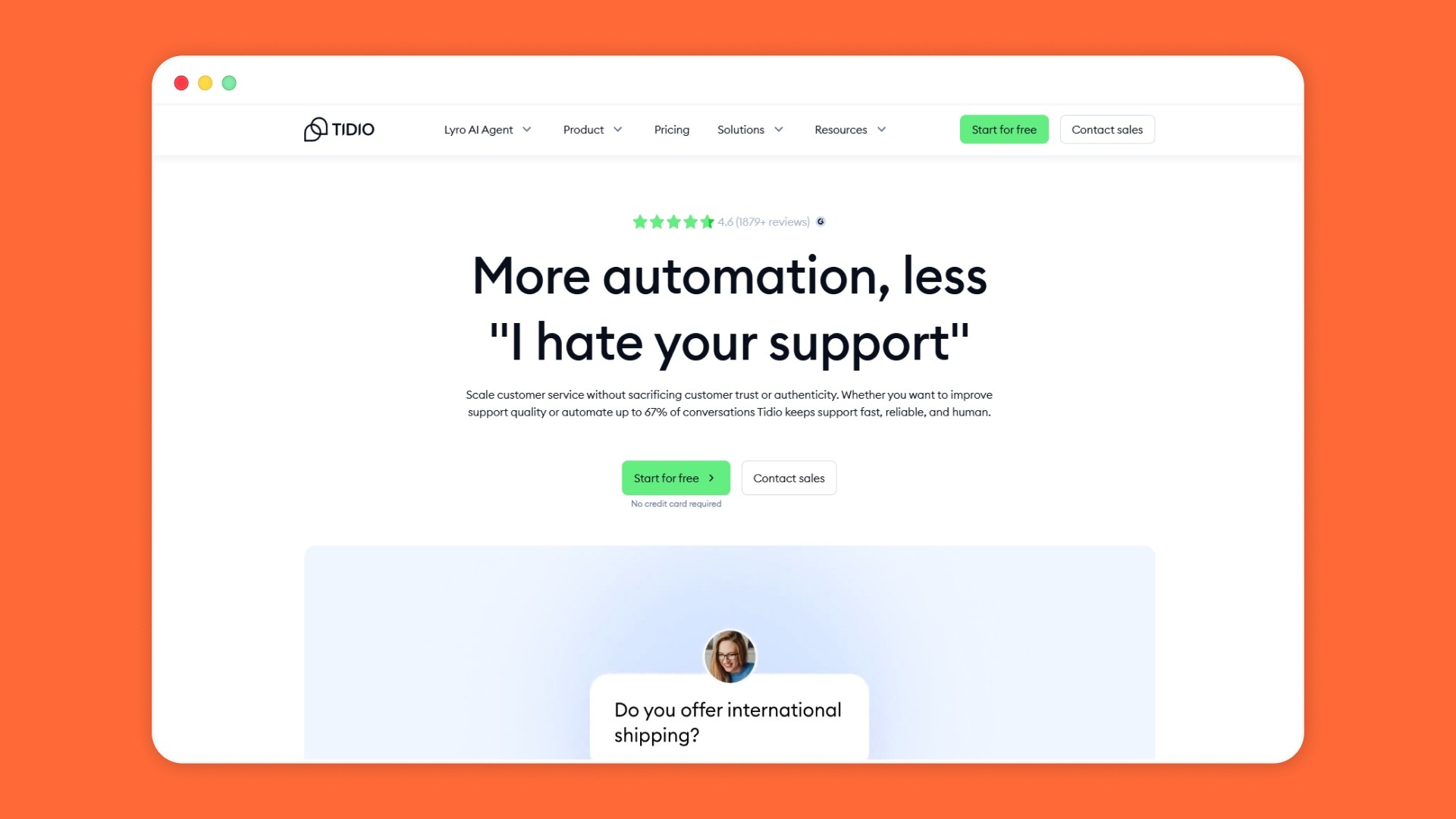
Tidio combines live chat with its AI chatbot (Lyro), allowing your store to respond to customer queries instantly, even when your team is offline. Lyro is powered by Claude (Anthropic) and learns from your FAQ content to give accurate, on-brand answers.
- Lyro AI resolves 64–67% of customer queries automatically, in under 6 seconds
- Real-time cart and order visibility for agents inside the chat dashboard
- Visitor behavior triggers that proactively engage hesitant shoppers before they leave
- Multi-channel inbox: live chat, email, Messenger, and Instagram in one place
Pricing: Free plan; paid plan starts from $29/month
Case Study: Procosmet
Procosmet, a beauty brand on Shopify, used Tidio to automate repetitive order-related support tasks. After deploying Tidio's live chat and chatbot automation, their monthly leads grew to over 100.
5. Loox — Shopify App for Photo & Video Reviews
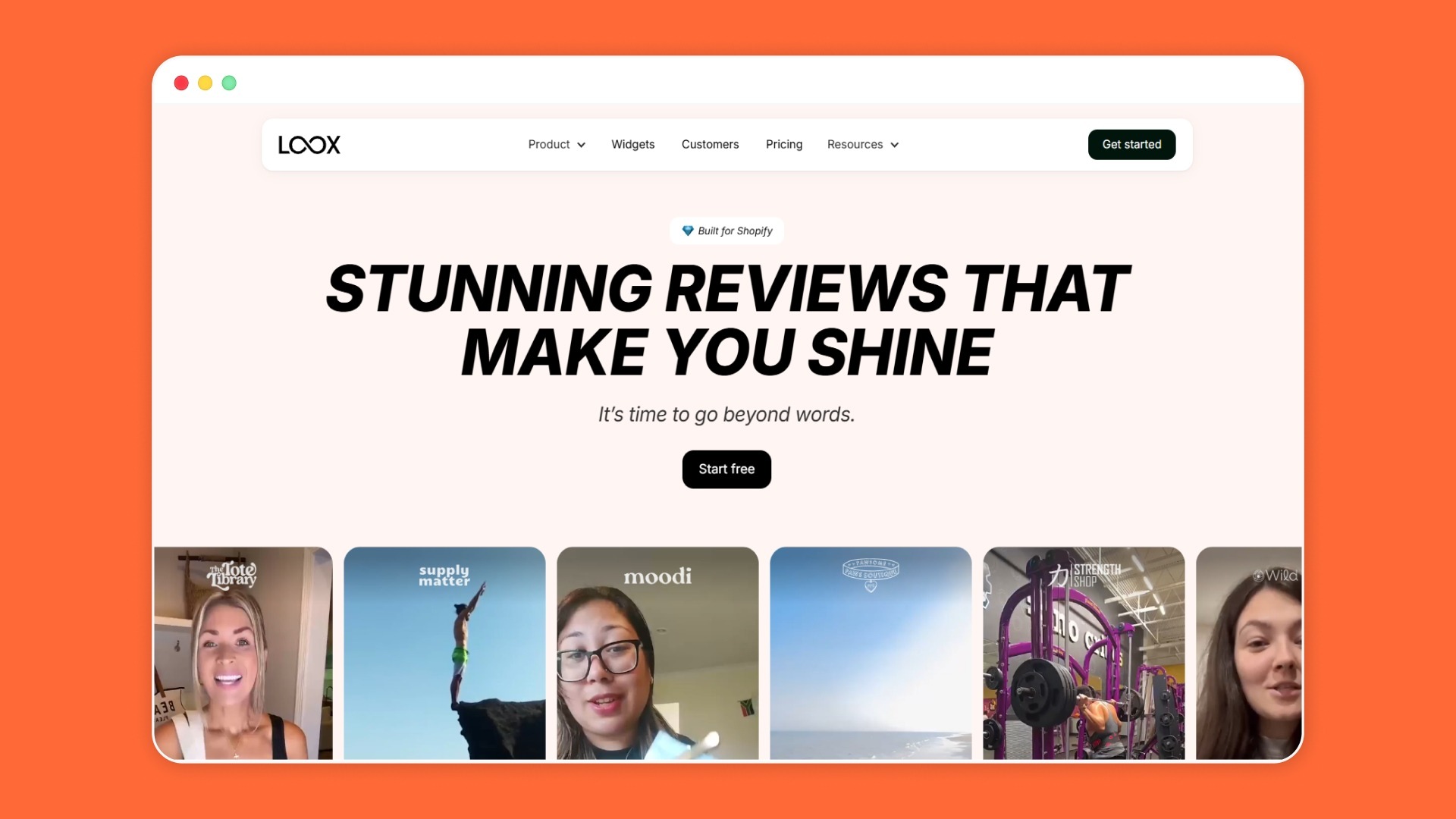
Loox automates photo and video review collection after every purchase. It offers customers a discount incentive in exchange for a photo review, driving higher collection rates and higher-quality social proof that converts new visitors.
- Automated review request emails are sent at a time you define after fulfillment or delivery
- Photo/video review widgets that display cleanly on product pages and homepages
- Google Shopping integration displays star ratings in your ads
- One-click import from AliExpress and other platforms to seed your reviews quickly
Pricing: Starts From $12.99/month
What Merchants Report
Studies cited by Loox show that going from 1 review to 100 reviews on a product that has a photo and video can increase conversion rates from 10% to 37%.
6. Judge.me — Shopify App for Product Reviews
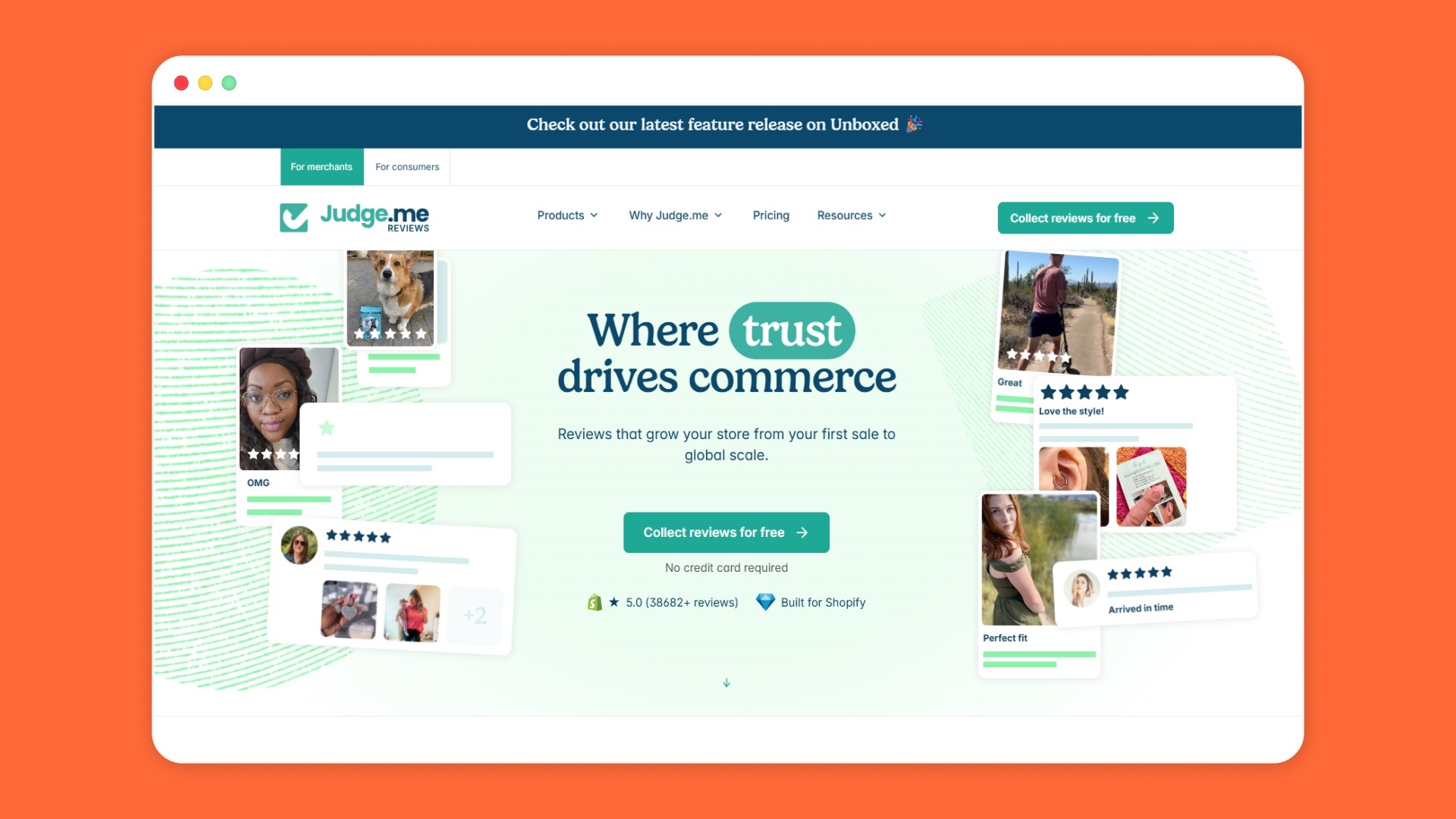
Judge.me is one of the highest-rated review apps on Shopify and one of the most accessible. Its free plan includes unlimited review requests, which makes it ideal for growing stores that can't yet justify a premium reviews platform.
- Unlimited review requests, even on the free plan, with no order cap
- SEO-friendly rich snippets that display star ratings in Google search results
- Q&A section on product pages to address common buyer questions
- Integrates with Klaviyo, Zoko, and Shopify Flow for automated review collection workflows
Pricing: Free plan; paid plan starts at $15/month
7. Yotpo — Shopify App for Reviews, Loyalty & SMS
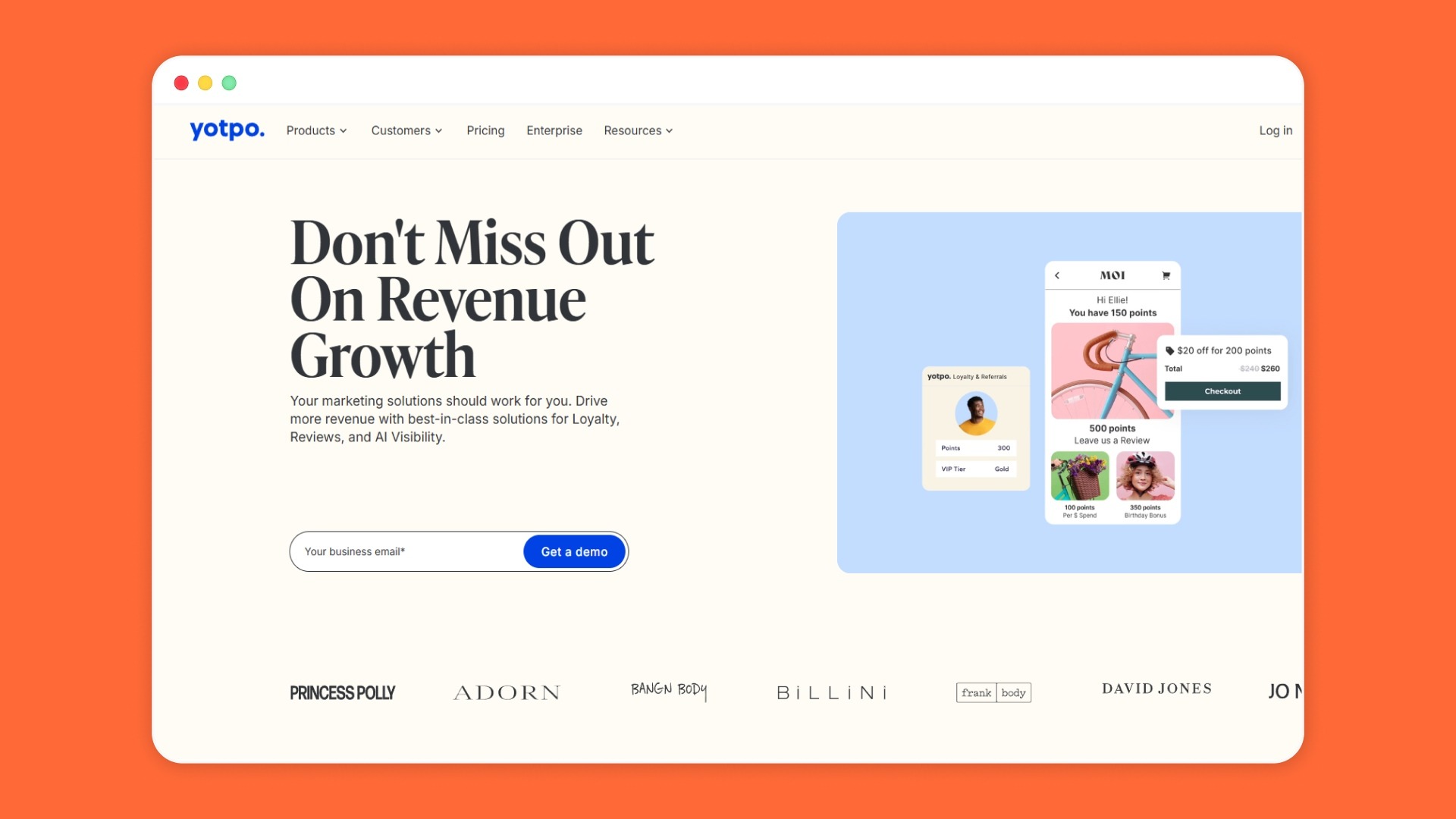
Yotpo is built for merchants who want their retention tools connected. Reviews, loyalty programs, SMS campaigns, and referrals all feed into each other through Yotpo, reducing the number of separate platforms you need to manage.
- Loyalty program with points, referrals, and VIP tiers, all linked to purchase behavior
- SMS marketing with advanced segmentation and flow automation
- AI-powered review moderation and rich display widgets
- Shopify Plus Certified: built and tested to handle enterprise-level traffic and scale
Pricing: Free plan; paid pro plan from $79/month
Case Study: Steve Madden
Steve Madden used Yotpo's Reviews and Loyalty suite to consolidate its customer engagement tools into a single platform. This program, which rewarded customers who left reviews with points, increased review submission and purchase frequency.
8. Smile.io — Shopify App for Loyalty & Rewards Programs
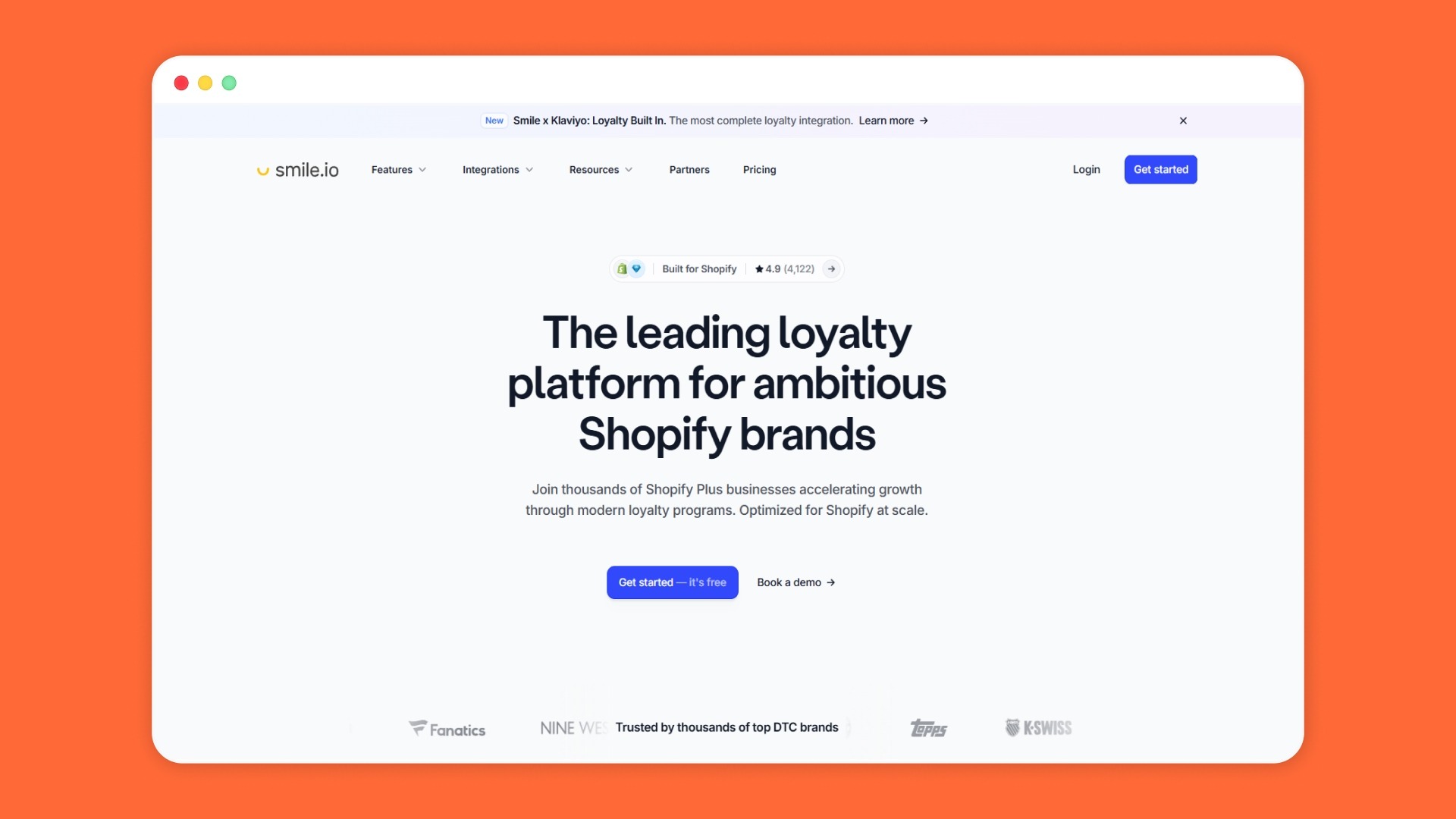
Smile.io powers loyalty programs for over 100,000 Shopify merchants. It's Built for Shopify certified, meaning it meets Shopify's highest standards for performance, data security, and native integration.
- Points programs, referral programs, and VIP tiers: all configurable without code
- Embedded checkout loyalty: customers see and redeem points at checkout, not afterward
- Integrates with Klaviyo, Gorgias, and Loox for a connected retention stack
- Detailed analytics: track program ROI, redemption rates, and member LTV in one dashboard
Pricing: Free plan; paid plan starts from $49/month
What the Data Shows
Based on Smile.io's data from over 1.1 billion shoppers, 41% of a store's revenue comes from just 8% of its customers, the loyal repeat buyers. A structured loyalty program directly targets this group, increasing both purchase frequency and average order value.
9. ReConvert — Shopify App for Post-Purchase Upsells & Thank-You Pages
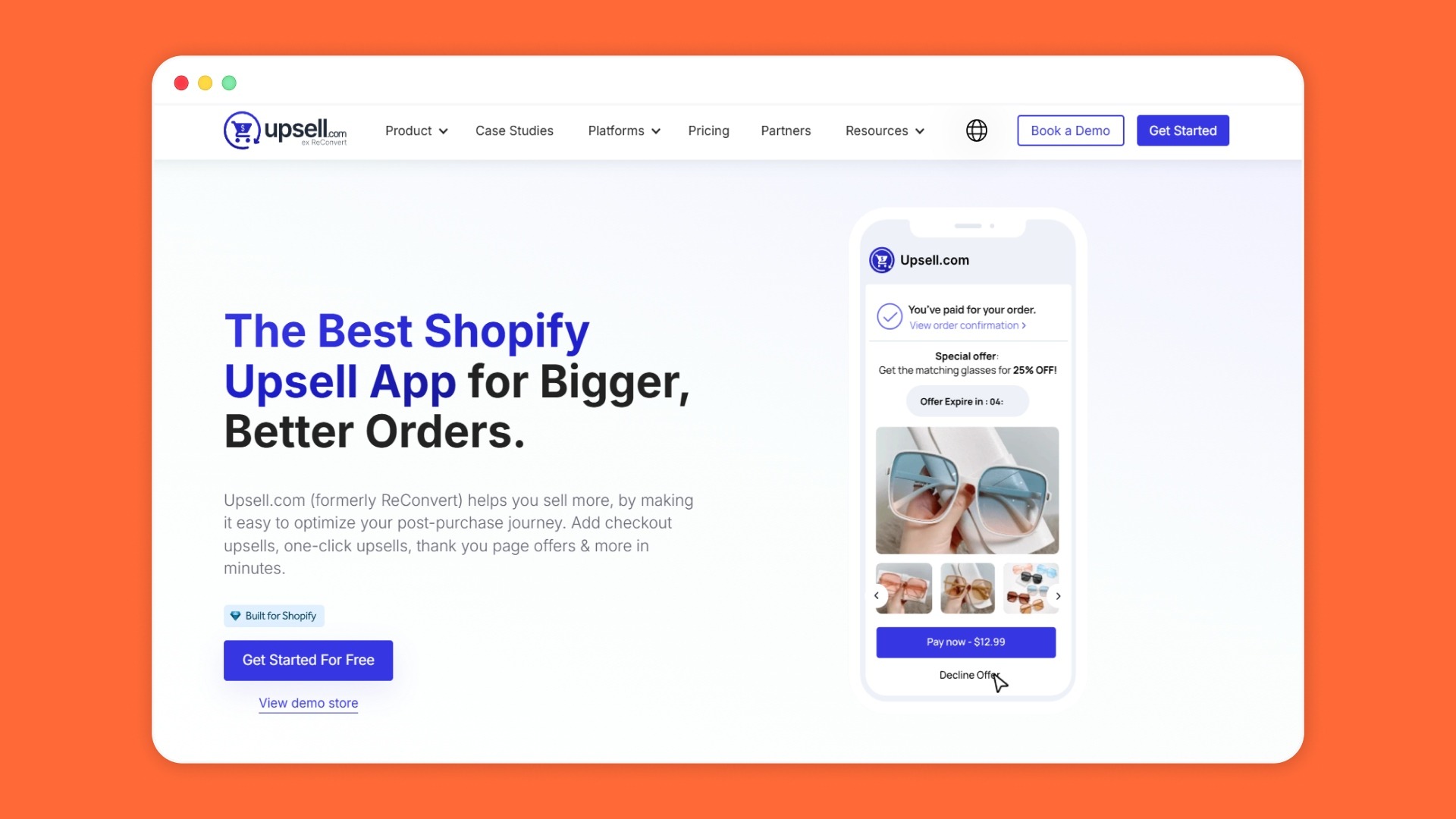
The moment right after a customer completes a purchase is the highest-intent moment in the entire shopping journey, and most Shopify stores do nothing with it. ReConvert turns your thank-you page into a revenue channel with targeted one-click upsells.
- One-click post-purchase upsells: customers add items with a single tap, no re-entering payment info
- Customizable thank-you pages with countdown timers, product recommendations, and survey widgets
- Birthday collector, capture customer birthdays to power personalized campaigns later
- Deep Shopify Checkout integration works natively with Shopify's checkout flow, no workarounds
Pricing: Free plan; paid from $4.99/month
Also Read: Top 10 Shopify Integrations Every E-Commerce Business Needs to Know
10. AfterShip — Shopify App for Order Tracking & Returns
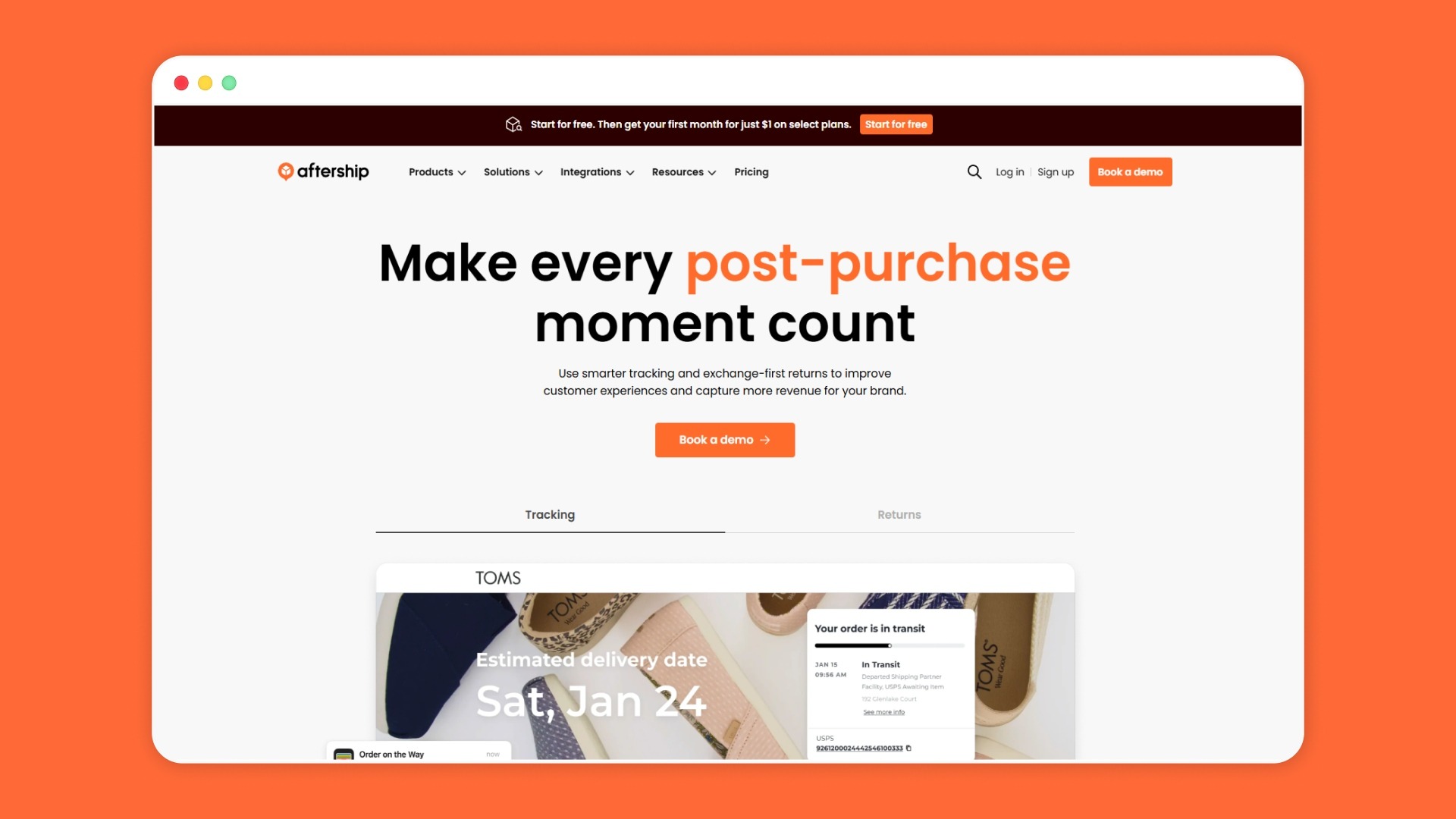
"Where is my order?" is the most common customer support query in e-commerce. AfterShip eliminates it by providing real-time tracking across 1,100+ carriers and automating shipping status notifications at every milestone.
- Branded tracking pages on your own domain, not a generic carrier page
- Automated email and SMS notifications for every shipment status update
- Returns portal: customers self-serve their return requests, reducing agent workload
- AI-powered Estimated Delivery Dates are displayed before and after purchase to reduce anxiety
Pricing: Free plan; paid from $11/month
Case Study: AfterShip Client Result
A brand using AfterShip reported: "AfterShip has enabled us to have visibility into our data so that we can measure performance and make better decisions. We've had customers reaching out saying, 'Wow, what a great service!' rather than coming to us with complaints."
11. Shiprocket — Shopify App for Shipping & Logistics (India-First)
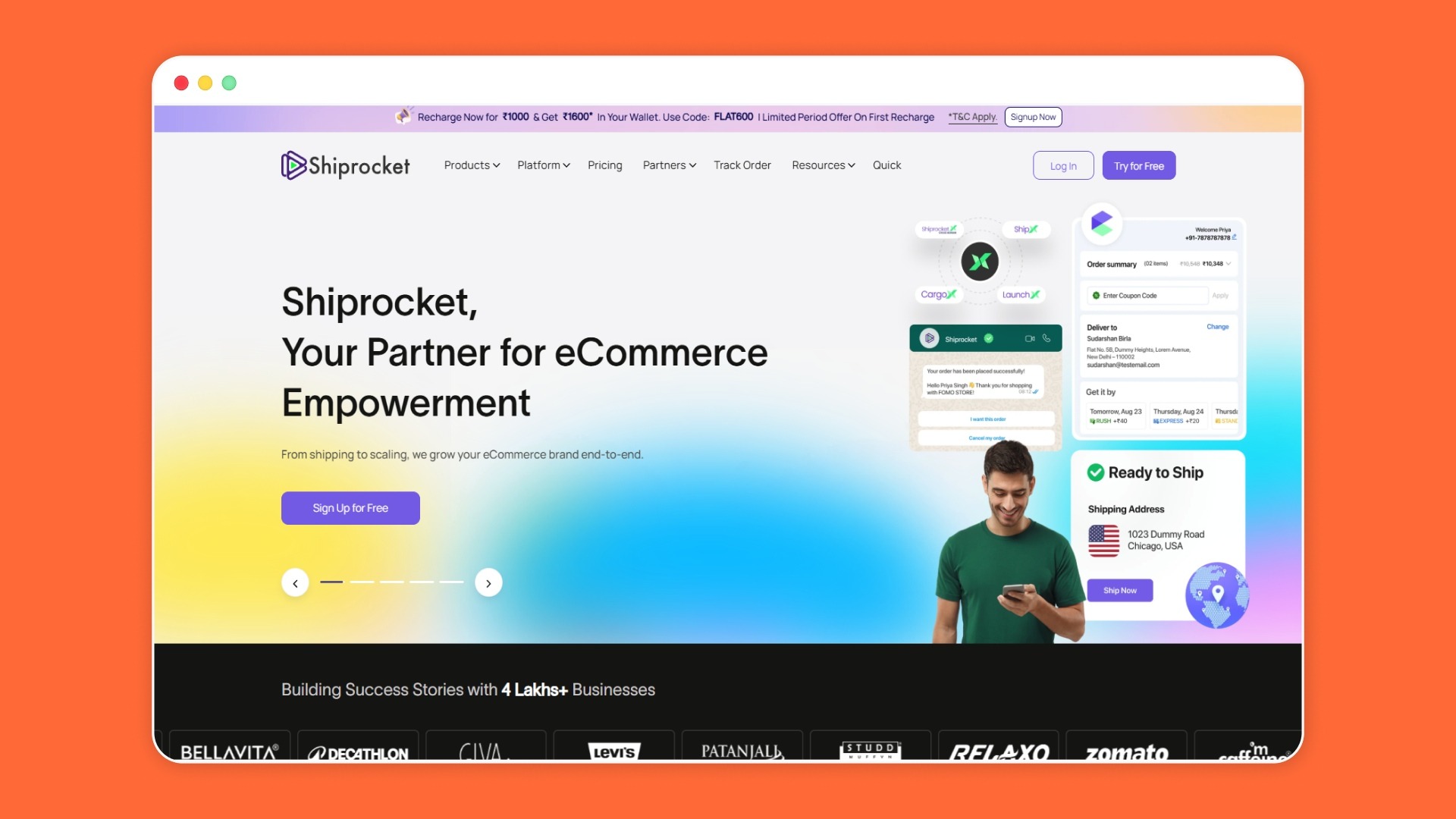
Shiprocket is the logistics backbone for Indian Shopify merchants. It connects your store to 25+ courier partners, recommends the best courier for each order based on weight and zone, and automates COD reconciliation, all from a single dashboard.
- AI-powered courier recommendation: selects the best carrier for each shipment automatically
- COD management with auto-reconciliation: reduces manual follow-up and payment delays
- NDR automation: handles Non-Delivery Reports to reduce return-to-origin rates
- Integrates with Zoko: customers receive COD confirmations and shipping updates directly on WhatsApp
Pricing: Starts From ₹20 for 500g/shipment
Case Study: Indian D2C Merchant
A D2C Shopify merchant in India using Shiprocket alongside Zoko reported a significant reduction in COD cancellations after enabling automated WhatsApp COD confirmation flows. When customers receive an instant WhatsApp message confirming their COD order and can confirm or cancel with a single reply, the false order rate drops.
12. PageFly — Shopify App for Landing Page Builder
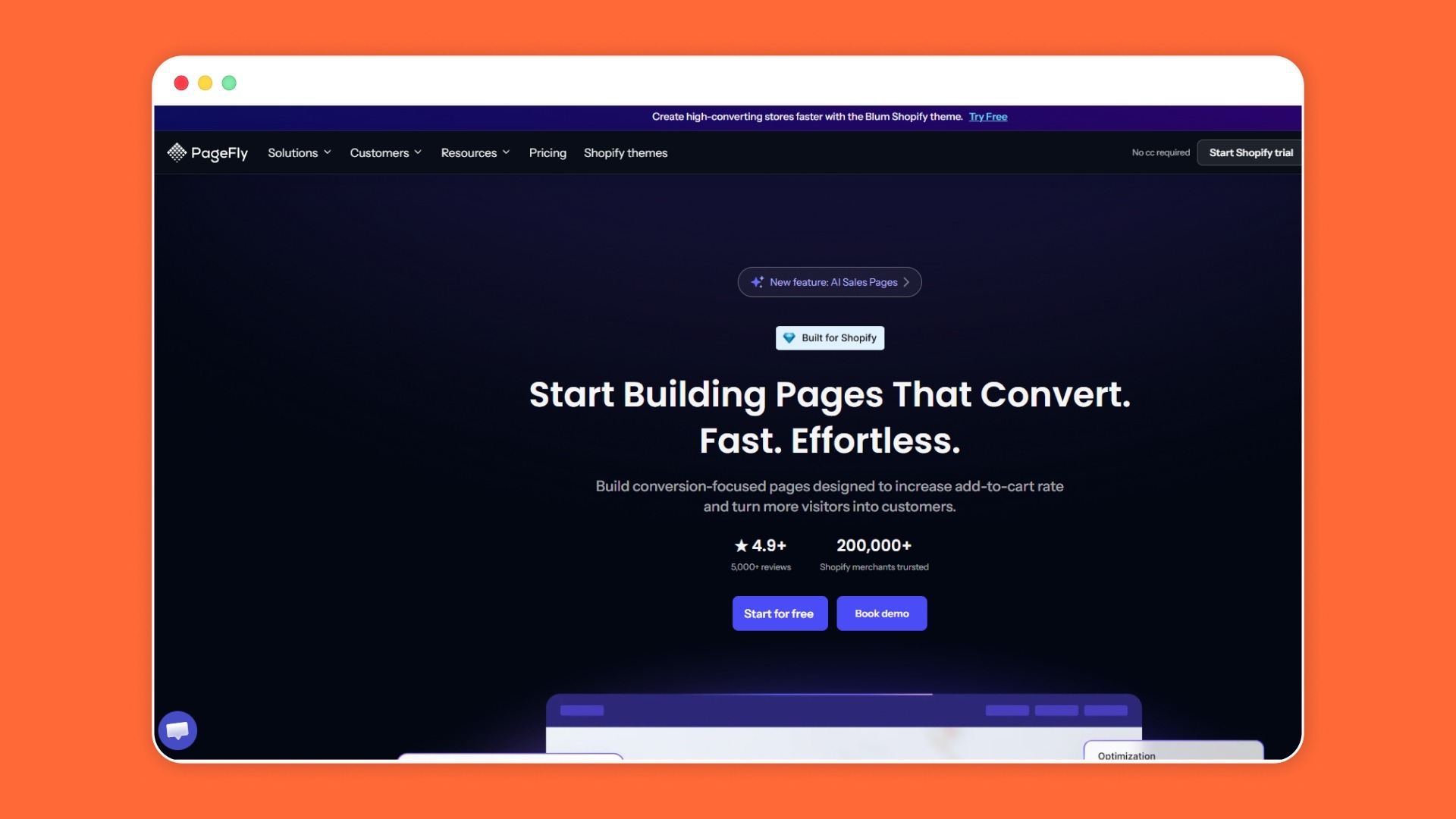
Shopify's default theme has limits. PageFly gives you a visual drag-and-drop builder to create custom product pages, landing pages, and campaign pages, optimized for conversion, not just aesthetics.
- 100+ templates for product pages, home pages, and collection pages
- Mobile-responsive by default: critical given 79% of Shopify traffic comes from mobile
- Checkout integration, add custom elements to your checkout flow
- A/B testing on different page layouts to identify what converts best
Pricing: Free plan; pay as you go from $24/month
Case Study: Boba Tea Protein
Boba Tea Protein used PageFly to build dedicated landing pages for each of their product launches. By creating conversion-focused pages with custom video embeds, rather than relying on their theme's default product page, they saw a lift in add-to-cart rates on campaign traffic.
13. Triple Whale — Shopify App for E-Commerce Analytics & Attribution
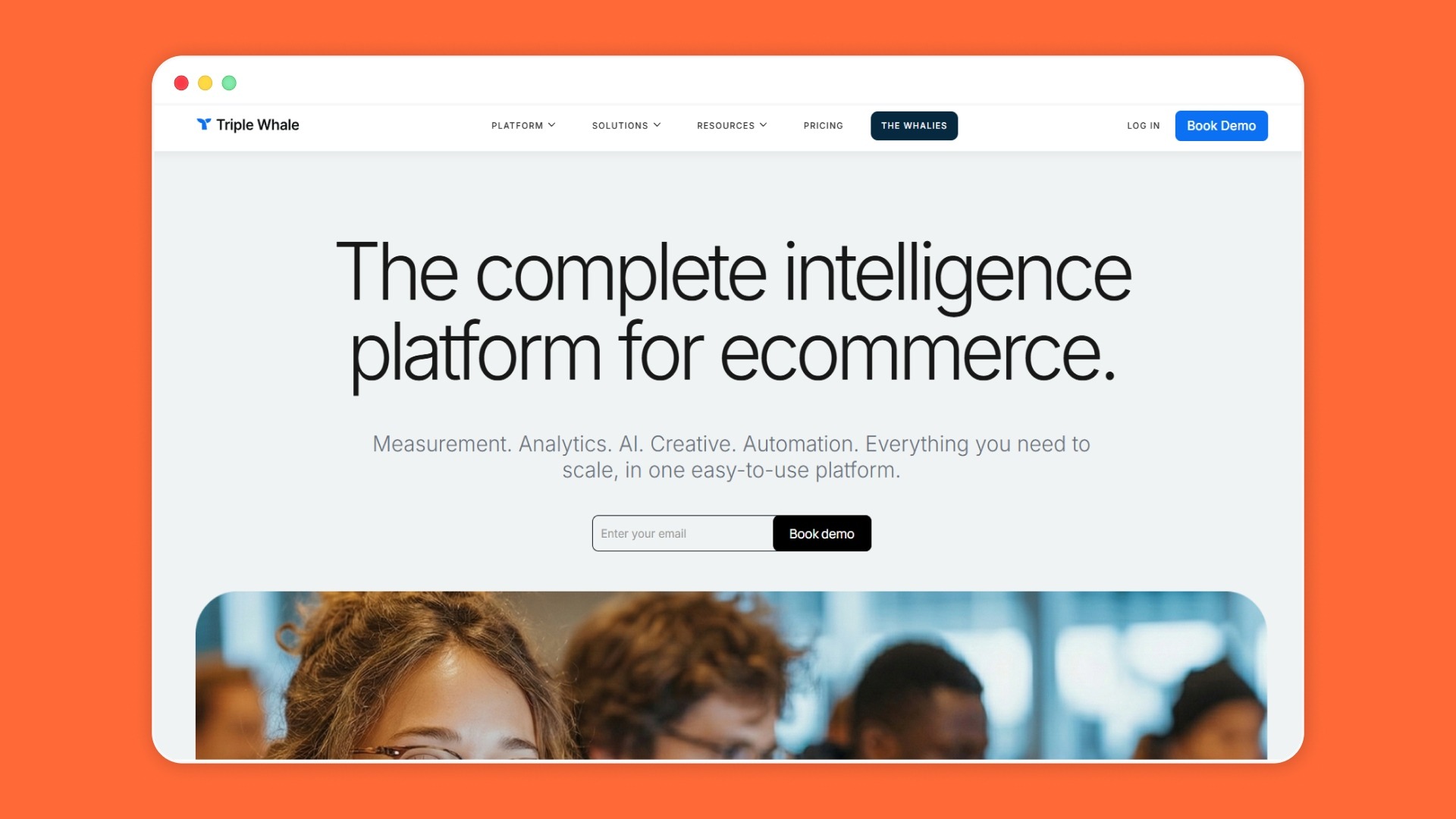
After iOS privacy changes, ad platforms started over-claiming credit for conversions. Triple Whale solves this with its own pixel-based attribution, giving merchants a clear, honest picture of which channels are actually driving revenue.
- Unified dashboard: ad spend, revenue, ROAS, and LTV across Meta, Google, and TikTok in one view
- Cohort analysis: track how customer groups behave over 30, 60, and 90 days
- Creative cockpit: see which ad creatives are driving the best ROAS before scaling
- Daily performance summaries: delivered to your inbox or Slack every morning
Pricing: From $129/month
Case Study: Obvi
Obvi, a supplement brand on Shopify, adopted Triple Whale to get accurate attribution data after iOS 14 disrupted their Meta pixel data. Using Triple Whale's unified ROAS metrics, they identified which ad creatives were genuinely profitable and scaled their budget toward them.
14. Omnisend — Shopify App for Multichannel Marketing for SMBs
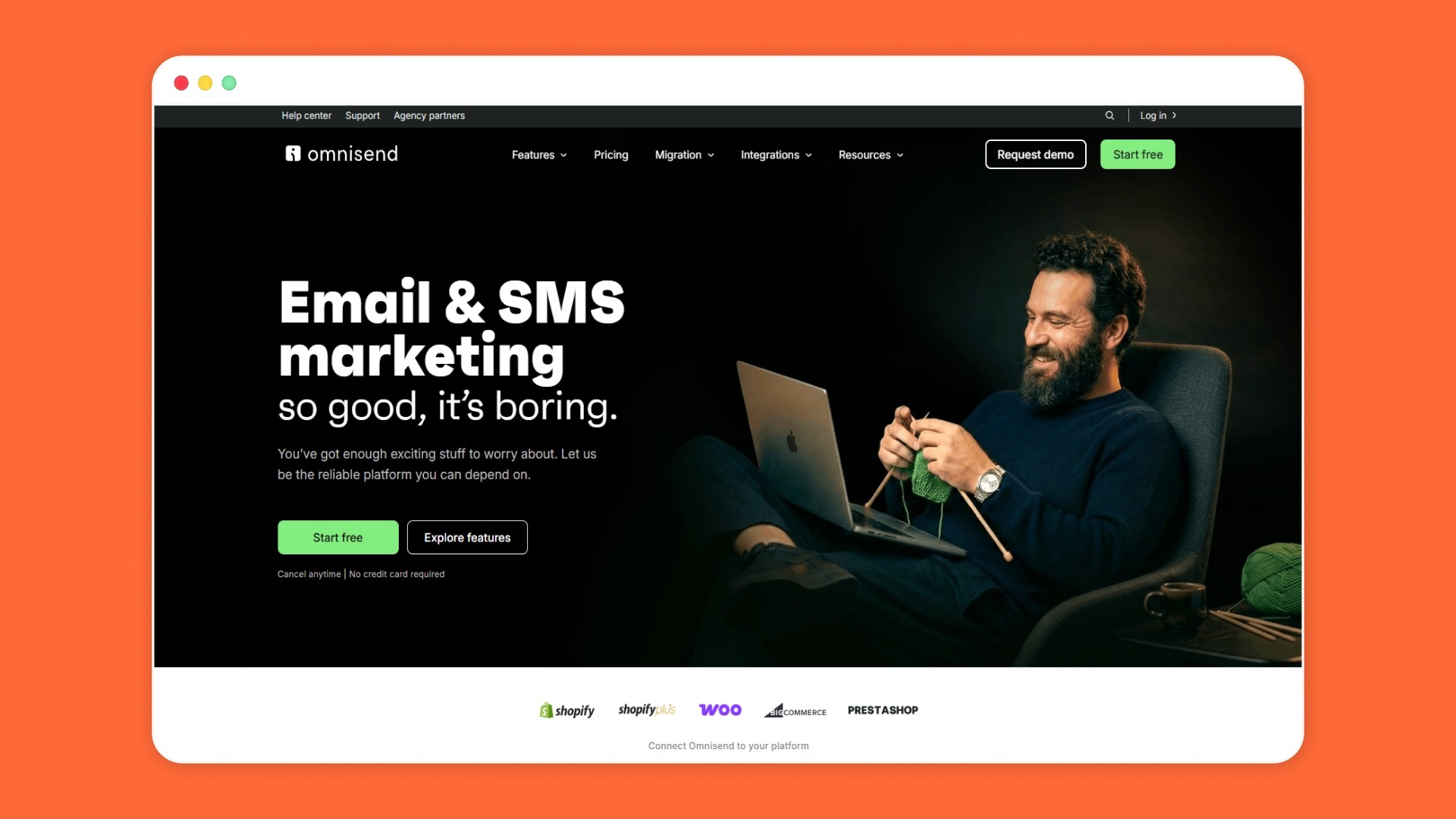
Omnisend combines email, SMS, and push notifications in a single dashboard, a strong alternative to Klaviyo for merchants who want multi-channel marketing without enterprise pricing.
- Drag-and-drop email builder with e-commerce-specific templates
- Automated workflows for cart recovery, order follow-ups, and win-back campaigns
- Web push notifications for re-engaging visitors who didn't leave an email
- Transparent, flat pricing — no hidden per-contact fees that surprise you at month-end
Pricing: Free plan; paid from $16/month
Case Study: Hallmark Timmins
Hallmark Timmins, a Canadian gift retailer, used Omnisend's automated email and SMS flows to recover abandoned carts and drive repeat purchases. Their cart recovery flow alone generated a 42% recovery rate on triggered messages.
15. Privy — Shopify App for Popups, Email Capture & Cart Recovery
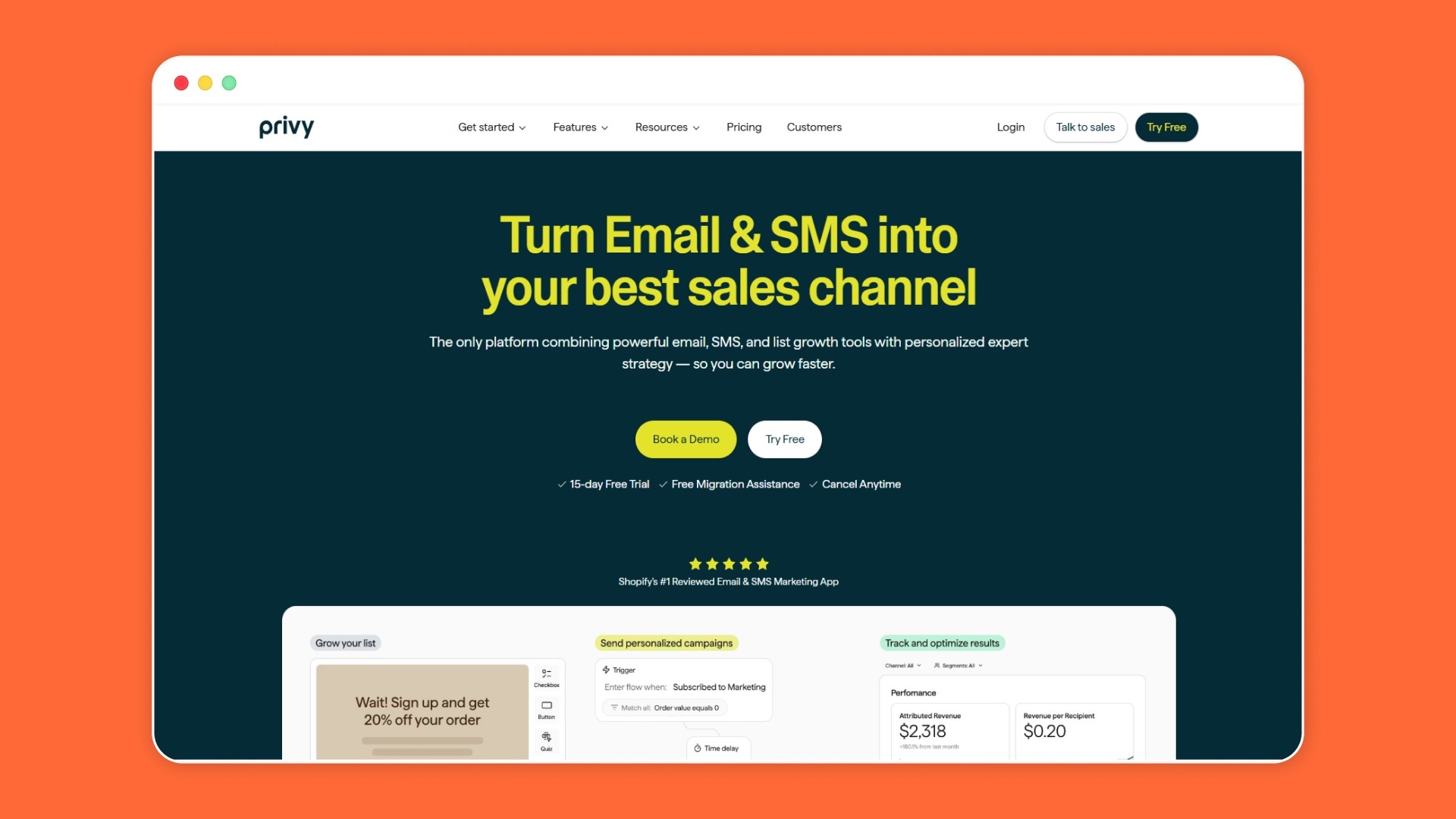
Privy is purpose-built for small and medium Shopify stores. It focuses on two things: capturing emails from visitors before they leave, and recovering abandoned carts through targeted follow-up emails and texts.
- Exit-intent popups that trigger when a visitor moves toward closing the tab
- Spin-to-win and embedded signup forms that collect emails on the product page
- Cart abandonment emails and SMS with pre-built templates that go out in minutes
- Simple A/B testing — test popup timing, copy, and offers without any technical setup
Pricing: Free plan; paid from $45/month
Case Study: BattlBox
BattlBox, a subscription box for outdoor gear, used Privy's email capture pop-ups and cart-abandonment flows to grow its email list by 15% month-over-month.
Conclusion
The right Shopify apps don't just add features, they build the infrastructure your store needs to grow without breaking. They automate what's repetitive, improve what's broken, and make possible what your platform alone can't deliver.
Start with the apps that address your biggest pain points today. If customers are abandoning carts, use Zoko for WhatsApp recovery and Klaviyo for email automation. If support is overwhelming your team — Gorgias or Tidio. If you're not getting repeat purchases, use Smile.io or Yotpo. Build your stack one problem at a time, measure what works, and scale from there.
And if you sell in markets where WhatsApp is how people buy, add Zoko first. It's the one app that moves your Shopify store off the website and into the channel where your customers actually are. Book a Free Demo Today!
Also read: Conversational Commerce Companies: Benefits and 8 Picks to Consider
Also read: Top 10 Best Ecommerce Marketing Agencies for Shopify and DTC Brands in 2026
FAQs
1. Is Shopify actually free for sellers in India?
Not as a full-time plan. Shopify currently offers a short free trial, then moves you to a paid subscription, with some India-facing promos offering a low introductory price for the first few months.
2. Can one WhatsApp number be handled by more than one team member?
Yes, but the setup matters. The WhatsApp Business app supports one phone plus up to four linked devices, and many commerce-focused WhatsApp tools add shared inbox features so multiple agents can handle chats from the same business number.
3. Can AI fully manage a Shopify store on its own?
Not end-to-end. AI can help with tasks such as product copy, analysis, order handling, and guidance within Shopify, but merchants still need to review decisions, manage strategy, and stay in control of operations.
4. Do WhatsApp tools help recover abandoned carts?
Yes, many of them do. Recovery flows can send reminders, cart links, and follow-up messages automatically, which makes WhatsApp useful for bringing shoppers back before the purchase goes cold.
5. Can you use UPI with Shopify?
Yes, but there are two cases. Shopify lets merchants in India pay their Shopify bills with UPI, and for customer checkout, merchants can add supported third-party payment methods or payment apps that offer local options such as UPI.
6. Which makes more sense: Shopify or Amazon?
It depends on what you want to control. Shopify is stronger for building your own branded storefront and customer relationship, while Amazon gives you marketplace reach. Many businesses use both, with Shopify as the main store and Amazon as an extra sales channel.
Interested to know more?
.svg)
Case Studies
















Featured Posts


Continue reading

The E-Commerce Divide: How the Top 10% of Brands Use AI to Grow 5X Faster (And Why It’s Not for Everyone)
Drive Sales with WhatsApp Catalog Integration: Here's How