


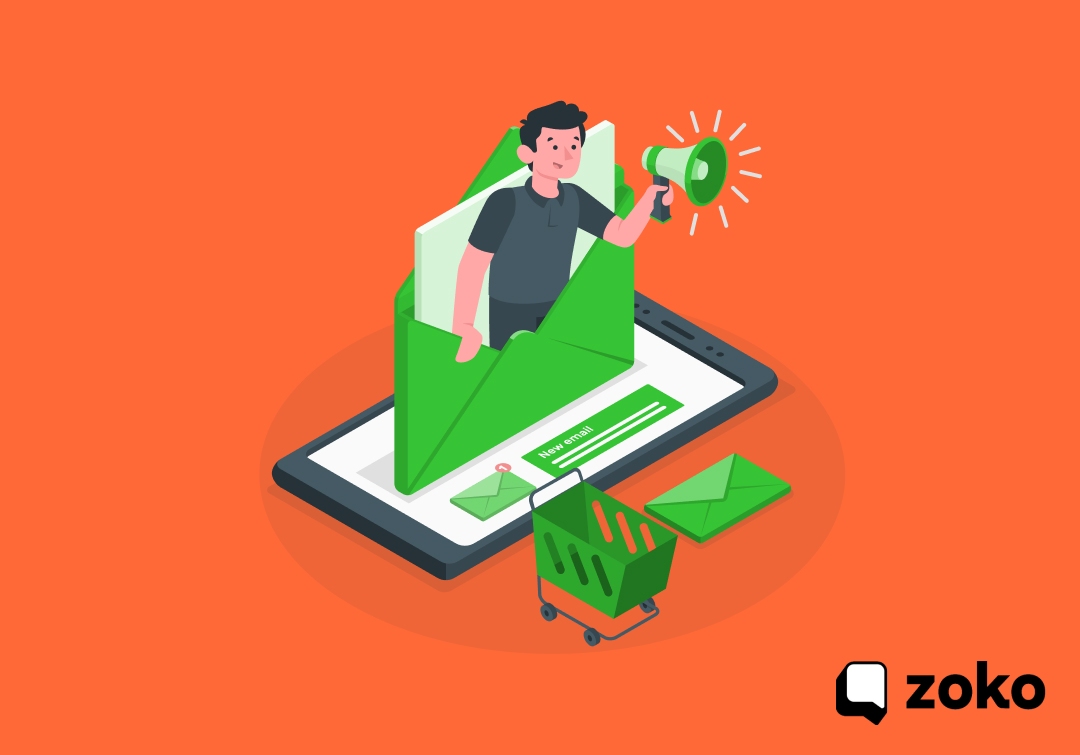


It is Tuesday morning, and you open your Shopify dashboard. Yesterday, 142 shoppers added something to their cart. Twelve checked out. The other 130 closed the tab. Sounds familiar?
Abandoned cart recovery messages are how you reach those 130 without raising ad spend or hiring more support. With the Baymard Institute putting the average abandonment rate at 70.22%, the recovery sequence becomes one of the highest-leverage moves you can make this quarter.
In this guide, you’ll get 17 ready-to-use templates. You’ll also learn about the ideal best sequence flow and the channel you should use to recover abandoned carts.
Key Takeaways
- Recovery is a sequence: A staggered three-touch rhythm beats one-shot reminders for almost every Shopify store size.
- Friction first, discount last: Address the reason the buyer left before offering a coupon you do not need to give.
- Channel matters: WhatsApp leads on open rates, SMS leads on speed, and email leads on detail.
- Some carts are unreachable: A meaningful share of abandoners were never going to buy that day, and a healthy sequence respects that ceiling.
- Automation pays for itself: A flow that runs on autopilot recovers revenue at a fraction of the cost of paid acquisition.
What Are Abandoned Cart Recovery Messages?
Abandoned cart recovery messages are automated follow-ups sent to shoppers who add a product to their cart on a Shopify store but leave before checkout. They run across WhatsApp, SMS, and email, usually as a staggered sequence of two or three touches over 72 hours.
Each message reminds the shopper of the cart, addresses a likely reason they bounced, and gives them a one-tap path back to checkout.
Why Most Carts Get Abandoned (and Which Ones You Can Recover)
Most cart abandonment is not a copy problem, and a fair share of it is not a discount problem either. A meaningful chunk of abandoners are just browsing, comparing, or saving items for later.
Those carts are mostly unrecoverable on the same day, no matter what message you send. What you can win back are the carts where a specific friction pushed the buyer out at checkout.
That friction tends to fall into a short list of the following patterns:
- Additional costs at checkout: Unexpected taxes or fees appear at the final step.
- Forced account creation: The store demands a sign-up before accepting payment, which most buyers refuse to do for a first order.
- Trust concerns with card data: The site does not look or feel safe enough to hand over a credit card.
- Delayed delivery estimates: The promised delivery window stretches past what the buyer was expecting, and the cart closes.
- Lengthy checkout: Too many fields, too many steps, too many decisions.
- Bad return policy: Restocking fees, narrow windows, or one-way returns lose the buyer at the policy line.
A coupon solves the first one, sometimes. The rest need a different message. Your sequence should align with the reason for the drop-off.
Suggested Read: How to Use WhatsApp for Last-Minute Shopify Purchase Reminders
17 Abandoned Cart Recovery Message Templates You Can Adapt Today
The templates below cover all three channels and follow a three-touch rhythm: reminder first, friction-fix second, light incentive third. Adapt the bracketed parts to your brand and product. Keep first names, product names, and prices as required.
WhatsApp Recovery Message Templates (1 to 7)
1. First touch: gentle reminder (1 hour)
Hi [First name], you left [Product name] in your cart. Want me to hold it for you? Tap here to finish: [checkout link]
2. First touch: image-led reminder (1 hour)
Hey [First name] 👋, quick reminder that your [Product name] is still in your cart. Here's the link if you want to come back to it: [checkout link]
3. Second touch: shipping reassurance (24 hours)
Hi [First name], your cart at [Brand name] is still open. Free shipping kicks in over [threshold], and you're already at [cart total]. Pick it up here: [checkout link]
4. Second touch: question, not pitch (24 hours)
Hi [First name], saw you didn't finish checkout. Was there a question on the size, color, or delivery time? Happy to answer here. Or if you want to grab it: [checkout link]
5. Second touch: trust signal (24 hours)
Hi [First name], we noticed your order didn't go through. Payments at [Brand name] are secured via [payment provider], and returns are free within [N] days. Here's the cart again: [checkout link]
6. Third touch: light incentive (48 to 72 hours)
[First name], your [Product name] is still waiting. Here's [code] for [X%] off, valid for the next 24 hours: [checkout link]
7. Third touch: final nudge with scarcity (72 hours)
Last reminder, [First name], [Product name] is selling fast, and we cannot hold the cart much longer. [Code] saves you [X%] if you check out today: [checkout link]
Also Read: Step-by-Step Guide to Recovering Abandoned Carts on WhatsApp
SMS Recovery Message Templates (8 to 12)
8. First touch: short and warm
Hey [First name], you left [Product name] in your cart at [Brand]. Finish here: [short link]. Reply STOP to opt out.
9. Second touch: value-add
[First name], your [Brand] cart is open. Free shipping on orders over [threshold]. Pick up where you left off: [short link]
10. Second touch: clarify policy
Hi [First name], quick note from [Brand]. Returns are free within [N] days and orders ship within [N] business days. Back to your cart: [short link]
11. Third touch: coupon
[First name], [code] saves you [X%] on your [Brand] cart. Valid 24 hrs. [short link]
12. Third touch: scarcity close
Final reminder from [Brand]: [Product name] is going fast. Use [code] for [X%] off today: [short link]
Email Recovery Message Templates (13 to 17)
13. First touch: subject line and short body
Subject: Your [Product name] is still here, [First name]
Hi [First name], You left [Product name] in your cart yesterday. We saved it for you in case you want to come back to it. [Button: Return to checkout]
14. Second touch: subject line and value body
Subject: A few reasons people finish their [Brand] orders
Hi [First name], Free shipping over [threshold]. Free returns within [N] days. Delivered in [N to N] business days across [region]. Your cart is still saved: [Button: Return to checkout]
15. Second touch: story angle
Subject: Why we built [Product name]
[First name], the team built [Product name] because [one-sentence brand story]. Customers like [example customer line] use it for [example use case]. [Button: Return to checkout]
16. Third touch: coupon
Subject: [X%] off your cart, [First name] (24 hours)
[First name], here's [code] for [X%] off your [Brand] cart. Code is good for the next 24 hours. [Button: Apply code and check out]
17. Third touch: last call
Subject: Last call on your cart, [First name]
[First name], your cart is about to expire. [Code] saves you [X%] if you wrap it up today. [Button: Return to checkout]
Building Your Abandoned Cart Recovery Sequence
The timing rhythm that works best is a staggered three-touch sequence over 72 hours, where each message does a different job. The first reminds. The second addresses friction. The third adds a light incentive if the cart is still cold.
Here's how the three touches map out, end to end:
Holding the coupon for the third touch matters a lot. Lead with a discount, and your buyers learn to wait for one on every future order, which drags repeat purchase margin over time.
Also Read: How to Build High-Converting WhatsApp Funnels for Shopify Stores
Which Channel Should Lead Your Recovery: WhatsApp, SMS, or Email?
The right lead channel depends on where your buyers live and what your store sells. For mobile-first Shopify stores, WhatsApp tends to lead the rhythm. It opens fast, carries an image of the product, and lets the buyer reply in the same thread. Email earns its place for longer messages and richer layouts. SMS works for short, fast nudges in markets where WhatsApp adoption is thin.
Here's how the three compare on what matters for recovery:
For most Shopify stores serving WhatsApp-heavy markets, the practical setup is WhatsApp for the first and second touch, with email carrying the third (the one that ships the coupon and the longer pitch). SMS serves as a backup when WhatsApp adoption is low.
Add a Shopify Cart Recovery Flow That Already Works
A recovery sequence works best when timing, message, and cart data are wired together from day one. Zoko offers a pre-built abandoned cart recovery flow that runs directly on your Shopify cart data. It fires the first touch within minutes of drop-off and sends through WhatsApp with full product images and a direct checkout link. The platform is built specifically for Shopify, so integration takes minutes, not weeks.
Here's what you get when you run recovery on Zoko:
- Abandoned cart recovery flow: A pre-built three-touch sequence that fires off your Shopify cart events, included free across all plans.
- WhatsApp Catalog sync: Cart products, images, and prices pull straight from Shopify into the WhatsApp message, no manual copy-paste.
- Pop-up campaigns: Capture WhatsApp opt-ins from store visitors so the sequence has an audience to recover.
- Unified inbox: Replies to recovery messages land in one screen, so a buyer's question gets answered fast enough to save the sale.
FabUs Frames, a Shopify brand using WhatsApp Ads and Zoko Flows, generated ₹487,706 in sales over 60 days from the same flow engine that powers the recovery sequence above.
See Zoko's pricing to find the plan that fits your store volume.
Final Thoughts
A working abandoned cart recovery sequence comes down to the right timing, channel, and a flow that runs on your real Shopify cart data. Start with the three-touch rhythm, pair it with the right channel for your buyers, and reserve the coupon for the third message only.
Zoko gives Shopify merchants a pre-built abandoned cart recovery flow on WhatsApp that ships with the timing, the templates, and the catalog sync already wired in. Start your 7-day free trial and recover the carts you are losing this week.
FAQs
1. How effective are abandoned cart recovery messages?
Recovery messages typically bring back a meaningful share of dropped checkouts, with results varying by industry, average order value, and channel. Stores that run a staggered multi-channel sequence usually recover more revenue than stores sending a single email reminder a day later.
2. Should I offer a discount in every recovery message?
No, discounting on the first message trains buyers to wait for coupons on every future order, which costs you margin. Reserve the coupon for the third touch only, after a gentle reminder and a friction-addressing message have already gone out.
3. What should an abandoned cart email subject line look like?
The strongest subject lines stay short, reference the product or the cart, and avoid heavy sales language. First-name personalization tends to lift opens. Keep it under nine words, skip exclamation marks, and let the body of the email carry the actual pitch.
4. What happens to carts I cannot recover?
Some carts are simply unreachable. A meaningful share of abandoners were never going to buy that session, regardless of follow-up. Accept that ceiling, focus the sequence on the recoverable share, and keep the top of the funnel filling with list-growth tools alongside.
Interested to know more?
.svg)
Case Studies











Featured Posts


Continue reading

The E-Commerce Divide: How the Top 10% of Brands Use AI to Grow 5X Faster (And Why It’s Not for Everyone)
Drive Sales with WhatsApp Catalog Integration: Here's How