


How to Use WhatsApp Shopping Cart Feature Effectively: Setup, Benefits, and Best Practices

How to Use WhatsApp Shopping Cart Feature Effectively: Setup, Benefits, and Best Practices
Oftentimes, a customer browses your store, adds items to their cart, but then leaves without completing the purchase. It’s frustrating, right? You’ve done everything to entice them—beautiful products, easy navigation, discounts—but something still causes that abrupt abandonment. It’s not just you. According to studies, cart abandonment rates for e-commerce businesses can reach 70.22%. That’s a lot of lost opportunities!
This is where the WhatsApp Shopping Cart feature, powered by platforms like Zoko, can make a big difference. It allows you to improve the shopping process by providing customers with a seamless, familiar platform to browse, add products to their cart, and complete the purchase. By offering a smooth and personalized experience, you can not only reduce cart abandonment but also boost your sales and improve customer retention.
In this blog, we’ll explain how to use the WhatsApp Shopping Cart feature to solve these common e-commerce challenges and enhance your customer experience.
Key Takeaways
- The WhatsApp Shopping Cart feature reduces buying friction by letting customers browse, add items, and review their order within one chat, which helps improve purchase intent and cart recovery.
- A successful setup requires more than enabling the cart. Businesses also need a complete product catalog, payment integration, and automated notifications for confirmations and updates.
- Better results come from pairing the cart with strong workflows such as catalog sync, CRM tools, personalized messaging, delivery updates, and abandoned-cart reminders.
- The Animeal example shows the feature’s practical value. With catalog sync, Shopify integration, and in-chat payments, it helped generate ₹1 million in revenue and a 35% conversion rate through WhatsApp.
- For Shopify brands, the feature works best as part of a broader WhatsApp sales flow that supports product discovery, cart building, payment, and support in one channel.
What are WhatsApp Carts?
WhatsApp Shopping Cart is a feature that lets customers add multiple products to a cart in a chat. Platforms like Zoko enhance this by syncing your Shopify catalog and enabling full checkout workflows within WhatsApp.
This helps businesses create a smoother, more convenient shopping experience directly within WhatsApp, reducing friction in the purchasing process. The following is a list of its key benefits.
- Streamlined Shopping Experience: Customers can add items to their cart while browsing, making it easier to manage purchases.
- Familiar Interface: Since it’s integrated into WhatsApp, your customers already know how to use it.
- Instant Communication: Any questions or concerns can be handled in real-time, improving the customer journey.
The WhatsApp Shopping Cart feature works smoothly by offering product details and then allowing customers to easily add multiple items, making the process much more engaging and faster. This is especially useful for e-commerce brands looking to boost conversions.
Zoko syncs your Shopify store with WhatsApp, enabling in-chat browsing, checkout, order tracking, and cart recovery, all easily and smoothly. Start your free trial with Zoko today!
Benefits of WhatsApp Shopping Cart for Your Business
The WhatsApp Shopping Cart makes the path from interest to purchase simpler, faster, and easier to complete inside a familiar chat experience. For e-commerce brands, that means fewer drop-offs, smoother buying journeys, and more opportunities to convert high-intent shoppers.
- Reduces purchase friction: Customers can browse products, add multiple items, and review their order in one conversation instead of jumping across pages.
- Improves conversion potential: A simpler buying path helps more shoppers move from product discovery to completed purchase without losing intent.
- Supports faster buying decisions: Customers can ask questions, confirm details, and finalize their cart in real time, which helps shorten the sales cycle.
- Keeps shoppers inside WhatsApp: When the buying journey stays inside a platform customers already use daily, the experience feels more natural and easier to complete.
- Makes cart review easier: Customers can see all selected items together before placing the order, which improves clarity and lowers hesitation.
- Creates stronger purchase intent signals: A cart built inside WhatsApp gives your team a clearer view of which shoppers are actively considering a purchase.
- Opens the door for better cart recovery: If a customer does not complete the order, you can follow up with reminders, support, or offers in the same chat thread.
- Improves customer engagement: WhatsApp allows businesses to respond quickly during the buying journey, which helps build trust and keeps the conversation moving.
- Supports personalized selling: Businesses can guide product selection, recommend related items, and answer objections while the customer is still close to conversion.
- Fits well into a Shopify-led sales flow: For Shopify merchants, the feature becomes more useful when paired with catalog sync, order updates, and checkout recovery workflows.
How to Set Up WhatsApp Shopping Cart for Shopify Stores
For Shopify merchants, setting up a WhatsApp shopping cart involves more than installing the WhatsApp Business app. You need a connected setup that links your store catalog, cart flow, payments, and post-purchase communication so customers can move from product discovery to order confirmation within a single channel.
Step 1: Connect Shopify with WhatsApp
Start by connecting your Shopify store to WhatsApp through a platform like Zoko. This creates the base for syncing products, customer details, and order activity, so your WhatsApp sales flow reflects what is happening in your store.
Step 2: Sync Your Product Catalog
Once the integration is live, sync your Shopify catalog with WhatsApp. This allows customers to browse products inside chat, view images and pricing, and explore available items without leaving the conversation. A synced catalog also helps keep product information current as your store changes.
Step 3: Enable the Cart and Checkout Journey
After your catalog is available, set up the cart flow so customers can add multiple products, review what they have selected, and move toward checkout. This is what makes the WhatsApp shopping cart useful for actual purchase intent rather than just product inquiries.
Your setup should let customers:
- Add more than one product to the cart
- Review selected items before checkout
- Continue to checkout through a payment link or a supported payment method
Step 4: Configure Payment and COD Options
Next, make sure your checkout flow supports the payment methods your buyers expect. For many Shopify merchants, that means offering both prepaid and cash-on-delivery options. You can also add confirmation steps for COD orders to reduce fake orders and improve order quality.
You can use integrations to support:
- Online payments
- Cash on Delivery
- COD verification or confirmation flows
Step 5: Automate Order Notifications and Cart Recovery
Once checkout is in place, automate the next set of customer interactions so the buying journey does not stop after cart creation. This includes cart reminders, order confirmations, payment updates, and shipping messages that keep customers informed and bring back those who leave before completing the purchase.
For example, you can use Zoko Flows to:
- Send abandoned cart reminders
- Confirm orders instantly
- Share payment confirmation messages
- Send shipping and delivery updates
Step 6: Add Customer Support and Order Management Workflows
A strong WhatsApp shopping cart setup should also support what happens after the order is placed. Customers often want to ask about delivery timelines, confirm address details, modify orders, or check payment status. Bringing these workflows into WhatsApp makes the shopping experience smoother and reduces friction.
Step 7: Test the Full Buying Experience
Before pushing traffic into the flow, test the full journey from product browse to checkout and post-purchase messaging. Check whether product details are accurate, cart actions work properly, payment links open correctly, and automation messages are triggered at the right time.
Step 8: Keep the Setup Updated
After launch, review the setup regularly. Update your catalog, monitor abandoned cart recovery, refine message timing, and adjust checkout steps based on customer behavior. A WhatsApp shopping cart performs better when the flow stays aligned with how your buyers actually shop.
Also Read: Automate Order Updates on WhatsApp
Also read: What Is Shopify WhatsApp Checkout? How It Works and Use Cases in 2026
Best Practices for Using WhatsApp Shopping Carts
To make the most out of the WhatsApp Shopping Cart feature, you should follow some key best practices. These tips will help provide smooth transactions, better customer experiences, and improved sales.
Use of Tools & Integrations
- Product Catalog Integration: Sync your inventory with WhatsApp’s catalog feature to keep everything updated in real-time.
- CRM Integration: Use a CRM system to manage customer data, preferences, and purchase history to personalize communication.
- Payment Gateway Setup: Integrate secure payment systems like PayPal or Stripe to allow customers to pay directly within WhatsApp.
Craft Personalized Messages
- Use Customer Names: Personalize messages with the customer’s name for a friendly, engaging experience.
- Offer Recommendations: Based on past purchases or browsing history, suggest complementary products to increase cart value.
Set Clear Expectations
- Order Confirmation: Send an immediate order confirmation with details and expected delivery times.
- Delivery Updates: Keep customers informed with real-time delivery tracking updates, so they’re always in the loop.
Optimize Cart Reminders
- Abandoned Cart Reminders: If a customer leaves items in the cart, send a friendly reminder with an incentive like a discount or limited-time offer to complete the purchase.
- Urgency Alerts: For time-sensitive deals or low-stock items, send reminders to create urgency.
Also read: Guide to Recovering Abandoned Carts on WhatsApp
Common WhatsApp Shopping Cart Mistakes That Cost You Sales
Even merchants with the right intentions can undermine their WhatsApp commerce results. Watch out for these common pitfalls:
- Sending unsolicited messages to non-opted-in contacts. This is the fastest way to get your account flagged. Make sure your contacts have opted in to receive messages from your business.
- Broadcasting generic, untargeted campaigns. Low-relevance messages produce low engagement and high opt-outs. Segment before you send.
- Slow response times. In a channel built around instant messaging, delayed replies signal disorganization and kill momentum. Automate where you can.
- Neglecting catalog hygiene. Outdated products, wrong prices, and missing images all reduce buyer confidence.
- Not following up on abandoned carts. If you’re not automating cart recovery, you’re leaving recoverable revenue on the table.
Let’s look at examples of e-commerce brands that have benefited immensely from the WhatsApp Shopping Cart Feature.
How Animeal Leveraged Zoko’s WhatsApp Shopping Cart Feature to Drive ₹1M in Revenue
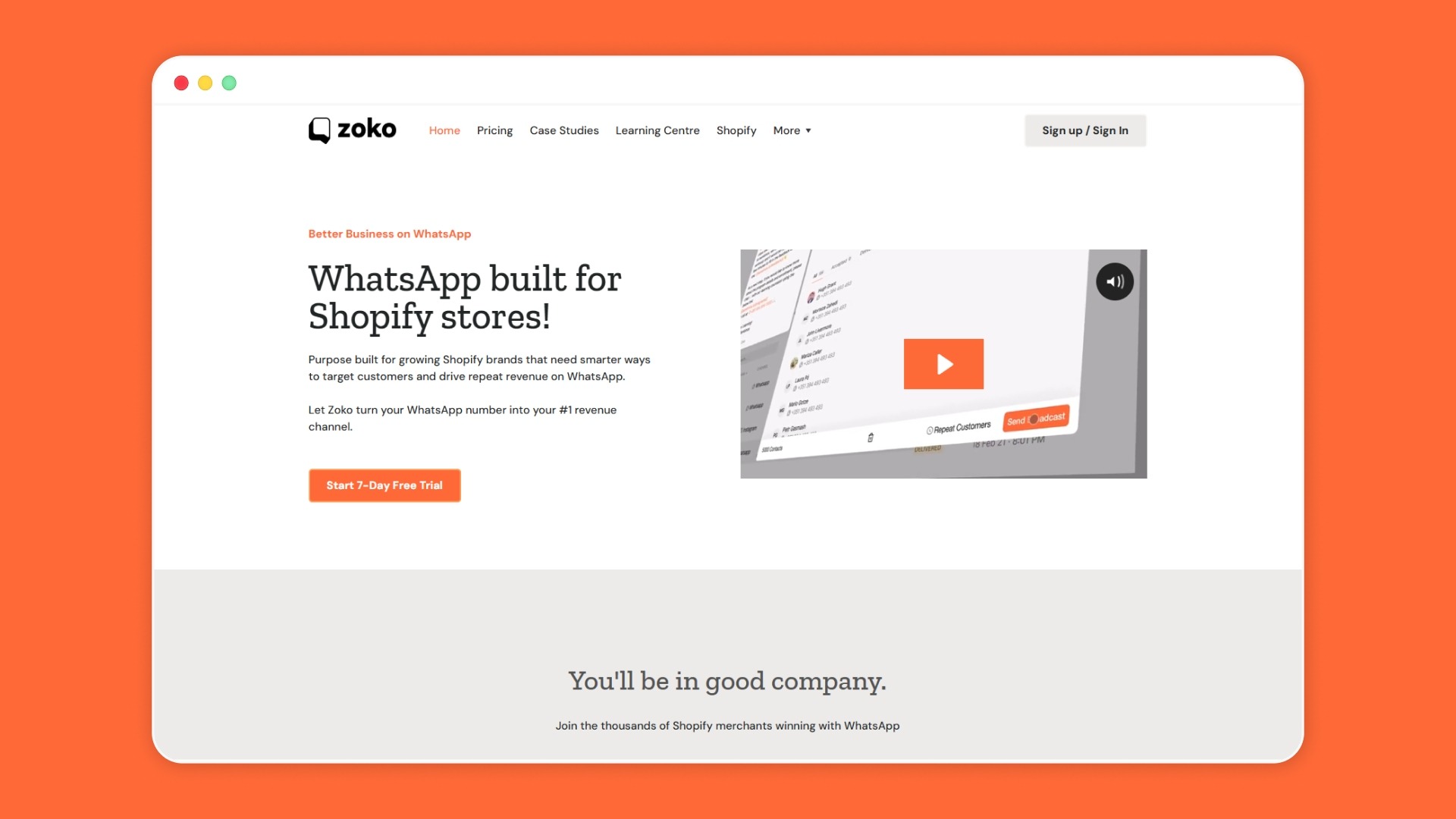
WhatsApp isn’t just for chats; it's now a powerful sales channel. A great example is Animeal, India’s leading pet medicine retailer. By integrating Zoko’s WhatsApp Catalog and Shopping Cart, Animeal transformed conversations into high-converting sales journeys and added ₹1 million in revenue within just 3 months.
Here are the key highlights of how Animeal used Zoko effectively.
- Catalog-to-Cart Integration: Enables customers to browse and add products to the cart directly within WhatsApp chats.
- Shopify Sync: Automatically synced Animeal’s product collections, ensuring up-to-date inventory was always available to shoppers.
- Razorpay Payments: Allowed UPI and online payments without customers ever leaving the WhatsApp interface.
- High Conversion Rate: Achieved a 35% conversion rate through WhatsApp, outperforming email, SMS, and web channels.
- Sales-Driven Conversations: Turned 1 in 3 support chats into sales by enabling in-chat guidance and product selection.
- Streamlined Buyer Journey: Customers got product info, made decisions, and completed purchases, all inside a single WhatsApp thread.
- Zero Redirect Drop-offs: Eliminated the need to redirect users to the website, reducing friction and boosting purchase rates.
- Real-Time Personalization: Provided custom payment links and pre-purchase assistance to build trust and close sales faster.
Animeal’s case shows just how powerful WhatsApp’s Shopping Cart and Zoko’s platform can be when used together.
The WhatsApp Shopping Cart feature is a powerful tool for engaging customers and boosting sales by streamlining the shopping process. By integrating it into your business, you can provide a personalized, efficient shopping experience that keeps customers coming back.
Combined with automated sales and support workflows, Zoko helps you to manage orders, collect payments, share product catalogs, offer real-time support, and close sales, all within WhatsApp. No redirects, all smooth, high-converting conversations.
Choose a plan that suits your business:
- Starter – ₹3,499/month or $39.99/month
- Plus – ₹5,499/month or $64.99/month
- Elite – ₹9,699/month or $114.99/month
- Max – ₹33,833/month or $404.99/month
Ready to turn WhatsApp into a revenue-driving sales engine? Start your 7-day free trial with Zoko today and experience the power of a purpose-built e-commerce solution designed for WhatsApp
Also read: How Voice-Assisted Commerce on WhatsApp Is Changing Buying Experience
FAQs
1. What is the WhatsApp shop feature?
The WhatsApp shop feature lets businesses display products inside WhatsApp through a catalog, so customers can browse items, ask questions, and show purchase interest without leaving the chat. It helps make product discovery and buying conversations more direct.
2. Is there a way to send a shopping cart to someone?
Yes. On WhatsApp, customers can add products to a cart and send that cart to the business as a single message. This makes it easier to review selected items and continue the purchase conversation in one thread.
3. What are smart shopping carts?
Smart shopping carts are cart experiences that do more than hold products. They can support actions like product suggestions, cart reminders, automated follow-ups, and faster checkout steps to help improve conversions.
4. Can I accept payments within the cart?
The cart itself is mainly used to collect and review items. Payment usually happens through an integrated payment method, payment link, or checkout flow connected to the conversation.
5. Is there a limit to items in the cart?
The shopping cart is designed to support multiple product selections, but the exact experience can depend on how the catalog and checkout flow are set up. Businesses should keep the cart simple and easy to review so customers can complete purchases smoothly.
6. How does a business finalize a sale?
A business usually finalizes the sale by reviewing the customer’s cart, confirming product details, sharing the payment step, and then sending an order confirmation. In more advanced setups, this can be automated through integrated workflows.
7. Can I accept payments within the cart?
Payments are typically completed through a linked checkout or payment integration rather than inside the cart itself. The cart helps organize the order, while the payment step closes the transaction.
Interested to know more?
.svg)
Case Studies




















Featured Posts


Continue reading

The E-Commerce Divide: How the Top 10% of Brands Use AI to Grow 5X Faster (And Why It’s Not for Everyone)
Drive Sales with WhatsApp Catalog Integration: Here's How