








As WhatsApp becomes the go-to sales channel for eCommerce, Shopify brands are rethinking how they manage marketing, conversations, and transactions in a single thread. Tools like AiSensy helped many get started, but growing stores now need more powerful platforms that sync data, support team workflows, and convert chats into checkouts.
In 2025, WhatsApp isn’t just another marketing tool. It’s where discovery, engagement, and conversion happen together. The right platform helps you automate follow-ups, recover abandoned carts, send payment links, and deliver personalized experiences without switching between dashboards.
If you’re scaling your Shopify store and looking for a platform that can grow with you, this list breaks down the top AiSensy alternatives built for modern eCommerce teams.
In this article, you’ll find:
- Key considerations for choosing an AiSensy alternative tool that scales with your business and campaigns.
- 10 top AiSensy alternatives built for WhatsApp marketing, sales, and customer engagement.
- A detailed look at each platform’s features, pricing, and pros & cons.
What Is AiSensy?
AiSensy is a no-code WhatsApp engagement platform that uses the official WhatsApp Business API to help businesses send broadcasts, automate notifications, and manage chats at scale. It’s popular among Indian SMBs looking for quick access to WhatsApp marketing and basic automation without heavy setup.
Key Features
- WhatsApp API–based automation for small and mid-sized businesses.
- Campaign segmentation with unlimited broadcasts and template messages.
- Drag-and-drop chatbot builder for FAQs and lead capture.
- Multi-agent shared inbox for live support and human handover.
- Click-to-WhatsApp ad creation for Meta campaigns.
- Built-in CRM with tagging, attributes, and retargeting options.
Drawbacks
- Limited eCommerce depth for Shopify and WooCommerce users.
- No in-chat checkout or commerce flow support.
- Lacks advanced features like multichannel support and advanced WhatsApp.
- Some premium features are locked behind higher-tier or add-on charges.
What Should You Look for in AiSensy Alternatives
AiSensy gives Shopify merchants a simple starting point for WhatsApp engagement. But once your store begins managing high chat volumes, repeat customers, and multi-step sales flows, you’ll need a platform that connects deeper with your store’s data and automates more of your operation.s
When evaluating AiSensy alternatives, focus on platforms that offer:
- Integration: Integration is crucial in WhatsApp marketing because it keeps data, carts, and orders in sync across platforms. Look for native Shopify integration that automatically syncs orders and payment links.
- In-Chat Commerce: Seamless shopping inside WhatsApp reduces drop-offs and boosts conversions. Look for platforms that support full in-chat checkout and commerce flows.
- Automation: Adaptive workflows save time and increase engagement by responding to customer behavior. Prioritize advanced automation beyond simple triggers.
- Multi-Agent Management: Efficient support is vital for customer satisfaction. Choose tools with shared inboxes and multi-agent capabilities to handle chats quickly.
- Analytics & Campaign Tracking: Smarter decisions require insights. Look for platforms offering detailed dashboards for conversions, recovery rates, and engagement metrics.
- Omnichannel Flexibility: Your audience may expand beyond WhatsApp. Opt for platforms that support multiple channels for seamless scaling as your business grows.
Also read: Best Verloop Alternatives for WhatsApp 2025
10 Best AiSensy Alternatives for 2025
WhatsApp marketing isn’t what it used to be. A few years ago, it was enough to send bulk messages and wait for replies. Now, customers expect the full shopping journey to happen inside chat, from product discovery to payment confirmation. For eCommerce brands, this shift turned WhatsApp from a side channel into one of the most reliable paths to repeat revenue.
That evolution has pushed the tools forward, too. The market now includes platforms built for very different needs: some focus on automation and broadcast scale, others on sales enablement, CRM depth, or post-purchase engagement. The difference lies in how deeply they connect with your store’s data and how much of the buying experience they can automate without losing the human touch.
Below, we’ve curated 10 AiSensy alternatives that reflect where WhatsApp commerce is headed. These platforms are built for real growth, measurable outcomes, and the kind of customer experience modern Shopify stores are expected to deliver.
1. Zoko
Zoko is a full-stack WhatsApp commerce platform for Shopify and D2C brands. It brings storefront, marketing, and support together in a single WhatsApp interface so merchants can manage the entire buyer journey without switching tools.
The platform is best suited for fast-scaling e-commerce stores that want tighter control over conversations, faster checkouts, and data-driven automation across sales and support.
Key Features
- Real-Time Shopify Sync for WhatsApp Commerce: Zoko connects directly with Shopify to pull product catalogs, inventory status, and customer data in real time. Merchants can share products, check live cart status, and send order updates without leaving WhatsApp.
- AI-Powered Workflow Engine for Smarter Retention: The AI automation engine personalizes upsell flows, sends timely reminders, and adapts communication based on user behavior. Each message feels contextual, increasing engagement without manual input.
- Abandoned Cart and Campaign Automation: Automatically re-engage users who leave items in their carts through behavioral reminders. Merchants can also run segmented WhatsApp campaigns and automate common customer queries, combining marketing and support under one roof.
- WhatsApp-Native Checkout With Payment Support: Shoppers can complete transactions directly within WhatsApp. With beta support for WhatsApp-native payments, Zoko minimizes drop-offs by turning chats into frictionless checkouts.
- Integrated Shiprocket Support for COD Management: COD sellers can automate order confirmations, delivery alerts, and failed shipment follow-ups. The Shiprocket integration keeps logistics and communication in sync, improving delivery success rates.
Pros
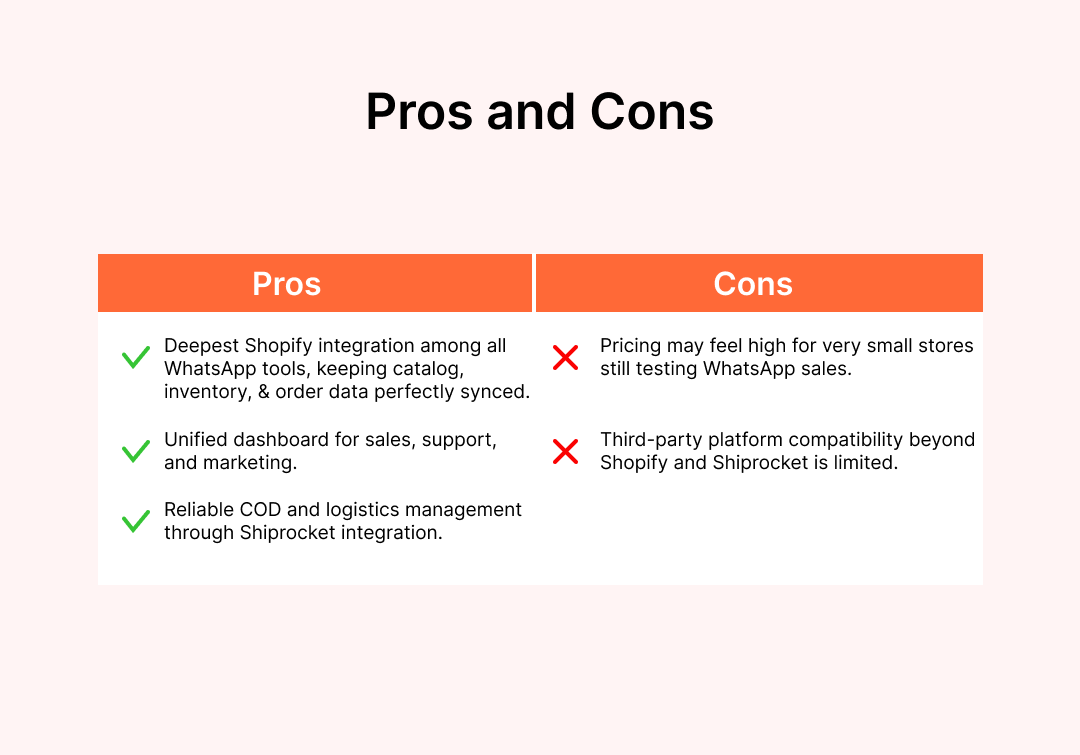
- Deepest Shopify integration among all WhatsApp tools, keeping catalog, inventory, and order data perfectly synced.
- Unified dashboard for sales, support, and marketing.
- Reliable COD and logistics management through Shiprocket integration.
Cons
- Pricing may feel high for very small stores still testing WhatsApp sales.
- Third-party platform compatibility beyond Shopify and Shiprocket is limited.
Pricing
- Starter: ₹3499/month or $39.99/month
- Plus: ₹5,499/month or $64.99/month
- Elite: ₹99/month or $114.99/month
- Max: ₹33,833/month or $404.99/month
Try Zoko to scale your WhatsApp sales, automate your workflows, and turn chats into conversions.
2. Interakt
Interakt, a Jio Haptik product and official Meta Business Partner, helps Shopify and D2C brands manage WhatsApp engagement, automate campaigns, and drive sales. It’s best for merchants who run ads on Meta platforms and want a unified system for marketing, support, and commerce.

Pros
- Official Meta partner with WhatsApp API access.
- Supports both WhatsApp and Instagram messaging in one inbox.
- Ready-to-use notification templates for faster campaigns.
Cons
- Limited control for highly custom workflows.
- Pricing scales quickly as usage and automation needs increase.
Pricing
- Starter: ₹999/mo
- Growth: ₹2,799/mo
- Advanced: ₹3,799/mo
- Enterprise: On request
3. WATI
WATI, powered by Clare.ai, is an AI-native WhatsApp platform that helps businesses accelerate pipelines, increase conversions, and manage customer interactions across multiple channels from a single workspace. Best for D2C brands and SMBs looking to scale sales, support, and marketing with WhatsApp at the core.
Key Features
- Zero-fee WhatsApp setup with Official API and blue tick verification assistance.
- Omnichannel inbox for WhatsApp, Facebook, Instagram, website chat, and QR codes.
- Standard promotions to run multimedia campaigns and track open & read rates.
- Acquire leads via Click-to-WhatsApp ads and capture forms on WhatsApp.
- Team inbox management for assigning, tracking, automating follow-ups, and tagging.
Pros
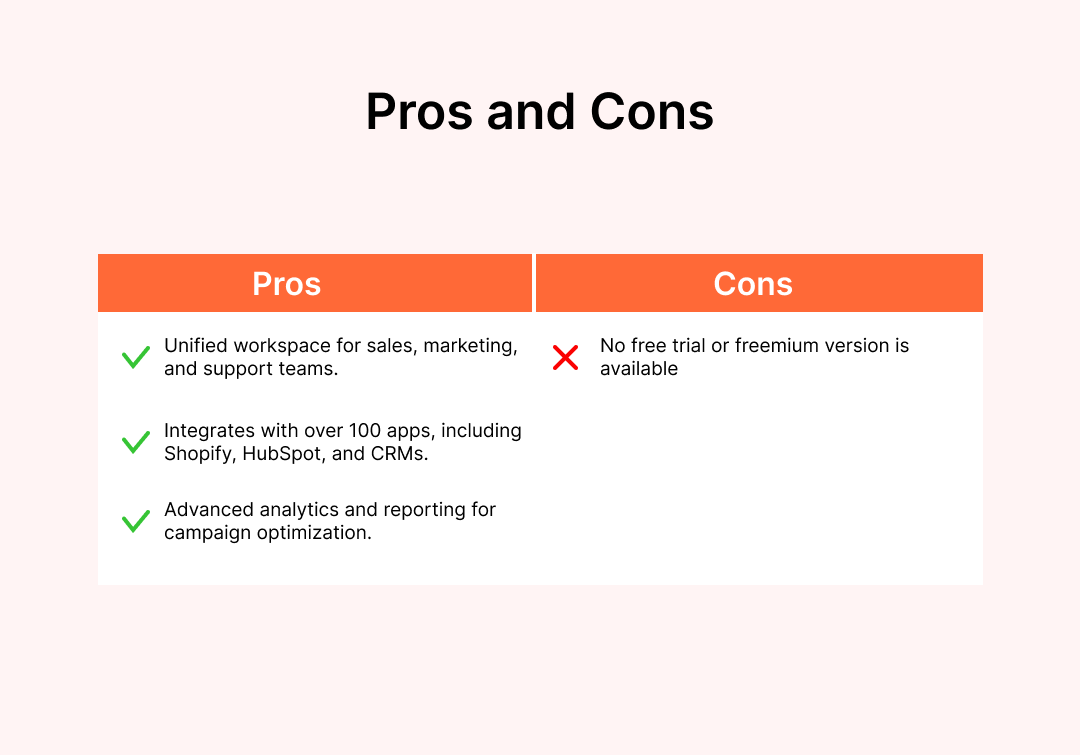
- Unified workspace for sales, marketing, and support teams.
- Integrates with over 100 apps, including Shopify, HubSpot, and CRMs.
- Advanced analytics and reporting for campaign optimization.
Cons
- No free trial or freemium version is available
Pricing
- Growth: ₹1,999/month
- Pro: ₹4,499/month
- Business: ₹13,499/month
4. Gallabox
Gallabox is a WhatsApp Business suite focused on robust automation and AI-powered workflows to capture, nurture, and convert leads efficiently. Best for SMBs and growing teams that want to scale marketing, sales, and support with intelligent, end-to-end WhatsApp automation.
Key Features
- WhatsApp Flows to create forms, manage data, and integrate into chatbots or broadcasts.
- Gallabox GenAI for personalized responses, AI-powered chatbots, and agent assistance.
- Shared Inbox for notes, tagging, assignments, and chat history management.
- WhatsApp Broadcasts with segmentation, reply-to configuration, and abandoned cart triggers.
- Click-to-WhatsApp Ads to capture leads, resell, upsell, and retain customers.
Pros
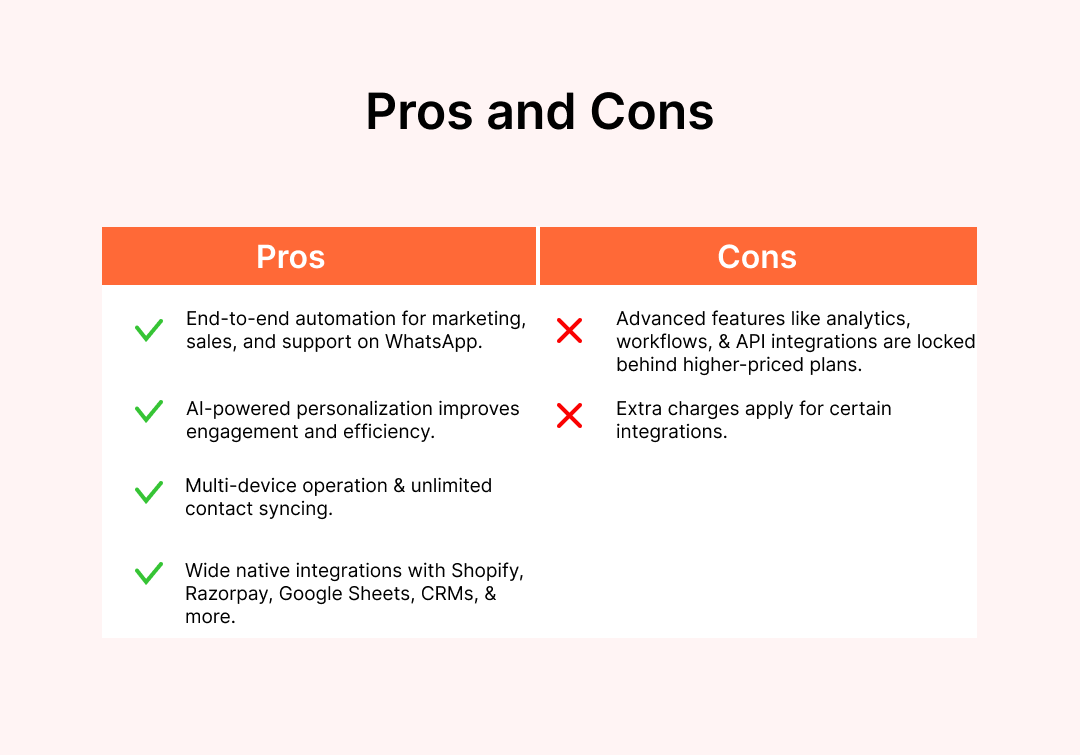
- End-to-end automation for marketing, sales, and support on WhatsApp.
- AI-powered personalization improves engagement and efficiency.
- Multi-device operation and unlimited contact syncing.
- Wide native integrations with Shopify, Razorpay, Google Sheets, CRMs, and more.
Cons
- Advanced features like analytics, workflows, and API integrations are locked behind higher-priced plans.
- Extra charges apply for certain integrations.
Pricing
- Growth: ₹3,599/month
- Scale: ₹7,799/month
- Pro: ₹14,999/month
5. DelightChat
DelightChat is a unified platform for WhatsApp marketing and omnichannel customer support, powered by AI to streamline conversations, recover carts, and boost repeat sales. Best for Shopify merchants and SMBs looking to combine marketing automation with a shared support inbox across multiple channels.
Key Features
- Omnichannel Inbox to manage WhatsApp, Instagram, Facebook, Email, and Live Chat from a single dashboard.
- WhatsApp Broadcasts to send personalized promotional messages and marketing campaigns.
- Abandoned Cart Recovery on autopilot via WhatsApp to recover lost sales.
- Order Confirmations and Tracking Notifications directly on WhatsApp, optionally including upsell codes.
- Cash-on-Delivery Verification messages to reduce RTOs and improve margins.
- Analytics to track ROI and campaign performance across WhatsApp interactions.
- Shared Team Inbox for assigning, tracking, and collaborating on customer queries efficiently.
Pros
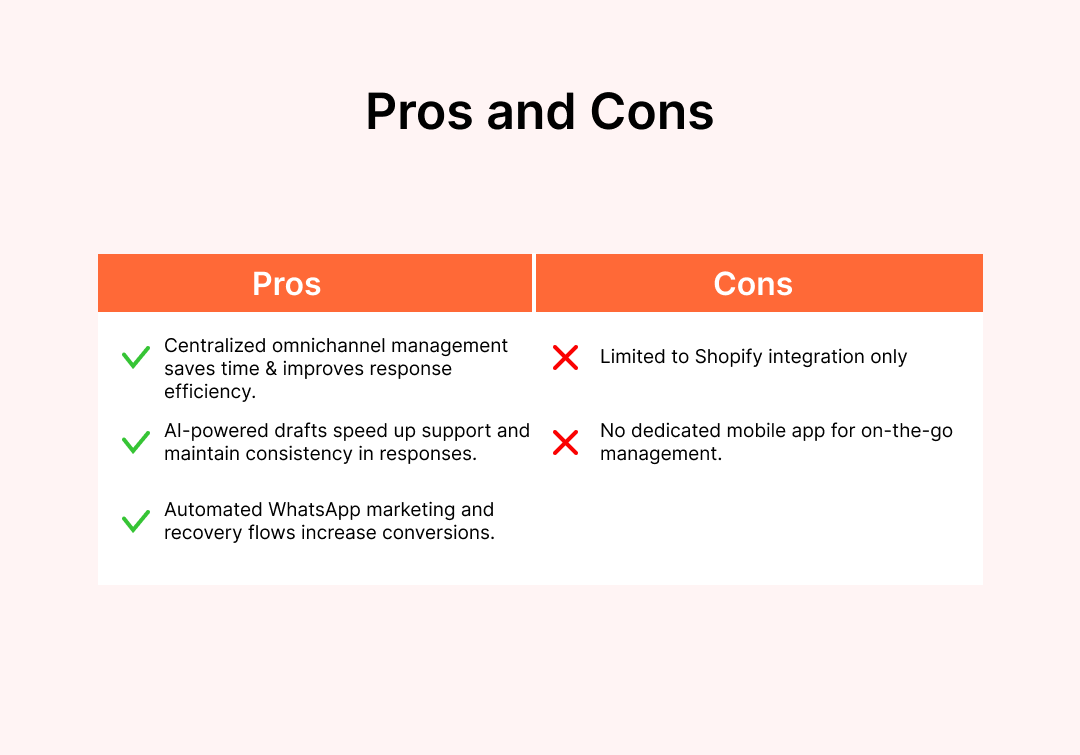
- Centralized omnichannel management saves time and improves response efficiency.
- AI-powered drafts speed up support and maintain consistency in responses.
- Automated WhatsApp marketing and recovery flows increase conversions.
Cons
- Limited to Shopify integration only
- No dedicated mobile app for on-the-go management.
Pricing
- Startup $29/month
- Scale $99/month
- Growth $299/month
6. Business on Bot
Business on Bot is an end-to-end WhatsApp platform for D2C brands, offering automated marketing, AI-driven customer support, and WhatsApp-native shopping. Best for small-to-medium D2C businesses looking to streamline operations and engage customers across multiple touchpoints.
Key Features
- Omnichannel Integration to manage WhatsApp, web chat, and other channels from a single dashboard.
- Smart Upsell during sales chats to deliver personalized product recommendations and increase order value.
- AI Segmentation to categorize customers by key attributes for targeted marketing campaigns.
- Anonymous User Detection to track visitors even if they don’t share full details.
- Behavioral Data Capture for personalized follow-ups and retargeting.
Pros
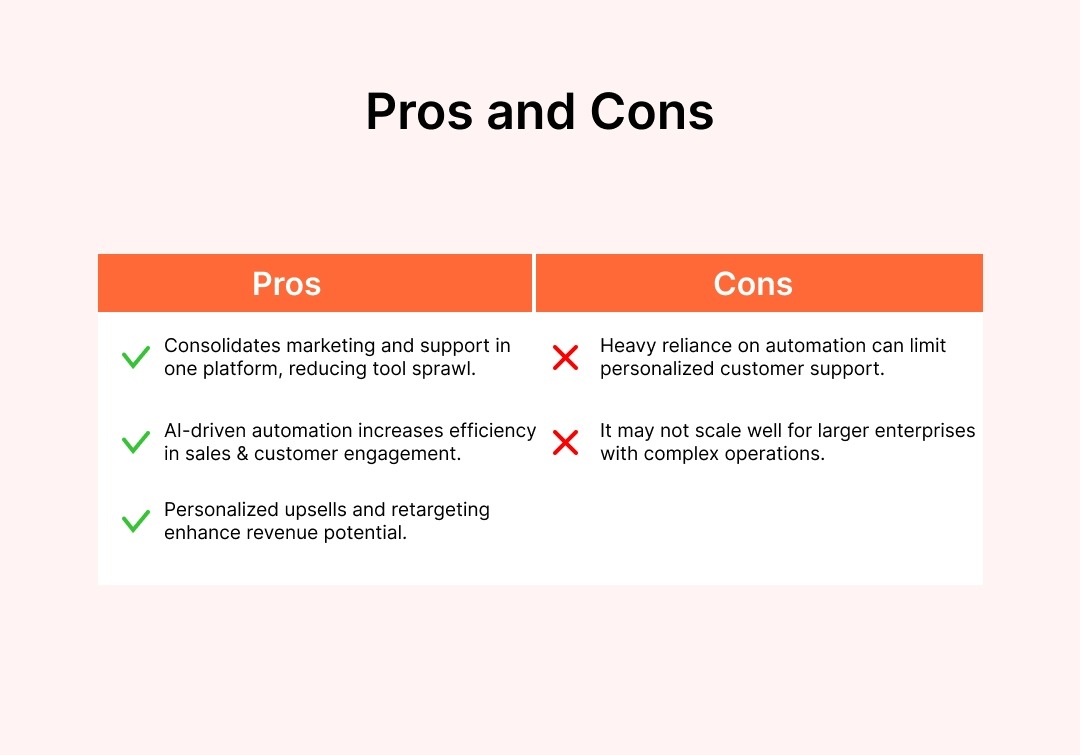
- Consolidates marketing and support in one platform, reducing tool sprawl.
- AI-driven automation increases efficiency in sales and customer engagement.
- Personalized upsells and retargeting enhance revenue potential.
Cons
- Heavy reliance on automation can limit personalized customer support.
- It may not scale well for larger enterprises with complex operations.
Pricing
- Contact sales for pricing.
7. WaliChat
WaliChat offers a multi-agent WhatsApp platform designed for teams that need to scale customer communication and marketing campaigns efficiently. Best for businesses looking to improve team collaboration, automate workflows, and manage multiple WhatsApp numbers from a single dashboard.
Key Features
- Multi-agent chat to distribute conversations across your team and manage multiple WhatsApp numbers.
- Analytics to track team activity, engagement, and identify improvement opportunities.
- Productivity tools, including internal notes, quick replies, and conversation tagging.
- WhatsApp API and Webhooks for automation, CRM integration, and custom workflows.
- Customer profile enrichment to personalize interactions and improve service.
- Switch between multiple WhatsApp numbers instantly for seamless operations.
Pros
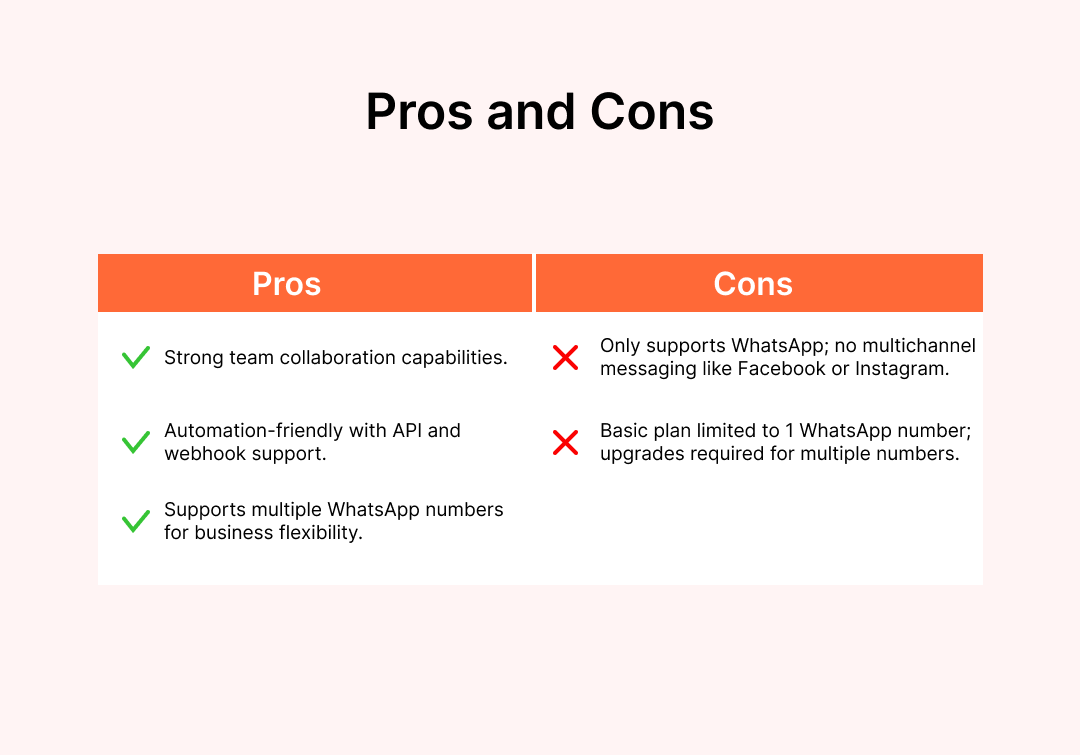
- Strong team collaboration capabilities.
- Automation-friendly with API and webhook support.
- Supports multiple WhatsApp numbers for business flexibility.
Cons
- Only supports WhatsApp; no multichannel messaging like Facebook or Instagram.
- Basic plan limited to 1 WhatsApp number; upgrades required for multiple numbers.
Pricing
- Professional €39.9/mo
- Business €69.9/mo
- Enterprise €99.9/mo
8. Twilio
Twilio provides a robust customer engagement platform that leverages WhatsApp and other channels via APIs, enabling businesses to manage messaging, notifications, and conversational commerce at scale. Best for companies with developer resources seeking highly customizable, API-driven WhatsApp solutions.
Key Features
- Transactional messaging to send alerts, notifications, promotions, and marketing messages via WhatsApp.
- Conversational messaging using a single API for customer care and commerce interactions.
- Contact center support across WhatsApp, email, voice, SMS, and more.
- Personalized communications leveraging first-party data for targeted campaigns.
- Account verification via WhatsApp, SMS, voice, email, and OTPs.
Pros
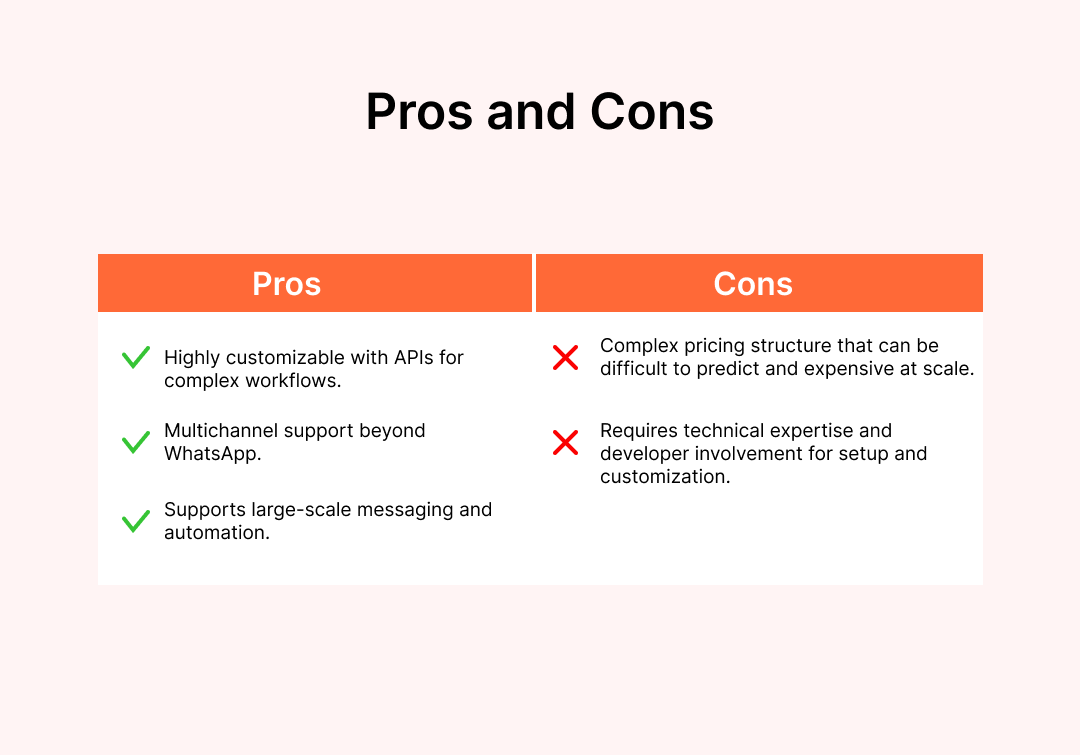
- Highly customizable with APIs for complex workflows.
- Multichannel support beyond WhatsApp.
- Supports large-scale messaging and automation.
Cons
- Complex pricing structure that can be difficult to predict and expensive at scale.
- Requires technical expertise and developer involvement for setup and customization.
Pricing
- WhatsApp per-message fee: $0.005 inbound or outbound, plus Meta template message fees.
9. Trengo
Trengo centralizes WhatsApp, email, Instagram, and live chat into a single inbox, helping support teams streamline conversations and improve collaboration. Best for growing businesses looking to scale support with automation and multichannel messaging.
Key Features
- Unified inbox for WhatsApp, email, live chat, and social media to manage all customer interactions.
- Rules engine to automate message routing and enforce SLAs.
- Internal team notes and mentions to improve collaboration.
- Knowledge base for customer self-service and reduced support load.
- Integrations with CRM, Shopify, and Zapier to connect workflows.
Pros
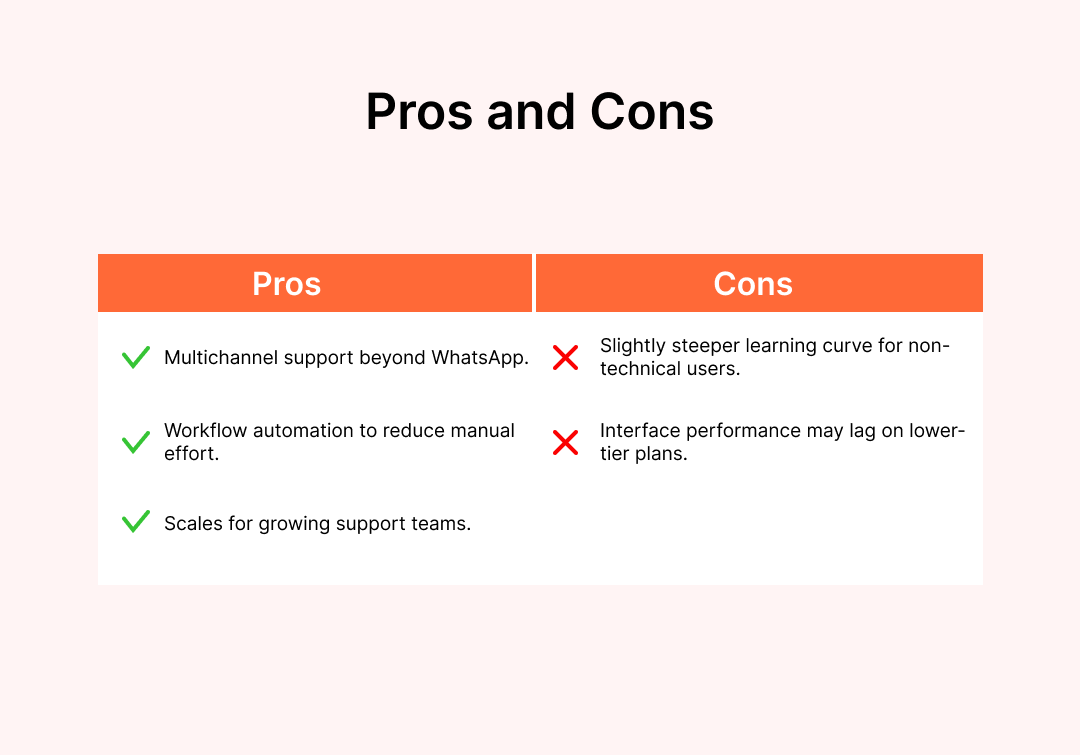
- Multichannel support beyond WhatsApp.
- Workflow automation to reduce manual effort.
- Scales for growing support teams.
Cons
- Slightly steeper learning curve for non-technical users.
- Interface performance may lag on lower-tier plans.
Pricing
- Boost $347/month
- Pro $579/month
- Enterprise: Custom
10. Kommo (formerly AmoCRM)
Kommo combines CRM with messaging-first automation for WhatsApp and Instagram, enabling sales teams to manage deals and track conversations directly in chat. Best for teams focused on sales pipeline management within messaging platforms.
Key Features
- CRM pipeline view for WhatsApp and Instagram conversations to track deals.
- Message-triggered deal automation for faster sales workflows.
- Pre-built WhatsApp templates for outreach and engagement.
- Lead management and tagging directly within the chat interface.
- Reporting dashboards for sales conversion and performance metrics.
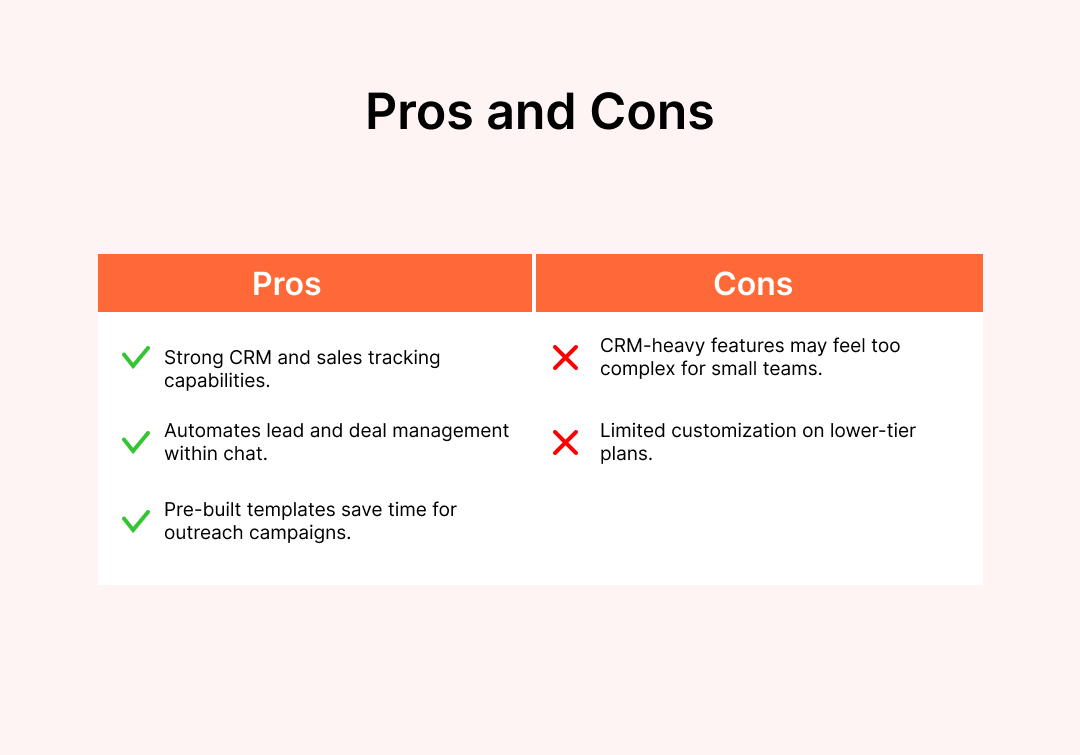
Pros
- Strong CRM and sales tracking capabilities.
- Automates lead and deal management within chat.
- Pre-built templates save time for outreach campaigns.
Cons
- CRM-heavy features may feel too complex for small teams.
- Limited customization on lower-tier plans.
Pricing
- Base $15/user/month
- Advanced $25/user/month
- Enterprise $45/user/month
Final Thought
WhatsApp marketing tools have evolved significantly, especially with the rise of AI, enabling smarter automation, personalized campaigns, and seamless customer engagement. However, no single tool fits every business. Your choice should depend on your company size, sales workflows, and the type of campaigns you run.
If you are looking for a platform that scales WhatsApp into a full sales and support engine while integrating seamlessly with your e-commerce store and tech stack, Zoko provides the tools to turn customer conversations into sales, automate operations, and drive repeat business.
Get started with Zoko today and transform your WhatsApp into a revenue-generating channel.
Also read: Top WhatsApp Business Solution Provider in Dubai
Also read: Top 8 QuickReply Alternatives to Boost WhatsApp Sales
FAQs
1, What is the best WhatsApp marketing tool for Shopify stores?
Tools like Zoko, Wati, and Gallabox integrate deeply with Shopify, allowing real-time catalog sync, abandoned cart recovery, and WhatsApp-native checkout, making them ideal for Shopify merchants.
2. Can WhatsApp marketing tools handle high volumes of customer conversations?
Yes. Platforms such as Zoko, Interakt, and Wati provide multi-agent inboxes, AI automation, and workflow engines to manage thousands of chats efficiently.
3. Do these WhatsApp tools support sales automation and campaigns?
Most advanced tools offer automated broadcasts, CTWA ads, cart recovery sequences, and personalized upsells to streamline sales directly through WhatsApp.
4. Are WhatsApp marketing tools suitable for enterprise businesses?
Yes, but it depends on the platform. Tools like Zoko, Interakt, and Twilio offer scalable solutions for large teams, while simpler tools like AiSensy or BusinessOnBot may be better for SMBs.
5. Can I integrate WhatsApp marketing tools with other apps and CRMs?
Many platforms, including Zoko, Interakt, and Gallabox, provide native integrations with Shopify, WooCommerce, HubSpot, Salesforce, and Zapier to automate workflows and enrich customer data.
Interested to know more?
.svg)
Case Studies
















Featured Posts


Continue reading

The E-Commerce Divide: How the Top 10% of Brands Use AI to Grow 5X Faster (And Why It’s Not for Everyone)
Drive Sales with WhatsApp Catalog Integration: Here's How