






WhatsApp Business Description for Shopify Stores: Key Elements, Benefits, and Examples

WhatsApp Business Description for Shopify Stores: Key Elements, Benefits, and Examples
Trust starts before the first reply. WhatsApp Business found that 74.6% of consumers trust a business more when they can message it, which raises the stakes for how your business appears on WhatsApp. For Shopify merchants, that creates a real challenge.
You can invest in ads, product pages, and catalog setup, then still lose momentum if your WhatsApp profile feels vague, outdated, or too generic to build confidence. If shoppers cannot quickly understand what you sell or what kind of help they can expect, your first impression weakens before the conversation even begins.
That is why your WhatsApp business description should tell shoppers what you offer, what they can message you for, and why your brand feels credible enough to trust.
In this guide, you will learn what makes a good WhatsApp business description, review WhatsApp business description sample ideas, and see how to introduce your business on WhatsApp in a way that supports sales, support, and order-related conversations.
Key Takeaways
- A strong WhatsApp Business description should cover five basics: what you sell, one trust signal, one differentiator, what shoppers can message you for, and a tone that matches your brand.
- The most effective descriptions are specific and ecommerce-focused, using clear product language, delivery or COD cues, and a direct chat purpose.
- Your description should change based on your goal, whether that is driving orders, building trust, handling support, or promoting a seasonal campaign.
- Keep the profile updated as your store changes, especially during launches, campaigns, support shifts, or delivery changes.
- Avoid vague lines, blank descriptions, overloaded copy, outdated details, and a mismatch between what the profile promises and what the customer chat experience delivers.
What is a WhatsApp Business Description?
Your WhatsApp Business description is a short line on your business profile that tells shoppers what you sell and what they can message you for. In a few words, it should help a customer understand your business and feel confident enough to start a chat.
When someone taps your business name on WhatsApp, they can usually see:
- your business name and profile photo
- your address and business hours
- your website and email
- Your business description
That makes your description one of the first pieces of information a customer reads. Unlike your catalog or product pages, it appears before the conversation starts, so it helps shape trust and sets expectations early.
Why Your WhatsApp Business Description Matters for Shopify Stores
Most businesses leave their WhatsApp description blank or fill it with something generic like “Welcome to our store.” That wastes one of the most visible parts of the profile. For Shopify merchants, this small line can shape whether a shopper feels confident enough to start a conversation or leave without messaging.
- It confirms that the shopper is in the right place: When someone opens your WhatsApp profile, they already have intent. They may have clicked from your website, Instagram, ad, or QR code. Your description should quickly tell them what you sell and what they can message you for.
- It builds trust before the first message: A blank or vague description can make your business look inactive or unreliable. A clear one makes your store feel legitimate, current, and ready to help.
- It reduces friction in the buying journey: If your description mentions your product category, delivery coverage, COD availability, or support purpose, shoppers get useful context before they even type a message.
- It supports more relevant customer conversations: Some shoppers want product details. Others want order help, delivery updates, or return information. A strong description sets expectations early, leading to clearer, more useful chats.
- It improves profile clarity: Using specific product or category terms makes your profile easier to understand at a glance. That helps shoppers recognize your store faster and decide whether to engage.
Key Elements of a Strong WhatsApp Business Description
Before looking at examples, it helps to know what makes a WhatsApp Business description effective. A strong description is not just short. It should tell shoppers what you sell, why they should trust you, and what they can message you for.
- Clarity About What You Sell: A specific description helps the right shoppers recognize your store faster and reduces confusion. For example, “Handmade leather wallets” is clearer than “premium accessories.”
- One Trust Signal: Add one detail that makes your business feel more reliable. This could be delivery coverage, COD availability, official-store status, support availability, or product quality.
- A Clear Differentiator: Your description should also show what sets your store apart. This could be customization, same-day dispatch, small-batch production, or a niche product focus.
- What Customers Can Message You For: A good description should make the purpose of the chat clear. Customers should know whether they can message you for product questions, order updates, delivery support, size help, or bulk orders.
- A Tone That Matches Your Brand: Your description should sound like the rest of your business. A premium store, a value-led brand, and a support-first business should not all sound the same. Keep the tone clear, natural, and consistent with your website, catalog, and customer conversations.
WhatsApp Business Description Examples for Shopify Stores
The best way to write a stronger WhatsApp Business description is to see what good examples look like in practice. These examples are grouped by product category and written with ecommerce use in mind, so they do more than fill profile space.
Each one tells shoppers what the store sells, adds a reason to trust the business, and gives them a clear reason to start a chat.
1. Fashion and Apparel
- “Trendy women’s wear delivered in 2 to 5 days across India. New drops every Monday. COD available. Message us for sizes and custom orders.”
- “Ethnic and fusion wear for every occasion. 500+ styles. Easy returns and fast shipping. Message us to place your order.”
- “Kids’ clothing for ages 0 to 12. Soft fabrics, playful prints, and free delivery on orders above ₹799. Order directly on WhatsApp.”
2. Beauty and Skincare
- “Clean beauty made in India. No parabens, no sulfates, and suitable for sensitive skin. Message us to find your routine.”
- “Handmade lip balms, serums, and face masks. Cruelty-free formulas with free delivery above ₹599. Order on WhatsApp.”
- “Natural hair care for curly and wavy textures. Shop our bestsellers or message us for a personalized routine.”
3. Electronics and Gadgets
- “Genuine mobile accessories, cables, and earphones from an authorized dealer. Same-day delivery in select cities. Message us for quotes.”
- “Refurbished laptops and phones that are tested, certified, and backed by a 6-month warranty. Ask us before you buy.”
- “Smart home devices and IoT gadgets with setup support included. Bulk pricing available for businesses. Message us to learn more.”
4. Food and Grocery
- “Farm-fresh fruits and vegetables delivered by 9 a.m. Order by midnight for next-morning delivery. Message us for weekly plans.”
- “Homemade pickles, jams, and snacks made fresh to order. No preservatives. Message us to see today’s menu.”
- “Organic grocery delivered in 4 hours with 200+ products. No delivery charge above ₹999. Message us to order.”
5. Home Decor and Lifestyle
- “Handcrafted home decor, including wall art, cushions, and planters. Customization available with pan-India shipping. Message us to order.”
- “Eco-friendly kitchenware and sustainable living products made from bamboo and natural materials. Order directly on WhatsApp.”
- “Modern furniture made to order with customizable sizes, colors, and materials. Message us for a quote.”
6. General Shopify Store Templates
- “Your destination for [category]. Fast shipping, easy returns, and helpful support. Browse our catalog and order on WhatsApp.”
- “We ship across India and offer COD on eligible orders. Message us for recommendations, bulk orders, or tracking updates.”
- “[Store name] for [what you sell]. Free delivery above ₹[amount]. COD accepted. Message us to shop now.”
Tip for Shopify merchants: If you use Zoko to manage your WhatsApp store, you can sync your Shopify catalog to WhatsApp and guide shoppers from your description into product browsing, support, and buying conversations without adding extra steps. Get a 7-day Free Trial.
How to Write Your Description Based on Your Goal + Examples
Your WhatsApp Business description should reflect what you want the channel to do most, whether that is driving orders, building trust, handling support, or promoting a live campaign.
- If your goal is to drive more orders, lead with your product category and strongest buying trigger, such as fast delivery, COD, or a clear reason to message you. Example: “Fresh flowers with same-day delivery in [place name]. Arrangements for every occasion. Message us to order.”
- If your goal is to build trust with new customers, use one trust signal early, such as years in business, easy returns, official-store status, or product quality. Example: “Handcrafted jewelry since 2015. Free returns within 7 days. Message us to browse the collection.”
- If your goal is to support customers, make it clear that WhatsApp is a support channel for product questions, order issues, or delivery help. Example: “Support for orders, replacements, and delivery queries. Message our team, and we will assist you.”
- If your goal is to promote a seasonal campaign, update your description to reflect a live offer, festive promotion, or limited-time launch. Example: “Diwali sale live now. Up to 40% off selected products with free delivery.”
You can switch back to your regular description after the campaign ends, so your profile always matches your current priority.
How to Add or Update Your WhatsApp Business Description
Your WhatsApp Business description should change as your store changes. You may need to update it for a campaign, a product launch, new support workflows, or revised delivery details. Here is how to add or update it, depending on your setup.
WhatsApp Business Description Mistakes Shopify Merchants Should Avoid
Small mistakes in your WhatsApp Business description can reduce trust before the chat even starts. For Shopify merchants, that can mean lower reply intent, weaker first impressions, and less useful customer conversations.
- Using vague language: Lines like “Welcome to our store” or “quality products at great prices” do not tell shoppers what you sell or why they should message you.
- Skipping a clear chat purpose: Customers should know whether they can message you for product questions, order help, delivery support, or bulk queries.
- Leaving the description blank: An empty profile section can make your business look inactive, unfinished, or less reliable.
- Cramming in too much information: A long, overloaded description is harder to read and weakens your main message. Focus on what you sell and your USP.
- Using outdated details: Old sale messages, discontinued products, or expired offers can hurt credibility and confuse customers.
- Ignoring shopper context: Your description should reflect what matters to your buyers, such as COD, delivery coverage, or support availability.
How Zoko Helps You Keep Your WhatsApp Business Description Aligned With Your Store Goals
A strong WhatsApp business description should reflect what you want WhatsApp to do for your store at that moment. You may want to drive more product questions, support order updates, promote a seasonal offer, or make catalog browsing easier. As those goals change, your profile description should change with them.
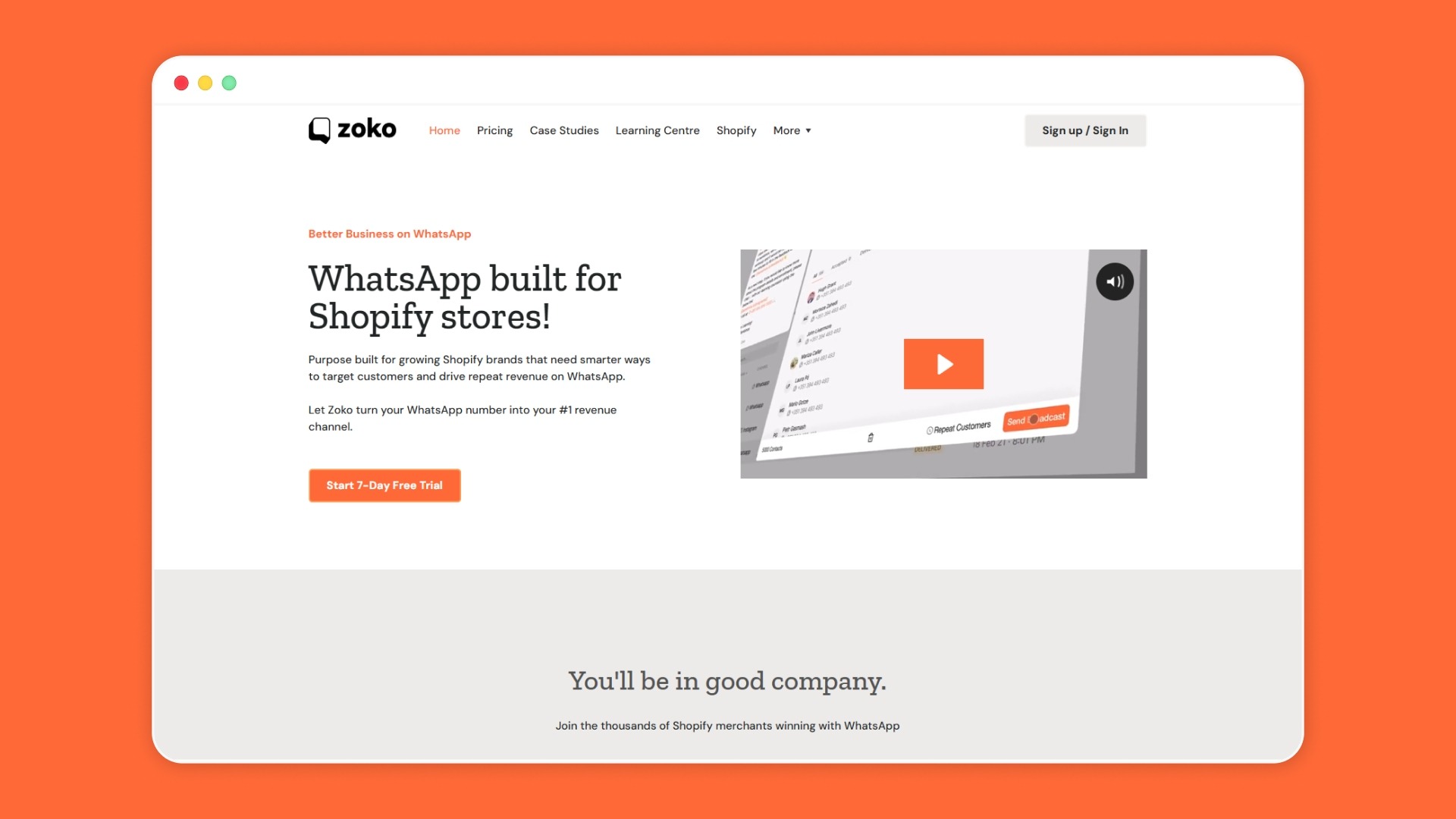
For Shopify merchants using the WhatsApp Business API, Zoko helps by giving you a connected dashboard to manage your WhatsApp setup, including business profile details.
- Catalog alignment: Zoko syncs the Shopify catalog to WhatsApp, so the description can match what shoppers see and browse next.
- Conversation consistency: Zoko helps manage customer chats, support, and order communication in one place, making it easier to deliver on what the description promises.
- Workflow support: Zoko supports flows such as order confirmations, shipping updates, and abandoned checkout recovery, helping the post-click experience stay clear and organized.
- Operational fit: For stores handling COD and delivery workflows, Zoko’s Shiprocket integration can help keep communication and fulfillment more aligned.
Conclusion
Your WhatsApp Business description is a short line, but it plays an important role. It tells shoppers what you sell, what they can message you for, and why your store is worth trusting.
For Shopify merchants, that clarity matters. A specific and up-to-date description can reduce hesitation, improve the quality of customer conversations, and support smoother buying journeys on WhatsApp.
If you want to improve how your Shopify store presents itself and communicates on WhatsApp, learn more about how Zoko supports catalog, messaging, and customer workflows. Book a Free Demo Today!
FAQs
1. Which is the best description for WhatsApp?
The best description is short, specific, and useful. It should say what you sell, add one trust point, and tell customers what they can message you for.
2. Can we link WhatsApp to WhatsApp Business?
You cannot merge a personal WhatsApp account with a WhatsApp Business account. You can, however, use WhatsApp Business and link companion devices like Web or Desktop.
3. How do I write a WhatsApp Business description for a new brand?
Start with what your brand sells, add one trust signal, and mention what customers can contact you for. For a new brand, clarity matters more than clever wording.
4. Can I use a PDF in my WhatsApp Business description?
No. The business description is a text field in your profile. PDFs can be shared in chats, but not placed inside the description itself.
5. What should I put in my WhatsApp Business description sample?
Include your product or service category, one value or trust point, and a clear chat purpose. Example: “Handmade skincare. Ships across India. Message us for product advice and order support.”
6. Is there any character limit in WhatsApp Business description?
Yes. WhatsApp’s help documentation states the business description field supports up to 256 characters, so it is best to keep it short and direct.
Interested to know more?
.svg)
Case Studies



















Featured Posts


Continue reading

The E-Commerce Divide: How the Top 10% of Brands Use AI to Grow 5X Faster (And Why It’s Not for Everyone)
Drive Sales with WhatsApp Catalog Integration: Here's How